Anthony Codispoti (00:00)
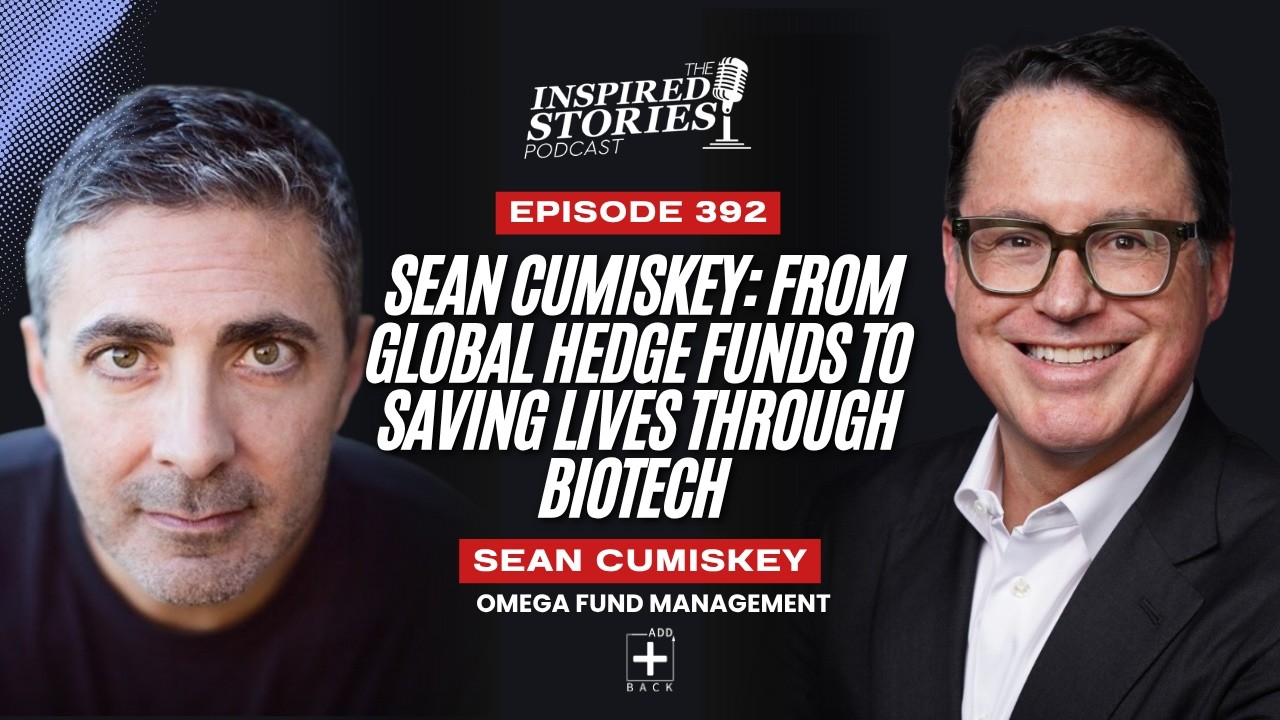
Welcome to another edition of the inspired stories podcast where leaders share their experiences so we can learn from their successes and be inspired by how they've overcome adversity. My name is Anthony Codaspodi and today's guest is Sean Kamisky. Sean is the head of investor relations at Omega Fund Management.
a global life sciences investment firm based in Boston that supports early to late stage biotech and healthcare ventures. Founded in 2004, Omega Funds has raised $2.5 billion to invest in exceptional entrepreneurs developing innovative products across multiple therapeutic areas, including oncology, immunology, rare diseases, medical devices, and precision medicine.
aiming to help bring groundbreaking treatments to patients worldwide. Nishan has a long history in investor relations and strategic development, having held key roles at prominent hedge funds and investment firms. At, how do I say this, why hang capital?
Sean Cumiskey (01:08)
It's actually Yi Hang in... Yi Hang is its Mandarin for perseverance. Most people say Yi Hang, but it's Yi Hang.
Anthony Codispoti (01:10)
Yihang Capital Management.
Okay.
Yi Hong Capital Management. He helped grow assets under management from 350 million to over 3.5 billion. He also led business development and product development at Farallon Capital Management, a $40 billion global fund, and directed global investor relations at York Capital Management.
His previous experience encompasses senior roles in banking and investment consulting as well as asset management. Sean joined Omega in March 2024, bringing his deep expertise in capital development and business strategy to the team. Now, before we get into all that good stuff, today's episode is brought to you by my company, Ad Back Benefits Agency.
where we offer very specific and unique employee benefits that are both great for your team and fiscally optimized for your bottom line. Imagine being able to give your employees free access to doctors, therapists, and prescription medications. And here's the fun part, the program actually puts more money into your employees' pockets. And the companies too. One recent client was able to increase net profits by $900 per employee per year.
Sean Cumiskey (02:25)
you
Anthony Codispoti (02:28)
Results vary for each company and some organizations may not be eligible. To find out if your company qualifies, contact us today at addbackbenefits.com. All right, back to our guest today, Head of Investor and Relations at Omega Fund Management, Sean Kamisky. Thanks for making the time to share your story today.
Sean Cumiskey (02:45)
Pleasure to be here, Anthony. Thank you for having me on.
Anthony Codispoti (02:48)
Yeah. So, okay, how did you first get your start in this world of call it asset management?
Sean Cumiskey (02:54)
Um, it was a long time ago. think, um, initially when I was, um, an undergrad and, and was fishing for things to do, I thought I would want to be a lawyer. I was, um, I was always writing, um, always liked to, um, engage in situations where there was debate and discussion and, and, uh, and was a good student in terms of like English and liberal arts and, those types of, you know, kind of skills kind of lead you toward law school. Um, and, uh, but I worked for a law firm for a summer, uh, as an undergraduate and I realized.
the law is not, there's the law that you think you might be getting to and there's what being a lawyer really is. And I realized that being a lawyer was probably not in ⁓ my future in terms of what I kind of like to do.
Anthony Codispoti (03:36)
What,
like too much like reading, too much pouring through, like boring case law?
Sean Cumiskey (03:39)
Yeah,
especially at big law firms, the associate track is really a grind. And we used to call it being on semi-colon patrol, right? You're just kind of reviewing documents and things all day long. And that is fine. But I have another side of my personality, which is very much kind of forward-facing and like interact with people as opposed to kind of documents. ⁓
And so, you know, at that point, I kind of thought, well, you let's think maybe about, you know, kind of finance or kind of something that was more kind of money oriented, even though I didn't have much experience in that. But I was fortunate to get into a ⁓ bank training program out of undergraduate and then afterward was able to work in kind of the private bank of the old Chase Manhattan Bank, which is kind of managing assets for kind of high net worth individuals and families. And as opposed to, let's say, investment banking or commercial banking, it was less transactional, more relationship oriented.
And ultimately, the fees that you generate are more in line with the value that you drive for the client. So it was much more aligned with kind of how I think of the world as opposed to just kind of selling and kind of pushing product and being transaction oriented. Not that there's anything wrong with that, but I really like kind of being on the side of the client. And so that really kind of got me started in SMM.
Anthony Codispoti (04:49)
Okay, so before we get to what you're doing current day with Omega Funds, let's pick out one of your career stops along the way that you would consider to be the most formidable for you and why. What is it that you gained from that experience?
Sean Cumiskey (05:05)
I would say probably ⁓ I was on the investment committee and management committee from called IV asset management, which was a global fund to funds manager based in New York. So essentially we managed hedge fund portfolios, taking different hedge fund managers and putting them into groups of portfolios for insurance companies, for kind of sovereigns, for pension funds, et cetera. And we had a pretty large global organization managed about 16 billion head offices in San Francisco, New York.
London, Tokyo, and Hong Kong. ⁓ And so was a large complex organization, basically engaging in very, very kind of sophisticated investment strategies, in addition to the management and kind of business challenges that you have across the line. And so we managed, it was kind of in that 2003 through 2011 type period where you had significant global growth, but then you had a financial crisis in 2008.
And so it kind of taught me to manage individual conflicting agendas, ⁓ to be able to manage clients and products in a time of growth and in a time of stress, and actually ⁓ learning some important lessons along the way in terms of what really makes leadership and what kind of passes as leadership ⁓ in our business. And so I was able to be involved in a lot of different strategies, a lot of different types of asset classes, and with clients all over the world with different priorities and different perspectives.
in addition to having managed a global team. So it was challenging on a number of fronts. And I learned a lot of very, very important lessons from that time.
Anthony Codispoti (06:43)
Let's pick out just one.
Sean Cumiskey (06:47)
Whew. You know, I think there's different types of, you know, in terms of lessons as it relates to either people or that there's, you know, people lessons, there's business lessons, there's kind of strategy kind of, you know, ⁓ tactical lessons. You know, I would say during the most consistent thing during that time that I leaned on was just transparency and candor and communication within the organization in terms of, you know, people are incredibly intuitive in terms of what's kind of happening, whether it's good or bad.
And so providing, you know, I would say the clarity ⁓ and perspective that many people need if they're working underneath you. And the other thing is in times of stress, ⁓ you know, if you can, you know, kind of keep your head while others are losing theirs, ⁓ that is a significant, you know, kind of advantage ⁓ that you can kind of take with you over time because it is very easy.
to get caught up in the day to day, especially when things are not going the way that you want. And if you have that bleed into the interactions with your people or your family or other people in your life, ⁓ it can kind of start rolling downhill pretty quickly. And so, you you have to kind of step back and realize the sun will always come out tomorrow, even if it doesn't seem that way. ⁓ And ⁓ in managing people in terms of being able to be candid with people about what is going on with the business, whether it's on the positive side or when things aren't going so well.
Anthony Codispoti (07:56)
Hmm.
Do you think you were just sort of wired naturally to have this perspective? Did you have some mentors along the way that coached you or maybe a course that kind of like steered you towards this thought process?
Sean Cumiskey (08:24)
Well, when I was ⁓ when I was at Ivy, I had ⁓ we had ⁓ a very good executive team. ⁓ And one of the things that we were all assigned as part of the manager, we were assigned a management coach. And just because it was seemed to be a good thing, there were six of us that were on this committee managing a pretty big business. And initially, thought a management coach, you know, that's just going to tell you basic stuff like be honest with your people or, you know, make sure you make sure you credit where credit is due and things like that. I was just very I wasn't anti or against the concept.
I just didn't see that, you know, the real need, which was a blind spot. ⁓ And after spending time with, you know, the individual management coach that I was assigned to, ⁓ they really helped me kind of look inside myself and strengthen my good habits I did have and kind of wean myself off of the habits or practices I had that were probably less constructive that I just didn't see. And so I think it kind of made me aware that you can always receive
feedback and improve, even if it's something that you think is very, very straightforward. And being more introspective and really assessing your own strengths and weaknesses and your own true interests is very, helpful. And that really set me on the path to where I am now in terms of I realized, what are the things that really make you get out of bed and that gets you excited about in the morning about your business? And are you doing them every day?
Anthony Codispoti (09:52)
What are the things that get you excited to get out of bed every day, Sean?
Sean Cumiskey (09:55)
Well, I think, know, there's, you know, in our business, like in asset management or hedge funds or venture capital or what people have called alternative investment management, but really where you have kind of the the most profitable firms, the most competitive people, ⁓ the most difficult markets or problems and the most intelligent clients. So it's challenging on all fronts, which is great. But there's typically, ⁓ you know, kind of a couple of tracks that you can take. You know, one is kind of maybe just being.
more of a manager, right? Managing business unit, managing people, managing processes. The other side is really kind of being involved with clients and products and where kind of the rubber really hits the road on the revenue side. And I found that I was kind of being more kind of not through any kind of, I would say, a conscious effort on my part, moving more toward the management side when I really enjoyed the client and the product side much more. And so,
getting out of the things that get me out of bed or helping to drive revenue to come up with new innovative products, to work with clients, to bring business into the firm, to keep business from leaving the firm, to be really being on the front lines as opposed to being in staff meetings all day. Now there's some people that are phenomenal at that, right? You have to be, you have to be really be ⁓ honest about what you're good at. And there are some people that within very large organizations that are phenomenal at kind of surfing the bureaucracy, if you want to say that, or kind of taming the bureaucracy and
and being in meetings all day and making them productive. I'm just not that way. ⁓ I'd much rather be on the front lines. And so ⁓ it was real kind of, ⁓ I would say, aha moment for me in terms of where I want to spend my time, if I can, where I'm most effective and what are the things that get me out of bed in the morning. And it's really the client, the product size, as opposed to ⁓ being a full-time manager. Not that I'm opposed to managing, I manage teams and I...
I think I've been okay at it. But it's again, it's more of the front end of the business as opposed to kind managing the structure, if you will.
Anthony Codispoti (11:58)
So how did the door open for you to join Omega Funds?
Sean Cumiskey (12:02)
So I was at a firm called Yihang Capital Management, ⁓ which I had joined when they were about $350 million. I wanted to do something entrepreneurial at that time in the business, which for reasons we can talk about later. ⁓ But I was able to grow them to kind $3.5 billion. I was the co-chief operating officer and kind of tenured faculty, if you will. Was not looking to go anywhere. But I've always had a very ⁓ kind of personal interest in biotech and life science. Going back many years, I've been personally invested in life science funds.
⁓ I've seen the impact that new medicines and therapies have on patients and I've always been very interested in that. And the opportunity came up at Omega when they were doing a search to hire someone to really ⁓ bring ⁓ a more senior perspective ⁓ to the front end of their business in life sciences. And I was recommended, a friend of mine in Silicon Valley recommended that they speak to me and I wasn't looking to leave but...
the more that I talk with them, the more I realized that the unique set of circumstances represented by Omega was something that may not come around again. So was able to kind of put everything that I had, you know, kind of learned and practiced over time, you know, into a firm that from the investment process really makes a difference in ⁓ people's lives. So it's very much, you know, doing well by doing good. And so that had a tremendous amount of appeal to me. And so it was a...
Once I got to that decision point, was pretty clear that if I hadn't taken this step, I would have always regretted it.
Anthony Codispoti (13:33)
Hmm. So with this particular opportunity, it was a friend that recommended you as I look back over your career path, lots of great stops along the way. Were you head hunted for those? Did you apply cold? Were there was also recommendations, referrals where you knew somebody there?
Sean Cumiskey (13:43)
and
It's almost 100 % of the time, people that I know in the industry, ⁓ you know, and you know, they're always, you know, I would say ⁓ when people are looking to move from, you know, whatever job it might be, you know, they're either, there's either a push or a pull, right? They're either being pushed because they just either the internal dynamics, maybe they don't like their boss or just there's something about the current rule that is just not as unbearable or just that they want to look elsewhere versus.
the pull where there's something very, very attractive that they're very interested in someplace else that lines up well with their skills and makes sense. I've always been kind of pulled toward things as opposed to, hey, I want to get promoted. So I go to another firm that does the same thing. You know, I'll be slightly more senior. And so really from us, from my experience, it's just been my own industry network and ⁓ and people that I know. And so which is very, very important. You learn over time because in an industry like ours, which
You're only, you know, it's truly six degrees of separation, if not fewer degrees of separation that people have. Everyone knows somebody that's senior in our industry that has worked with you or worked for you or has interacted with you as a client or, you know, a service provider. Everyone carries with them a citizenship grade, essentially. ⁓ And, you know, I would, I always, you know, advise, especially kind of younger, you know, professionals or people that ask me for advice. You need to really, really pay attention to that.
in terms of how you treat people, how you interact with the outside world, how you deal with stress, ⁓ because ultimately good opportunities will find you when you have a high citizenship grade and high integrity and high work ethic. Those opportunities will find you. You don't necessarily have to look for them yourself. And there are a lot of people that have just kind of blown themselves up through certain types of behavior that may not be indicative of who they are, but it leaves an imprint on the way people think of you.
Anthony Codispoti (15:44)
Yeah.
Okay, so let's talk more specifically, break down what it is that you guys do there to make a funds plain English.
Sean Cumiskey (15:51)
So plain English, we are a venture capital firm. ⁓ And so simply put, what it means is we provide capital to startup smaller companies that in our case, not investing in technology or social media or the venture capital you might be familiar with, but in companies that are developing therapeutic solutions that we call unmet medical needs. So essentially companies that are developing new types of therapeutic drugs where there could be a small molecule, which is like a pill.
or a biologic, like an injectable, ⁓ or ⁓ even cell and gene therapy, and then also medical devices as well. ⁓ Ultimately, we're looking to improve the standard of care ⁓ and make patients' their outcomes, better. ⁓ And so we operate, we invest in companies that are across therapeutic areas like oncology or immunology or the cardiometabolic space, things like that.
⁓ and also on some medical devices as well. We've invested in companies that are improving kind of insulin pumps or heart monitors for those that have ⁓ at risk of sudden cardiac arrest or things like that. And so we have been quite successful. We've developed 52 FDA approved products that have improved the lives of patients. ⁓ But it's very complicated. Think about the science is very different across different disease areas.
And there's very high barriers to entry into business, which is one of the things that I like as well, which we can talk about in terms of the difference between biotech versus others. But essentially we're developing drugs and devices to improve the lives of patients.
Anthony Codispoti (17:28)
Yeah. Wow. That is a great reason to get out of bed every morning, isn't it?
Sean Cumiskey (17:33)
It's, know, it is really cool. think, you know, it's the failure rate, obviously, in our business and drug development is quite high. know, 90 % of the drugs that you're going to take, you know, don't necessarily make it. And that's true for a lot of startups, right, as well. But in life science is particularly high. But the very nice thing is when our companies succeed, it is unambiguously good for humanity, right? We're not. And I don't want to sound like I am, you know, kind of a
Anthony Codispoti (17:42)
Wow.
Sean Cumiskey (18:02)
disparaging kind of normal kind of tech investing. But we're not we're not looking to industrialize mental illness or FOMO. We're not trying to incent consumers to spend money they have on things they don't need. We're not trying to attract people to sports betting platforms. And you know, we're creating kind of automated solutions that throw workers out of work. And so there's a lot of unintended consequences that comes with new technology that we've seen. But in our case, it's unambiguously good ⁓ in terms of improving the standard of care or developing new standards of care for a lot of really
horrible diseases. For example, we have a company right now that's working on a treatment for pulmonary fibrosis, which is a really horrible disease that once, in many cases, you're diagnosed, you might have four to five years. And the current standard of care for some of these severe elements of the disease just kind of manages the decline. And so we have a company that actually for the first time has shown some evidence where they can reverse the fibrosis and restore lung functioning.
Anthony Codispoti (18:59)
Wow.
Sean Cumiskey (18:59)
which
again, it's a long way to go. It's a very long path, right? For these things to work, but that's just truly, truly kind of cool to see.
Anthony Codispoti (19:06)
Is there an example of something that's in the market helping folks right now that would be fun to talk about?
Sean Cumiskey (19:12)
So there's a number of things that we've done that have been, had significant impact.
Sean Cumiskey (19:17)
So, know, with these companies in many cases, we won't take them all the way through the clinic in approval. Typically our job is to get them, to have the companies develop the drug to go through maybe phase two, phase one trials. And then in many cases, those companies will either go public as an IPO to raise funds to further develop the therapy, or more often they will be purchased by large pharma companies who then will take them through the stage three development and the regulatory approvals.
What has happened, the reason why we have firms like ours, is that large pharma companies are not necessarily good at developing their own drugs. They're very large bureaucratic organizations. They can't really move as quickly. so 20 years ago, maybe 50 % of the clinical trials, the trials where they're testing the drugs in patients, we call it in the clinic, 50 % of those clinical trials were done by small biotech companies. Today it's 75%.
And so large pharma has largely outsourced the development and creation of new drugs to small biotech companies, which are the companies that we fund.
Anthony Codispoti (20:25)
Okay. What do you think sets you guys apart? you know, you've mentioned the 52 impactful medical products to market the FDA approvals. How are you guys different from some of the other biotech and healthcare funds out there?
Sean Cumiskey (20:26)
Okay.
It's good question. think, ⁓ you know, there's the short answer is, is there are lot of very good firms in our business. ⁓ I think in the way that we look at it, there's a couple of different ways that have made us successful. It's not that the answer isn't like, hey, we're smarter than everyone else or our scientists or our PhDs or more diligent. You know, all firms in our business have really, really good people. ⁓ You know, where we, I think, differentiate ourselves is, you know, the name of the firm is Omega, which is
the last letter of the Greek alphabet. And so what that means is we focus on what the end result is. Like what is the problem we're trying to solve? Meaning that we don't necessarily say, okay, we have some scientists coming out of a lab in Cambridge or someplace and they have some real cool science. We're not quite sure what the indication or disease they might be able to cure with this, but it's very interesting. And so we'll fund this kind of science experiment. We don't really do that because we want to know what the actual product is going to be. Like what are we trying to solve for?
The other thing is that we work as a team. Many venture firms are not firms per se. They're more, as I would describe it, a loosely aligned confederation of interests, meaning that you have one partner, one senior investment person working with three or four associates maybe. And that team basically does everything for that portfolio company. You know, the transaction, the financing, they're on the board, they advise the company. And you can do that in tech or software investing. ⁓ But
In biotech, it's very, complicated. Not only is it the initial proof of concept or the phase one, know, kind of phase one data that trials that you're running. It's also the regulatory interface. It's financing the company. There's the clinical trial strategy. Once you get into the clinic, into patients, how you design the trials, where you do the trials. There's the ⁓ chemistry manufacturing controls we call CMC, which is, know, once you've proven a company, a compound can work in the clinic, you've to be able to manufacture it at a scale enough for, for phase three trials.
a whole bunch of things that are very, very important. And typically not one person knows everyone or everything. And so the way we work is as a team, we will bring in the various Omega experts from across the firm, no matter whose deal it is, to make sure we have the best outcome for the company. And so because of that, our portfolio companies are supported by our entire organization because the way that we're all compensated is on the portfolio, how well the portfolio does.
So we all have the best incentive to make sure that we have the best outcome for each company. And so we're able to work across the firm and across disciplines in a way that helps the company get through the clinic more efficiently and more effectively. And so I think when you think about combining the product-first approach, like I the 52 products is a huge number for a firm of our size. And the fact that we're able to work as a team across the firm makes a real difference in terms of our investment outcomes.
Anthony Codispoti (23:29)
Yeah.
I want to hear a little bit more. We'll come back to what you're doing at Omega, but ⁓ it just keeps rattling around in my head what you did in terms of your previous role growing assets from 350 million to 3.5 billion. ⁓ What were the key ingredients in building that investor trust to ensure that kind of growth?
Sean Cumiskey (23:54)
Well, the first thing is, ⁓ you you have to have kind of quality of relationships. that goes again, it goes back to the citizenship grade. So there's a number of things that have to kind of interface because ultimately, you need to be able to translate kind of what you're doing in a way that ⁓ is attractive to those investors that have interest in the area that, you know, that your firm invests. ⁓ But ultimately, you know, one of the key things, and this is something that I always kind of
again, emphasized to younger professionals is kind of your citizenship grade. You know, I worked at some very kind of large, well-known firms. And when I took a ⁓ kind of detour to work for Yee Hung, which was a smaller asset manager, there's always the question, will investors, did they respect you or did they respect the seat that you're in? Meaning that, let's say, you know, to make it more concrete or a better example for the, you know, kind of the person on the street.
Let's say you're an executive at Alphabet or Meta or one of these large tech companies and you know, everybody of course, your business partners and your clients, know, kind of will have some sort of deference just because of the power of the company itself. Then you go do something that's much smaller. Are you going to still have that kind of respect outside the organization that you were at versus when you were at the big platform? And so the key thing for many people is they will work at a very large, successful firm.
and think they want to do something more entrepreneurial, go to a smaller asset manager firm, they can't replicate the success because they didn't have the citizenship development they should have when they were at the larger firm. And so for me, it was being able to lean on those relationships that I've built over time to be able to properly represent what we're doing at Ehun, which was complicated, more Asia-focused, a little bit more ⁓ opaque than many folks were used to, and being able to explain that in a way that would ⁓
be aligned with kind of those investors that had an interest in investing in that part of the world. So a lot of it is translating a more complicated ⁓ investment thesis or investment concept in a way that is actionable to potential investors ⁓ while, again, leaning on that relationship and that trust because many people had dealt with me before at other firms and knew that I wasn't going to just ⁓ look to just kind of
say whatever I needed to say to get them interested in the fund we're running at Eon.
Anthony Codispoti (26:19)
So how well do you understand the tech side of the companies that you're investing in versus, I mean, it strikes me that you're clearly a smart guy. You understand the investment strategy side of it. But how well do you understand the tech side of what you guys are investing in? And how much do your investors, your LPs understand about the tech side? And is that really important?
Sean Cumiskey (26:46)
It's a good question and very relevant. ⁓ As I think about my career, I've always gravitated toward complexity. Things that are more complicated and maybe a little more difficult to understand at first blush because when you're in investor relations or fundraising or kind of client facing role, the ability to translate kind of complicated ⁓ concepts and situations in a way that is ⁓ understandable and actionable and truthful, right?
to ⁓ investors ⁓ is a significant advantage. And I've always kind of gravitated to those more complicated situations because it allows me to stand out a bit more, guess you would say, think about kind of where you kind of really have excelled in the past. And so the previous firms I worked at were all kind of global, multi-asset firms, very complicated businesses, ⁓ which were great platforms for someone like myself that likes to learn about a lot and be able to synthesize that, synthesize that, excuse me.
for kind of investors. And so when we think about what we're doing here at Omega in terms of life science and biotechnology, it's very complicated. And you really need to be able to meet the investors where they are. If they have interest in kind of medical science, but maybe aren't as deep in oncology or what we're doing with specific companies, you need to be able to make sure you can translate that for them in a way that makes it understandable. Likewise, for those that are really, really deep in the science.
You need to be able to make sure that you can meet them where they are. And if they kind of outstrip what I know, because I don't know everything, you need to be able to make sure that you pair them with the right people, the firm that can get them the answer they need. And so that becomes very important because you need to kind of vary that level of information depending on who you're with. We have clients that are many types, know, wealthy families that look to invest to make an impact, you know, they're impact oriented investors. And so what we do in health care is extremely important to them, but they're not health care experts.
We also have a lot of medical ⁓ foundations and hospitals that are investors. They know the science. And, you we also have a few kind of pharma companies and other kind of pharmaceutical entities that are also investors and they're truly expert. In those cases, I will, I'm really just the major data of the firm. will facilitate those conversations with the really, really deep experts in those fields. I'm not trying ⁓ to hold myself out as a PhD in neuroscience because I'm not.
but we have plenty of them here and I make sure I'm able to call on them when needed, which is also very, important in our roles. You need to be able to extract the expertise in the firm and place it in front of the client when it's necessary in a manner that is ⁓ very, very ⁓ efficient and seamless.
Anthony Codispoti (29:29)
So you guys are not currently raising a fund, but as I understand it, you recently ⁓ closed one, Omega 8. Tell us about that. What did you raise? What was the target?
Sean Cumiskey (29:42)
So our target was 600 million. We raised just under 650, so 647. And so that was just about the same size that we raised back in 2021. And 2021, if you recall, is kind of the peak of the kind of COVID everything bubble, right? Everything was going up and raising capital, was, know, what wasn't as difficult. But in the intervening three to five years, and you've seen this across venture, private equity, LBO,
you know, biotech, fundraising has come down quite a bit. And part of that is because limited partners or the investors have not received the distributions that they would expect from their private equity investments, meaning the cash realizations haven't come back to them, whether it's via IPOs or M &A transactions, et cetera. And so as a result, biotech fundraising was down about 70 % from the peak in 2021. So for us, it's number one,
being able to make sure that we have these very, very kind of solid relationships with our clients. That means communicating with them through both good times and bad. And when things aren't necessarily moving in the direction you want, being just candid about that and giving them a real honest look at what's happening within the portfolios. Because ⁓ at the end of the day, they're all professional investors. They just need to know that you're aware of what's happening and that you can communicate kind of both the pluses and minuses of what's going on. But more importantly, we were able to deliver what we call DPI.
which is the essentially cash returns to investors. So during the kind of three year period where, you know, January of 2022 to middle of last year, where a lot of investors weren't receiving, you know, cash distributions from their venture firms, you know, we distributed almost $900 million of capital back to our LPs. We had 14 M &A transactions, six over a billion, and we had like nine IPOs in a period where no one was really doing anything. And the reason why is it's not because
you again, you know, and that really stand out that that stands out. And so we were able to, you know, it was really the real proof of concept, because at the end of the day, when you are able to invest in or you have a product or a therapy where it's a device or a drug that has the data that indicates that it's going to be effective against a significant unmet medical need in any of these disease areas that has value in any environment.
And the reason why is most of our exits over half have been &A transactions to pharma because we develop drugs that work. And pharmaceutical companies, as you know, always have patent expirations and loss of exclusivity. So they need to replace their pipelines with newer drugs. And as I mentioned earlier, they outsource a lot of that to small biotech companies. So they're always serial acquirers. their, ⁓ I guess, demand curve is inelastic as it relates to ⁓ acquiring new assets as long as you have the data.
So it doesn't, the great thing about our business is that it doesn't matter what's happening with interest rates as much or what's happening in the macro economy or with Ukraine and Russia or things like that, as long as we're able to develop these types of successful therapeutics that has value in any market, particularly to pharma. And we saw that in those last two and a half years, given the amount of kind of exits and liquidity we're able to generate for our investors. So ⁓ you include, you you, you tack on the fact that we're a very credible organization that we
communicate very clearly with our investors. We're always looking to educate. We're able to distribute capital and return cash to our investors in a time when no one else was. ⁓ All of those factors enabled us to raise additional capital, especially with newer investors that were new to Omega. And so it was a combination of things that enabled us to be successful, but we're quite happy the way it turned out.
Anthony Codispoti (33:32)
So typically the way a company gets valued is here's the revenue, right? And depending on what field you're in, here's sort of a multiple of what your EBITDA is, for example. It strikes me though that in the area that you play in, that maybe there's a different type of formula that's used. Tell me if I'm right or wrong here because perhaps the company, they've got this great product.
Maybe they're starting to sell it. Maybe they aren't selling it yet, but they know that it works. so revenue numbers don't really assign the true value to it.
Sean Cumiskey (34:12)
Yes, ⁓ that is true. ⁓ I would say that ⁓ one of the ways, you think about our companies, ⁓ we invest in their cash burning science experiments. Ultimately is what they are. They have no revenues. They're burning cash and it's expensive to get a new drug into the clinic. ⁓
You know, that's that's on the drug side, separately from the device side. So medical devices do have revenues. So if you're on the device side, it's it's very much like a ⁓ typical company that you would value, right? Kind of multiple of sales. You see the traction of getting in the market, you know, profit margins, etc., because they're they're commercial stage companies. So that's more kind of the traditional valuation metrics apply to those companies. But for the therapeutic and the device companies, you know, the valuation is really going to be based on, you know, kind of the ⁓
the ⁓ maturity of the company in terms of how early it is. Is it phase one? Is it phase two? Is it to go into phase three? ⁓ The type of indication, is it a very, very large ⁓ disease area that has significant kind of commercial ⁓ potential? Or is this something that's very more niche, like kind of rare disease? ⁓ And also, kind of what ⁓ ultimately, in many cases for the pharma companies, what the acquirers are willing to pay, which
may not be related to the stage of the company at all, but their view of the attractiveness of the asset vis-a-vis their current portfolio of companies. So the valuation on the private side of the therapeutic companies is much more an art than a science. And it's much more related to the data and the indication. How good is the data? How much does it improve the standard of care? Or is it a first in class, best in class therapy against something that is ⁓ a pernicious and kind of widespread type of disease? ⁓
When you think about, we don't think about like TAMs or things like that in terms of, ⁓ because ultimately for the potential market for what we do is every person on the planet, because everyone gets sick, unfortunately. But within certain disease areas like large oncology or immunology, there's these very large indications like pulmonary fibrosis that I mentioned ⁓ that are, have significant commercial potential if you're able to develop a therapy. And so the pharma companies will value it on that.
And if you're going public, they will also tend to look at what the potential application of this drug is going to be a blockbuster over a billion dollars in sales. What do they think that may reach once they reach the phase two, phase three approval? So there's a lot of art and science in the valuation of these companies as opposed to just pure metrics that you might see in other instances.
Anthony Codispoti (36:55)
Makes sense. ⁓ Sean, tell us about how you... Sorry, what was that?
Sean Cumiskey (36:57)
I
I hope I made sense. I don't know.
Anthony Codispoti (37:02)
Oh, no,
I'm with you. I'm with you. Yeah. You know, I mean, some businesses are pretty cut and dry where it's like, you know, I used to be in the income space for a while. for a while, those multiples were pretty low. And then they moved up during COVID when everybody wanted an e-comm business. And now they've come back down. SaaS businesses have, you know, their own typical multiple manufacturing. And so, yeah, just trying to get an idea of how this space works. And so it's, you know, what I'm hearing you say is on the device side of things. Yeah, there's
there's sort of more of that more traditional formula on a biologic, on some kind of a medication. It's a little bit different, right? It's like how good's the, because it's not gone to market yet in this case. Is that true typically? Yeah.
Sean Cumiskey (37:43)
Exactly, exactly. Exactly.
How good is the data? ⁓ How robust is the data? And what is the indication ⁓ that you are, how large is the problem? So there's a company that we incubated ⁓ about four years ago, almost five years ago called Scorpion Therapeutics.
which was in the oncology space. So this is a company that we incubated ourselves. We took the manager team from, you know, they had a white sheet of paper. They wanted to go after certain types of hard to cure breast cancers. And so we funded them and helped build the company, build a commercial organization for them. And they were in the clinic, you know, testing within patients within three years, which is very, very quick. And then at the beginning of last year, they were acquired by, their lead asset was acquired by Eli Lilly.
for 1.5 billion upfront and another potential 1 billion in milestone payments. Because the data that they showed against this type of breast cancer was so promising that Lily stepped up and bought the asset, first thing to think about of money. And there's also milestone payments involved, which I mentioned earlier. So when we sell a company to, say we develop a pill for, let's say in this case, or a therapy for cancer or something, and we sell it to,
⁓ Anthony Therapeutics. You will give us a, many times there's a cash upfront payment, which can be significant. There's also milestone payments, meaning that as long as the drug, it gets, know, passes phase three trials, we get another milestone. If it gets approved by the FDA, we get another milestone payment. So there's milestone payments down the road as drugs hit certain sales targets or certain regulatory approvals.
Anthony Codispoti (39:22)
Yeah.
Let's shift gears just a little bit. ⁓ want to hear about how, no, I want to come back to this because here's the thing is you guys are developing so many really cool technologies, right? ⁓ And these things come out and then you've got, let's call it doctors all over the country, all over the world who are busy, you know, up to their elbows in their day to day practice. And they don't know about, for example, this new breast cancer.
Sean Cumiskey (39:30)
Ha
Mm-hmm.
Anthony Codispoti (39:50)
treatment that is very effective against certain very difficult to treat types of breast cancer. Call it small town Ohio, ⁓ farm country Iowa, where no disrespect to the doctor, but just hasn't hit his radar yet or her radar yet. How do you bridge that gap? This probably is less your role and more the role of whoever's acquiring what it is that you guys have helped to develop.
but it is something I've always wondered about. Like, how do you sort of think about bridging that gap to here's the latest breakthrough and how do we actually tell the world about
Sean Cumiskey (40:31)
Yeah, I mean, a lot of the data for like companies, especially on the, some of the trial data is published, right? They're published in, know, the Journal of American Medical Association or New England Journal of Medicine, things like that, right? There's a lot of, you as things, as therapies are developed, there's a lot of the science and the clinical goals are published. There's also a lot, and so there's a lot of, you and all doctors mostly will be, you they read these journals and will have a sense of what for certain, you know, if they're a cardiologist.
or they're looking at maybe kind of drugs that lower, let's say cholesterol or things like that, or they're an oncologist, certain types of oncology, they're aware of some of the drugs that are entering trials. In many cases, they may, for the leading kind of academic medical centers, ⁓ they may be participating in the trials themselves, their patients. But there are a lot of... ⁓
very kind of specialized conferences where a lot of the private companies and even the large pharma will present results for phase one, phase two, phase three studies for certain types of indications. So within the community there, when things are working or there's positive results or ⁓ kind of landmark studies that are being done, there's quite a bit of ⁓ awareness. Ultimately, when a drug is approved and the labeling and the FDA has signed off on everything, then that really, at that point is really
Like I ultimately it's using the pharma company or it could be the if the company has gone public and they're traded, the standalone company themselves to make sure that they can properly market and educate the end consumer, know, the the primary care physicians or the or the the patient communities in many cases about these new therapies. And that's less us, right, because we're not we're not we're not in the business of kind of marketing and commercialized. We're just a small kind of venture capital. Yeah, we're there to get the science up and running and get the
Anthony Codispoti (42:11)
Yeah, that's good. Yeah.
Sean Cumiskey (42:21)
and get the drug through the clinical trial process successfully. And then typically there's, whether the company goes public and takes the commercialization on their own or they're purchased by like a Merck or Lilly or Sanofi or somebody that will then bring it into house, finish the phase three trials, interface with the regulator and have the commercial head behind
Anthony Codispoti (42:43)
You know, we talked earlier, Sean, about how ⁓ the fact that you're working at a company that the whole goal is to do good, right? And to improve the quality and the length of people's lives, ⁓ help them through their medical challenges. But not too long ago in your own life, there was a big challenge that arose for you personally that, you know, kind of bled over into the professional space.
Sean Cumiskey (42:56)
Yep.
Yes.
Anthony Codispoti (43:11)
I'd
like to explore that. I'd to hear more about that and how you got through that and what it meant for you.
Sean Cumiskey (43:16)
Yeah, sure, sure. I I was in San Francisco and working for a company called Fairlawn Capital Management, which does kind of a large multi-strategy hedge fund with some private asset strategies. Fairlawn respected, has been around for a very long time, I would say one of the blue chip firms in our industry, and was in position to take a senior leadership role at the firm, assuming that I was able to execute and do well, et cetera.
And my wife was diagnosed with breast cancer. ⁓ And that was ⁓ in the beginning of 20, kind of beginning mid 2015. ⁓ And, you know, I had two young children at the time who were in, one was in elementary school, one was in middle school. ⁓ know, Fairlawn is a phenomenal firm, but this industry is not for the faint of heart. You have to kind of be all in. That's one of the reasons I like.
venture capital hedge funds, private equity, those types of businesses, because it really is kind of the sharp end of the spear, so to speak, in asset management. And you need to be kind of all in 100%. You can't be half and half. And so I was trying to do well at Fairlawn, but also support my wife and kids. And I was not doing particularly well at each. I thought I could.
but I was dropping the ball in both places. ⁓ And I realized that you only go around maybe once, depending on your religious beliefs, maybe you've reincarnated, but in this lifetime, you really have one kind of ride around, the merry-go-round. And ⁓ family was the most important. So I left Farallon and took an entire year off.
to help my wife recover, support the kids. I did a lot of nonprofit work and kind of got back into the real world, so to speak, which was, I think, very, very grounding because we kind of lose track of ourselves in this, the world that we're in, adventure, hedge funds, what have you. ⁓ And, ⁓ you know, ⁓ I talk to people about it they say, hey, that's an admirable thing to do, you know, and yes, but, you know, I should have done it earlier.
I like everyone else, I thought I could do it all. And then I just hit a brick wall and it became painful, painfully obvious that something had to give. And that thing was certainly not my family. So I took a full year off in 2016. I a lot of, like I said, tutoring and educational work, which I've always been a of a fan of. And then when I decided I wanted to go back to work, I was fortunate that again, the citizenship element, a lot of firms reached out to me and for opportunities.
Did I want to go back to kind of a complicated, high-hitting, high-friction type of job in these large firms? Or did I want to do something more entrepreneurial? And that's when I decided to join Yihan, which was a very small firm at the time. And I said, if I want to put to work everything I've learned and be solely responsible for a lot of the business decisions, this is the time to do it. And I was fortunate that a lot of my former investors and people I know were very receptive to what we were doing, again, because of the citizenship angle that I had.
past. so, you know, it was stressful because you don't know if you're going to go back to work or if people want to hire you after you've been out for a year. And you sit around and say, wow, am I ever going to be able to do what I love or am I going to find the right job? And why did I leave? But you know why you leave, you had to. And so all those things kind of run through your head. And although it did turn out well, certainly,
you know, it was a learning experience and, you know, it just kind of just forces you again to pay attention to what really, really matters. And we all kind of give lip service to that. until you're really in that situation, it just becomes much more meaningful.
Anthony Codispoti (47:16)
So as you were heading into this, you find out that your wife has breast cancer. From the diagnosis, from what they could tell, what was the general prognosis? I mean, there's no guarantees, right? It could look pretty treatable, and then turns out it's not, or vice versa. But what was sort of the feeling? What was the sense in that moment?
Sean Cumiskey (47:21)
Mm-hmm.
⁓ We had a, just because of some, you know, of biological and kind of genetic history my wife had, she was always going in to get tested. ⁓ And so when we were living in New York City, when I was working for York, when we decided we thought maybe having our kids in California instead of Manhattan would be a bit better for them, ⁓ when I joined Fairlawn and we were fortunate to go into San Francisco that... ⁓
UCSF did one additional test on my wife that actually caught the cancer ⁓ relatively early. So we knew there's always kind of a risk that this would happen. was just kind of, you know, and then it fact did. ⁓ And had she ⁓ been diagnosed with this type of cancer 15 years ago or even 10 years ago, ⁓ the outcome may not have been good, but she was, there's a drug on the market called Herceptin, which was developed by Genentech. ⁓
that ⁓ was very effective against her type of cancer. we knew that the prognosis was good, but the road is a challenging one. There's just varying degrees of difficulty when you're with cancer. So the chemotherapy and all of those types of things, the course of treatment and the radiation, the surgery, it's really a bit of a long road and a challenging road. And certainly I...
give all due credit to my wife who is much more mentally tough than I was and held up much better than I did during that whole time. ⁓ But again, when I was interviewing at Omega, I met one of our executive partners was ⁓ at Genentech at the time they developed Perceptive, which saved my wife's life. So being at Omega kind of brought things back full circle, but... ⁓
you know, we were very fortunate that we were conservative with our finances and we didn't necessarily, you know, I didn't have to have to work for a certain period of time. So I had the luxury of being able to take it up, take time off. A lot of people don't, you know, lot of people have dealing with family illnesses, whether it's, it's, know, with the children or spouses or parents, and they don't have a luxury of taking the time that I did. So we were very, fortunate in that respect, but it definitely, like said, it just brought a lot of things into, into very sharp focus that I, you know,
Anthony Codispoti (49:49)
Yeah.
Sean Cumiskey (49:57)
Newton had always acknowledged, you know, it becomes much more real in the moment.
Anthony Codispoti (50:01)
Was there any hesitation making that move, stepping away from work for a year?
Sean Cumiskey (50:07)
Initially, I fought it because it was pretty clear that I needed to step away and I just was stubborn. I thought I could handle everything and be Superman and all that stuff, but look, we're all human. We all have our breaking points and I certainly accepted it was kind of hit mine and it became pretty obvious that they needed to leave. I was a little concerned.
when I left, like, would people remember me? Would I be able to, when I decided if I wanted to go back in the industry, would I be able to get a job or what does that look like? And those are things that you think about during that time. But like I said, it did work out well, fortunately. ⁓ it's an uncertain time, right? And for many of us, our identity is our job in many cases, especially in this industry.
I think I've been a little fortunate that my job has always been what I do. It's not who I am. But even so, was hard leaving a very prestigious firm in a high profile role to just kind of hang out.
Anthony Codispoti (51:16)
And you know, I'm glad that you said it exactly the way that you said it. Because for so many high performers, entrepreneurs, executives, etc. And I am guilty of this. I'm raising my hand myself. I very much identify who I am with what I do. Right. And in those times where I've changed what it was I was doing, or I had exited something and didn't know what the next thing was, it's very unsettling. It's very ⁓
Confusing, disturbing, like where do I sort of fit in? Like I was anchored to who I was over here in this job and this role in this company and now that's gone and it does feel like part of your identity has dissolved.
Sean Cumiskey (51:58)
Sure. No, I 100%. And because, know, some of us when you're when you're we throw so much of yourself into professional life, which in many cases you kind of have to do in especially the industries that you mentioned and the one that I'm in. It's you you can't be 50 % there, 80 % there. have to be kind of 110 % there all the time and stepping back from that. It's like, OK, so now who am I exactly? And you know, what is what is my identity? And like I said, I've always been fortunate that I was kind of divorced a little bit.
who I am versus what I do, but it was still a challenge, you know, because they don't have an identity per se. And I give full credit to my wife who, you know, turned me toward, ⁓ you know, doing much more volunteer work, which I planned to do, but she kind of, you know, kind of directed me there. I've always been interested in education and tutoring and things like that. And so I was able to kind of channel that to be able to give some back to people, as I say, in the real economy. you know, I have this...
Well, talk about that. You know, I live in a fake economy of like hedge funds and private equity and venture capital and startups, whatever. That's kind of the fake economy. The real economy is what most people go through on a day to day basis. And, you know, in many cases, we kind of lose a touch of that a little bit. ⁓ And so kind of being pulled back into that in terms of kind of what ⁓ is really kind of going on outside of the world that you're in. And you realize you are in a bit of a bubble.
And so it does force some grounding on you if you don't have it already.
Anthony Codispoti (53:30)
Sean, what's your superpower?
Sean Cumiskey (53:33)
You know, ⁓ I dread that question because, ⁓ you know, I don't know if I have an answer. think, ⁓ as I think about it, I think what has enabled me to excel in the roles that I have had is that I am...
much more of a multidisciplinary thinker, meaning that I am very, very broadly curious and then I'm able to take kind of what are very kind of complicated, like I situations, strategies, what have you, and synthesize that in a way that also builds upon kind of like business strategy and business imperatives within these organizations that I work. So you take a lot of different elements from whether it's just not the financial, the narrative, the storytelling, the numbers.
⁓ you know, the sizzle and the steak, so to speak, ⁓ and to be able to work with ⁓ people from ⁓ a long list of disciplines that exist within these firms to kind of make the one plus one equals three. And I can't really distill that into one word or phrase, but I think that has served me, ⁓ you know, served me very well. I don't know if that's a superpower, I have no idea, but that is historically what is... ⁓
What is this thing which I've been able to do?
Anthony Codispoti (54:52)
How about something fun you like to do outside of work,
Sean Cumiskey (54:56)
You know what? Love the outdoors, you know, hiking and you know, my my my mother growing up in Northern California was a card carrying member of the Sierra Club. You know, so I like to I like to get I like to be outside and in the outdoors. And and so places like Boston or San Francisco are great for that because you can you can get out pretty you know, pretty easily whereas when we lived in Manhattan, it was it was much more of a battle to get out to to to where you know where there's a little bit of nature. But
I do love to be out in the outdoors. I do love to travel. I travel a lot for work, but it's very sterile. Work travel is sterile, right? Your plane, car, hotel, meeting, restaurant, hotel, plane, back, right? Whereas I like to do a lot of kind of cultural kind of tourism with my wife and seeing the world, so to speak. And I do, I read a lot. I think that's something that is becoming ever more scarce.
just in terms of how society is and kind of how easy it is to, you know, for attention spans to wander. ⁓ You know, I find reading ⁓ is one of the best ways to just distinguish yourself, ⁓ you know, to today. ⁓ I read everything. I mean, there's a lot of stuff that I read for work. ⁓ And one of the great things about our business is like the science continues to advance. And so you need to kind of stay on top of things. Even if I'm not a scientist, there's a lot of things that we read kind of a publication standpoint.
Anthony Codispoti (56:06)
What do you like to read?
Sean Cumiskey (56:21)
But there's a lot of, I read a lot of kind of, I try to spread my reading, my personal reading between something that's more work related or economics or markets or kind of related to what I do, something that's maybe fun, kind of like a maybe murder mystery or who knows, right? ⁓ Or, know, or some like historical fiction. So ⁓ I'm always trying to rotate kind of what I'm reading, but you you do need to take the time and space.
away from the day to day, put your devices to the side, and I do this on Sundays and read whether it's The Economist or some of the news publications related to biotech, some of the current investment memos and decks from our portfolio companies. That's all information that you need to have to be able to retrieve. I many people will feed it into chat GPT, and you can do that for certain things, but it's not the same as being able to retrieve it on
Anthony Codispoti (57:10)
I was going to ask actually, do you still read completely read all of these articles, all these decks, etc. Or are you feeding a lot of them into AI and asking for summary so that you can ultimately consume and synthesize more data?
Sean Cumiskey (57:13)
Thanks.
⁓ It depends. ⁓ If it's something that is very, very lengthy on something that is kind of a little bit of ancillary interest, but not super important. In many cases, I can get an AI summary and then decide if it's something that I really want to delve into. I use it as some of the AI tools ⁓ as ⁓ a source of support, but not necessarily illumination. ⁓
And what I mean is that it'll help me direct where I want to spend more time as opposed to using it as a shortcut to take away time, if that makes sense. I don't use it as a shortcut to learning. I use it as a shortcut to what I want to learn more about.
Anthony Codispoti (58:08)
Gotcha. Get some summaries on things that you're not sure about, if it's worth investing the extra time, and then from the summary you can determine, ⁓ these two things out of these five, this is what I want to dive deeper into, and I'm going to go and consume it the old fashioned way.
Sean Cumiskey (58:23)
Exactly. And just
I'm just old fashioned, I guess, in terms of I just find I retain things if I'm actually reading it on my own. And that's a muscle that you need to especially today. You need to kind of work really, really hard to maintain because there's so many things that are just competing for your attention. There's a lot of very surface, I would say, kind of surface knowledge out there. But again, in our business, and especially when you're more of a specialist and you're dealing with more kind of complex, kind of complicated concepts,
You need to dive in on your own.
Anthony Codispoti (58:56)
Yeah, for sure. ⁓ Sean, I've just got one more question for you today. But before I ask it, I want to do three quick things. First of all, if you want to get in touch with Sean Kamisky today, he's given us his email address to hand out to you. is sc at omega funds calm sc at omega funds calm. And we'll have that in the show notes to also as a reminder, if you want to get more employees access to benefits that won't hurt them financially, and carries a financial upside for the company, reach out to us at
addbackbenefits.com. Finally, if you will take just a moment to leave us a comment or review on your favorite podcast app, you will hold a special place in my heart forever. Thank you so much. So last question for you, Shana, a year from now, you and I reconnect and you're celebrating something really big. What's that big thing you hope to be celebrating one year from today?
Sean Cumiskey (59:46)
That's a question. think, ⁓ you know, from the thing we recently celebrated ⁓ as a family was ⁓ my wife's kind of 10 year marker for breast cancer survival, is, ⁓ which once you've on it, the past the 10 year window of treatment, you know, your odds of being, of it coming, you know, of it being a remission are much, much, much higher. And so that was very, that was the anniversary that we were looking for. ⁓ But, ⁓ you know, from
as I think about it of over the next year, and it's probably like maybe a year and a half from now, what I really want to be able to do is, you know, from our, where we're raising Fund 9 on the professional side, and, you know, if we can slightly increase the size from Fund 8 if we want to, and make it a much more seamless, less laborious process, because fundraising is a grind.
I would be thrilled to have that happen, which means that it's really just the residual of all of the restructuring and process engineering that we've done in the past years will have been effective.
Anthony Codispoti (1:00:51)
Say more about that some of this process engineering that you guys have done the restructuring to make things more efficient on the fundraising.
Sean Cumiskey (1:00:57)
Yeah, mean, it's a lot of it is, ⁓ you many people think fundraising is just kind of running around, helter skelter, meeting with investors that might be interested in pitching them on your fund, etc. And in some ways that that is true. But really, you know, I come not from originally being, you know, kind of an asset raiser or client person. I come from like the product and investment side early in my career. And so I'm very process oriented. And so, you know, you really can't manage what you can't measure.
And so that means optimizing the CRM experience. A lot of CRMs out there that are not so great, ⁓ but being able to make sure you're pushing the limits of what they can do for you, that you're automating things as much as possible, that you're taking the human element out in many cases, because that just invites user error in many cases, making things scalable, measurable, ⁓ and from a marketplace or strategic standpoint, having a real strategic plan in terms of what you're going to do.
how you're gonna do it and how you're gonna measure yourself against that. And that goes with maybe certain client segments, whether it's like say hospitals or medical foundations or pension funds or sovereign wealth funds or family offices. I'm fortunate that I've worked with all those types of clients and kind of conversant in their own specific dialect, I guess, if you will. ⁓ And then building the team and process around the firm that can make that work. And again, it's the one plus one equals three. You wanna make sure that you put the firm in the best position to succeed whenever you are... ⁓
whenever you're going out to meet an investor. And a lot of that has to happen behind the scenes ⁓ prior to even getting to the meeting.
Anthony Codispoti (1:02:32)
Sean Kamisky from Omega Fund Management. want to be the first to thank you for sharing both your time and your story with us today. I really appreciate it.
Sean Cumiskey (1:02:43)
No, thank you very much. It's been a pleasure. I hope I was able to ⁓ provide some interesting commentary on what we do, but I guess the audience will decide that.
Anthony Codispoti (1:02:52)
I've already decided the judgment is in you did well. Thank you, Sean. Folks, that's a wrap on another episode of the inspired stories podcast. Thanks for learning with us today.
Sean Cumiskey (1:02:56)
That's very kind of you. Thank you.
REFERENCES
Email: sc@omegafunds.com
LinkedIn: Sean Cumiskey
Website: omegafunds.com