
Listen to the full episode here
Transcript
Anthony Codispoti (00:01)
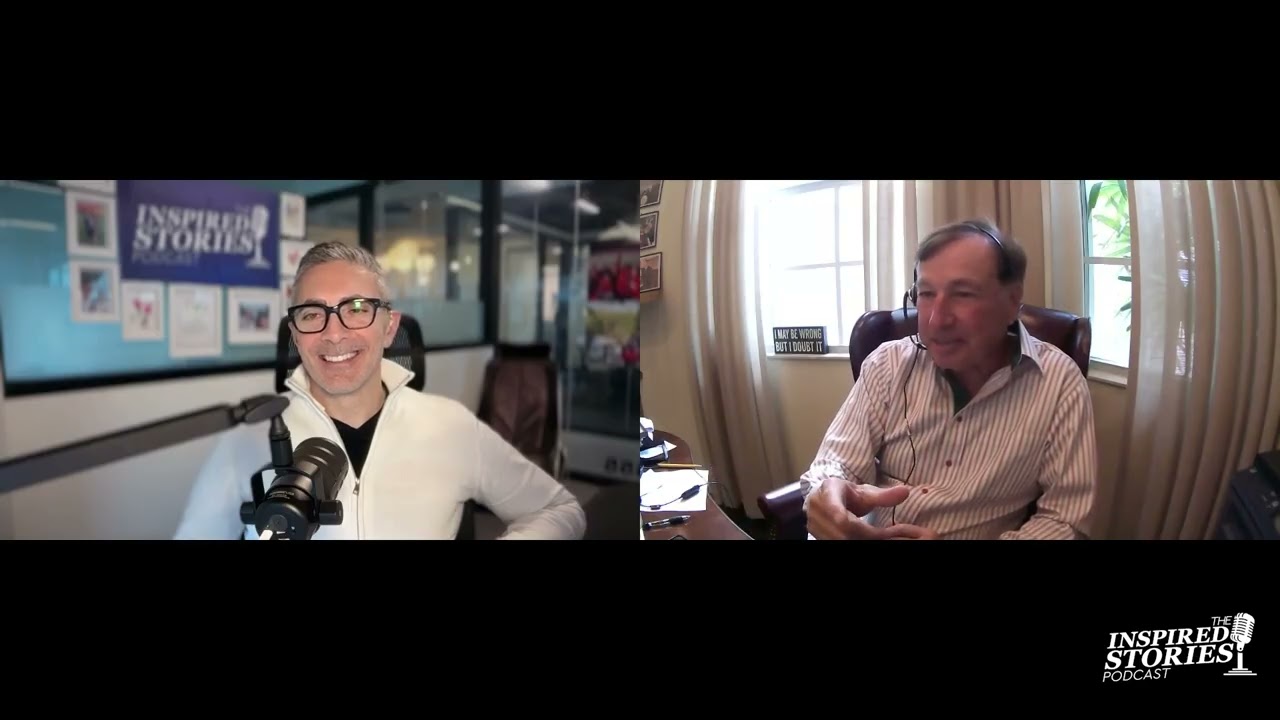
Welcome to another edition of the inspired stories podcast where leaders share their experiences so we can learn from their successes and be inspired by how they've overcome adversity. As you listen today, let one idea shape what you do next. My name is Anthony Cotis-Bode and today's guest raised over $20 million in scholarships for children in need, built a smart home for a catastrophically wounded veteran and received the title of commendatore
from the president of Italy. None of that was part of the plan when he left the Marine Corps as a sergeant and went to work at Price Waterhouse Coopers as a young CPA. He took a leap that most people in his position would never have considered. And what happened next took 50 years to fully unfold. And there were moments along the way that would have stopped most people cold. Meet Frank Fusaro, co-founder and president of the Forum Group.
a veteran-owned staffing firm he launched in New York City in 1974. The firm now spans 10 practice areas, employs over 100 recruiters, and has placed talent across accounting, legal, IT, healthcare, and beyond for over half a century. Frank has earned three awards from the New York State Society of CPAs, including the Lifetime Achievement Award. His story is proof that the discipline you build in one chapter of life
has a way of funding every other chapter that follows. But before we get into that good stuff, today's episode is brought to you by my company, Ad Back Benefits Agency. I said, if you run a business, you are likely stuck in the cycle of rising insurance premiums. You're paying more, but your team is getting less. And many people can't afford coverage at all. We do things differently. We provide your staffing employees with unlimited access to doctors, therapists, and prescriptions that's always free for them to use.
Frank Fusaro (01:37)
It's great. Thank
Anthony Codispoti (01:54)
It's even great for temporary and high turnover roles. But here's where you really need to pay attention. Unlike every other employee benefit out there, our program puts more money into your company's bank account.
As an example, we recently helped a client increase net profits by $900 per employee per year. Gains like that can change how a business is valued. All right, back to our guest today, the president of the forum group, Frank Fusaro. Thanks for making the time to share your story today.
Frank Fusaro (02:23)
it's a pleasure thanks for having me Anthony
Anthony Codispoti (02:26)
So I want to go back real early on. The year that you were born, your father passed away. Tell us about that.
Frank Fusaro (02:36)
Well, it's not as sad as you might think in the sense that I think if you lose a parent when you're 10 years old, 12 years old, 15 years old, it's a lot worse. My dad passed when I was about four months old. ⁓ We moved in with my grandmother in a very traditional situation. It was a multi-family building. I had three uncles in the building, so I never wanted for parental ⁓ guidance.
But if anyone shaped my life, who was my hero, it was my mother, who raised us, basically, I have a certificate here from Home Relief. This is dated January 11, 1949. This is a grant to my brother and I of $21 each. Actually, I got a penny more because I was younger, but I always said I was worth more.
and she got about $30, was total about $75 a month. But I don't remember missing anything or wanting anything when I was eight or nine years old, my mother remarried, very, was a dock boss on Pier 11 in Brooklyn, you know, one of the neighborhood guys, and the most ethically human being ever met. So he was also a tremendous influence on my life and...
You know, I've been blessed so many times. My only wish in life now is I could start all over.
Anthony Codispoti (04:04)
and do it all over again.
Frank Fusaro (04:05)
Absolutely. It's been it's been a joy. You know, it's unbelievable. I went to a Jesuit high school in Brooklyn, four trains and a 15 minute walk through Crown Heights, which is tough for a thing. It's a tough neighborhood. My brother was a senior when I was a freshman. He was class valedictorian, editor yearbook, captain of the baseball team and student council president. Here I come along.
and ⁓ I graduate at the bottom of my class. And all I got for four years, and I love my brother dearly, was your lose brother. As a matter of fact, years later, I'll tell you a very quick story, years later, ⁓ Tom Tizio is a good dear friend of mine. He was the vice chairman of AIG, and he worked directly for Hank Greenberg, who was my client and I know him pretty well. And he asked me to join the board of the ⁓ St. Vincent Services.
which was formerly St. Vincent's Home for Boys in my old neighborhood in Red Hook, Brooklyn, where my mom threatened to send me every day of my life. So, we're at first board meeting and the chairman of the board comes up to me at the end of the meeting after he introduced me, he says, Fusaro, Fusaro, Lou Fusaro, Brooklyn, crap. said, yeah, that was my brother. He said, you must have been a D student. I said, I was, but how did you know? He says, well, obviously, A, B and C students wind up working for D students, so you did well.
Anthony Codispoti (05:32)
Ha
Frank Fusaro (05:34)
So that was, I tell that story a lot when I give my speeches around the country.
Anthony Codispoti (05:39)
And that was going to be my question. You know, I have a lot of guests on this show who were top of their class, went to elite universities, and I've got a number of folks who really struggled in school. ⁓ You know, it just wasn't for them. Maybe there were some undiagnosed ADHD, which didn't really exist at the time, learning disability. just what was your situation and why do you think that you rose to the level that you have?
Frank Fusaro (05:54)
nothing like that it was
Well, listen, the reason I did Pooley in school, no ADD or whatever, I was I took four trains to high school. And if you're a minute late, you got detention. And I was I was taking four years of Latin, French theology, et cetera, et cetera. And I had basically very little interest in it. And it was a great school, but not for me. So that's what led to the next chapter of my life.
Anthony Codispoti (06:31)
Before we get to that next chapter, tell me a little bit more about your mother's personality and what you were able to learn from her growing up.
Frank Fusaro (06:40)
Now, thinking back over the years, you know, she was a rock. She always had a smile on her face. She was even tempered and even keeled. And ⁓ she was just an inspiration. you know, whatever. When you lose a parent that young, it doesn't affect you as much, you know, because this is what I had. This is where I was. And I always embraced the situation. And I had, as they say, I three uncles and three families.
cousins in the building and so on. So that was my life. you know, she made sure that we had everything we needed and we wanted for nothing. We had nothing, but we wanted for nothing. So that was set the tone for my, you know, my
Anthony Codispoti (07:27)
You had the most important thing. You had an abundance of family around you.
Frank Fusaro (07:30)
love,
love, guidance. so I had an uncle who was a butcher. If we had meat, he would drop off some meat a couple of days a week. Otherwise it was pasta and, know, pasta by Joel. And, we had the fig tree in the back and my grandmother who didn't speak English. So but Italians are funny. Second generation Italians don't speak English because first generation speaks to their parents in Italian, but they were so hard bent to assimilate.
become Americans. They wanted their children to become American. They wanted their children to speak English. And you know, I wouldn't trade that for the world.
Anthony Codispoti (08:08)
can relate to many parts of your story that I'm praying. But let's go back. So you were at PricewaterhouseCoopers. You served in the Marine Corps. And then in 1974, you co-founded the Forum Group. Kind of quickly walk me through how those pieces fit together.
Frank Fusaro (08:24)
Well, it started, I graduated high school ⁓ again at the bottom of my class at just turning 17 and I joined the Marine Corps and that was a real turning point in my life. ⁓ And when I, excuse me. Well, the Marine Corps has a way of giving you confidence and that's what I lacked. You you go through school and you be at the bottom of the class struggling, just getting by and so on and so forth. And you have a bright shining light ahead of you, my brother.
Anthony Codispoti (08:37)
Why?
Why was that a big turning point for you, Frank?
Frank Fusaro (08:54)
Boy, again, I love dearly. You lack confidence and what the Marine Corps did more than anything, and I had a very ordinary service. I joined at the beginning of the year in 1964, first combat troops in Vietnam. I had a very ordinary term with the Marine Corps. I never went to Vietnam. Most of the guys I went to the air when I was a crew chief in the helicopter squadron and most of my my
My original ⁓ platoon at Paris Island, they all went. Some came back, some didn't, but nobody came back the way they... So, ⁓ I think of them a lot.
Forgive me. ⁓ So that shaped my life. when I went to St. John's and I did pretty well at St. John's and ⁓ knocked off the CPA exam one, two, three, went to Pricewaterhouse. And while at Pricewaterhouse, ⁓ I was I was actually ⁓ hired by a client of mine. It was a very difficult audit we were doing. was very at an adverse at very adversarial position with the company, with my client.
Anthony Codispoti (09:45)
No, it's okay.
Frank Fusaro (10:13)
because we were engaged by their parent company and the president of my client had sold his company to, it was the old Seaberg jukebox people in Chicago, they were the Pricewaterhouse client who engaged us to work for a company, Inland Dynatronics. So it was a very adversarial situation because his primary compensation of president in selling the company was growing the company. So every dollar was very, very material.
So at any rate, you know, after a year or so in the audit, they asked me to join them. And I was supposed to help be the assistant controller, but also help the national sales manager. Six months later, the national sales manager leaves and I become national sales manager. And I love the job. And I, you know, we were selling car radios and stereos and so on. And ⁓ I opened up the military.
So we were selling our equipment all over the United States and all over the world actually, because the ship stores are floating. So when I sold the army ⁓ and then the Navy and the Marine Corps, we sold the Air Force. I opened up a couple other major companies and started a program where we, found a guy that could replicate the ⁓ nose pieces of a radio and we could sell
radios to new car dealers and they could install them and they would you know be the same as a an original equipment thing so that was very successful so anyway i made a lot of money so but traveling 80 percent of the time problem with my my wife my dear wife were married 53 years carol and ⁓ you know ⁓ the travel was getting to me but i could never replicate
the job because I didn't have the experience to warrant that job. At any rate, to make a long story short, I had been with Pricewaterhouse with a peer of mine, Steve Goldstein, and he and another fellow, Mark Gilbert, wanted to start a business and they called me and they asked my advice and so on. And then eventually they asked me to join them. So the three of started the firm and not having any experience in the staffing firm, I said, I'll take responsibility for the public accounting profession.
and I immediately joined the New York State Society of CPAs, got very active with them, ⁓ got very active, went out and met with every client face to face. ⁓ as it turns out, luck has a lot to do with it because there's no such thing as a self-made man. My clients were wonderful. And after about a year, I formed a group of
of human resource professionals at all of the big eight firms in those days and two of the national firms, Seidman and Grant Thornton. So we had 10 firms and I said, listen, you guys, you you fight for ⁓ entry level students as your employees and your companies fight for clients. But other than that, you have all common problems. So why don't we get together? And I put together this group and there were 11 of us, the top guys in the HR world.
public accounting. And from that, I developed the most incredible relationships with the firms. In those days, turnover was a major problem with them. And I started, it says, okay, guys, give me all your entry level hirings, male, female, graduate, undergraduate, and reported back to them, this is the total number and so on. And this is your individual number. And every year I said,
again, give me your entry level class and who left from the prior years. And after about 12, 15 years, I had, I could tell them how many people they lose to the, to the head. It was so consistent. And the biggest problem was turnover. So I said, okay, if there's turnover is the problem, let's, let's, let's look at that. And I started a study at the state society of turnover and public accounting did ⁓ a survey.
got the results of the survey and basically what it said was the students, the employees, the young employees were relatively happy with a lot of the issues, but the benefit issue was big with them and compensation issue was bigger than them because any two year person could go to work at JPMorgan Chase and get a big raise. I said, but that's not in their best interest. And the problem with public accounting is they take a 22, 23 year old person
and said that the goal is partnership. But who's going to make partner, know, two out of a hundred. So that's not an incentive. said, but the real incentive should be we make manager because public accounting gives you great experience and leave at the manager level. And if you believe that you have to find a way to support it. And we found a way to support it, both in terms of the job you got when you left it as a two year person.
Versus the job you got when as a leaving as a six or seven year person. And that thing became the genesis of a program I did. I was invited, I call it the chicken and the hound and the chicken coop. I would go in and I would have a hundred first and second year people at Pricewaterhouse and Deloitte and you know, all the firms who love this thing. And I would tell them, look, and I told it to senior.
partners in the firm. I said, you give me a hundred kids, there are 30 on the left that you can't keep no matter what. And there are 30 on the right that you can't lose. So I talked to the 60 in the middle, or 20 on 20. I talked to the ones in the middle, the ones that are out looking for a job and are thinking about staying. And it was amazing. And then they used to send me people who quit and went in and quit and I would turn them around. And they love that. And all their partners, you know,
work with us and they would recommend us to their clients and that was a great start for the firm.
Anthony Codispoti (16:32)
So I want to recap, because we just covered a ton of ground there. First of all, before we get too far, I want to thank you for your service. And I appreciate you talking about some of your friends that didn't come back, didn't come back the same way. know that it's clear that they're still with you in your heart. Also want to give credit to the Marines for building up your confidence, right? And I think probably put you in a good position to succeed at sales when those opportunities eventually opened up.
Frank Fusaro (16:36)
I know.
yeah.
Anthony Codispoti (17:03)
Okay, so, you you were approached by some friends, they want to start a business, you didn't have any experience in the staffing business that they wanted to start here. So you're like, hey, I know the public accounting side of things. And you came up with this idea of let me go out to these competing firms, talk to all their HR folks, and form kind of a networking support group. Is that like a good way to describe it? Okay. ⁓
Frank Fusaro (17:26)
Exactly.
Anthony Codispoti (17:31)
And a big part of what you were able to do is to help them see, yes, you guys compete for these resources and those resources, but there's a lot that we can share and learn together. And big thing that you wanted to do was to try to reduce the turnover that was taking place, as well as support all of these young new accountants that are coming into the field, right? It helped them sort of find the right path forward.
Frank Fusaro (17:45)
Thank
Anthony Codispoti (18:00)
How have I done here? What did I miss?
Frank Fusaro (18:03)
No, that's a very good summation. ⁓ The thing was ⁓ the funny part about it is the day after I did this, I get 20 resumes from from the audience and they were very valuable candidates because all the firms wanted two and three year people out of public accounting. And I would get in touch. I would counsel them and I'd tell them again, I think the best bet is to, you know, stay six, seven years experience wise and so on and so forth. But if you can't
You can't, you know, you just can't do it because it's very demanding. Let's see what we can do. And that was so we had the candidates and the client, my, my CPA firms, said, I'm not going to charge you for these, for these, ⁓ you know, for the, ⁓ for the presentations, nor for turning a kid around. I would turn one out of three kids that quit and had it and accepted an offer.
I would turn them around and by explaining again, you know, this and this and this, and I had people years later, partners in the CPA firms, Ken, frankly, your lecture, you know, it changed my, my VISTA, my, my, my goal became get that six or seven years. And by the time I did that, the work got better, the responsibility got better. But in the meantime, I would meet all the partners in the CPA firms and they would send their clients to me. And when I was recommended by the partner on the job.
I was no longer just a recruiter, I was a consultant to them. And that's how we developed so many clients and that was a a real benefit. the bottom line is you never know where you're going because I didn't know what the hell I was doing when I did this. OK, I just said if I'm going to. Absolutely not. You know, life's not necessarily that I think I have good forward thinking, but I didn't know what I was doing. OK.
Anthony Codispoti (19:47)
This wasn't like a well thought out strategy. I'm going to do X and Y is going to happen for me.
Frank Fusaro (19:58)
And but you throw yourself in. I said, I knew if we're going to who needed us, who were brand new staffing firm, you know, when and these clients were dealing with all the other firms and some of the Robert Halfs of the world and so on and so forth. So I said, the only way that I got to meet these people and I got to tell them, but they said they saw a young kid who was a CPA and and we produced, you know, listen, we worked 10, 11, 12 hours a day every day of the week.
in those first two or three years.
Anthony Codispoti (20:30)
I wonder what listeners could take away from your experience in this model. A lot of business development folks, a of folks in sales. What do you think is sort of the repeatable part of this strategy?
Frank Fusaro (20:44)
I think people do business with people they like. Okay. They all have choices. If you're on the insurance business, thousand insurance agencies out there, you know, but if you get in front of them and you like them and you could bring value to what they're doing, not only in my case, it was not only, you know, the CPA firms, you know, placing people with them and giving them value that way because they needed people desperately, but also have helping them to retain their staff.
And in doing so, I got a boatload of candidates. You know, and I told them, I said, that's the reason I said, if I, if I travel for you, I'm charged you. When I traveled all over the United States, I had to curtail that because it was taking me out of the office too much, but it was a great message for them. So, you know, we got very lucky with that. So the bottom line was you got to try, you got to go out there, you got to knock on doors. You have to be persistent. You're going to sell, you got to be persistent.
you have to reflect on what value you could give your client and what makes you different. I was a CPA. Most of my competitors weren't CPAs. And then once I started doing the lecture series at every, we have ⁓ state society conferences and I joined the board. asked me to join the, what at one point they asked me to be president. said, well, I can't be proud. I didn't even practice accounting anymore. I can't be president of a 40,000
person, you know, society. and again, joining these organizations, okay, nobody does anything in these organizations. So all you have to do is stick your hand up and say, I'll do and you become a star. So that's another thing I advise young people, whatever their business, businesses, stop going home and watching Netflix, okay? Find a, find a charity, find a nonprofit organization.
Anthony Codispoti (22:27)
⁓ interesting.
Frank Fusaro (22:39)
where you can, where you see that these are potential clients. These are people I want to get to know. The most important clients I ever had, I found from the charitable work I did, whether it Catholic Charities Brooklyn Queens or the Columbus Foundation or the Thalassemia, Coolies and Amia Foundation. That's where I met my most ⁓ critical clients.
Anthony Codispoti (23:03)
Let's talk a little bit about the philanthropic work that you've done. We mentioned in the intro, you've raised over $20 million through the Columbus Citizens Foundation Adopt-A-Scholar program. It's a staggering number. How did that initiative start?
Frank Fusaro (23:18)
Well, again, it starts on a shoestring. OK, I was I was on the board of the Columbus Foundation when we had about 400 insane Italian American people, very proud of their heritage, very family oriented. And as I joined, I noticed every year or two, they'd send out a letter about scholarship giving and so on and so forth. And they, you know, somebody send a check for 200, 500 and they collect a few thousand dollars and parcel a, you know.
scholarship effort, you know, and give three or four scholarships. Okay. I said, this is, know, so I'm thinking about this and I said, you need a program. Okay. You need something that you can sit in front of a person as I did with the CPA firms. So I started this, I envisioned this adopt a scholar program where we could, where we'd ask a person to donate either a four year scholarship or a perpetual scholarship, a four year scholarship was $25,000.
that they could pay over four years, but we'd rather have the money up front. And a perpetual scholarship was $100,000. And again, I didn't know this would work, but I went to the president at the time and I said, you know, I want to do this. It took me two or three times to convince him. And all I needed was to do a brochure. So I did a brochure and I went back to the board. I was on the board at that time. think it was treasurer of the foundation.
And asked them for their input on my thing. They said, I had a young woman dressed in a cap and gown on the front and the only comment I got, she doesn't look Italian. I put a mustache on and she'll look Italian. At any rate, the first day I do this, I go to Mario Gabelli and Mario says, I'm a big supporter of Ford and Prep. I said the high schools are important. And he says, I'll do $300,000.
Then I call up Larry Oriana, who I didn't know. I knew Mario. These are both members. And Larry said, what did Mario do? I went to college together. said, Mario did 300. And he says, okay, I can hear him. I can hear the wheels turning. Okay, we'll do 300. He's, I'll do 300. I had 600. Mario calls me up later in the day. And I hardly knew him because I was still a kid. He said, I want to do 20 scholarships at Ford and Prep.
I said, Matt, that's $400,000. Okay, we'll do 400. So I said, well, screw it. I call Larry up and Larry, I'm sorry to do this to you, but you asked me and he did 400. He did 400. And I put in 100, we had $900,000 on day one. And then I would go with my little brochure. We sent a brochure to 400 members. And every time I saw a member, would say, well, we got the...
You could you could name the scholarship the name of a loved one the Italian is very big in that you know honoring their parents and grandparents You could pick the school you could pick the major you just can't pick the student because I know they'd be sending their nephews So know so we had a separate committee to do the vetting for the students and so I publicized that and it just took off I put a big ⁓ plaque up in the in the in the foundation right off the bar with the names
Okay, you're both the annual and the perpetual. And I would tell the perpetual, a hundred thousand lot of money. said, but you're in the 50 % tax bracket. It's going to force you $50,000. And then you're going to give me appreciated stock. Okay, so the capital gains, you know, that stock might be worth, you know, a thousand dollars, but if you sell it, you got to pick up two, $300 of capital gains.
Anthony Codispoti (26:58)
Wait, sorry,
sorry, Frank, explain what you're talking about with the appreciated stock.
Frank Fusaro (27:02)
Okay, if you have a shares of stock that you purchased for $500 and now they're worth $1,000, if you sell it, you have to pick up $500 in capital gains. Your basis is, okay, and then the $100, the 100 is 20%. So that's only worth $900 to you. But if you give it away, it's $1,000. You get $1,000 deduction.
Anthony Codispoti (27:13)
Yeah, your basis, right? Yeah, the difference of your basis.
Frank Fusaro (27:29)
So if you have a stock that's worth 50,000, that you bought at 50,000, now it's 100,000, because you guys were fairly well off, then it's serious money. So that, you give appreciated securities, I've used that, so it took the bite out of it. And once I start to the bull in them, put their name on a plaque, then it just rolled from there. And I got it up to 10, 12, $12 million.
And we brought in a terrific fellow, a lifelong friend of mine, Dave Marini, as executive director. he, his background was, was sales. It was not sales. It was giving philanthropy. And, ⁓ he was with us about 10 years and did about a million a year. So was by the time we got done, it was kind of in the $22 million bracket. And the other thing I did was we had grand marsh, the Columbus state parade. ran the Columbus state parade for 10 years. So another thing, I didn't know what the hell I was doing, but
Anthony Codispoti (28:18)
That's it.
in New York City.
Frank Fusaro (28:26)
you we got Emmy Awards every year we ran it, I ran it, Emmy nominations. Never won because Macy's Thanksgiving, know, they give out, yeah, no, it's local stuff, you know. And, you know, but Macy's would win every year. I mean, they had probably a 20 million, 30 million dollar budget. I'd never die.
Anthony Codispoti (28:36)
I didn't realize they gave out Emmys for parades.
okay, got it.
Frank Fusaro (28:54)
I had a 75 year old woman helping me, one of the employees, but we did some, went to the Broadway theaters. had Columbus days always on a Monday, which is a dark day. And I got three or four Broadway shows every year. Okay. To come in and do a number during the parade because the parade was floats and high school bands and so on and so forth.
Anthony Codispoti (29:15)
It's fun.
Frank Fusaro (29:20)
But the one of the things that the other thing I did was important. I'll just take a second. You're going to have to this down. I apologize. OK. But we had always we had Frank Sinatra's Grand Marshal Sophia Loren, you know, just every year. But all we got from them was a bill from the Waldorf. OK. I said, this is nuts. So the first person I went to was
Anthony Codispoti (29:28)
later on.
Frank Fusaro (29:50)
Ken Langone and I said, Ken, want you to be, you know, I'll first of all, I you to be a member and I want you to, you know, be Grand Marshal of the parade. He was very, very proud of his attack. He was absolutely frank. He said, what do you want? It's a million dollars. He said, okay. Oh, that's pretty, pretty good start. And then we always had honorees and I was, I had been a past honoree, but never asked the honorees for money. said, okay.
If you want to be grand marshal, that's a million bucks. And if you want to be at honoree, it's you got to rate give or get. You can raise it, raise it, whatever you rate, whether you raise it, whether you write a check. That was two hundred fifty thousand. And for eleven years in a row, twelve years in a row, I had Mario Gabelli, Bob Lopenta, both very serious senior guys, very philanthropic. And we raised.
In some years, I had one honoree that raised $800,000 on top of, you know, so between a million, a million. So we started the weekend, Columbus weekend with a million and a half to $2 million on day one. Excuse me. That went to the scholarship program. When I was president, we got up to 600 kids in the scholarship program. 600. OK.
Anthony Codispoti (30:55)
Where do those funds go then ultimately? Where do those funds go that you raise? Got it. Okay, so it fed into one fed into the other.
That's tremendous. Now tell us
about the tunnel to towers board. This is another area where you've raised a lot of money for a cause near and dear to your heart.
Frank Fusaro (31:17)
Well, what was happening is we were coming up on our 50th anniversary and I told my son Chris, then was transferring, becoming CEO of the company and I was phasing out after 50 some odd years. fortunately, he's better than me. So it worked out very well. OK, so I had no problem ⁓ for a couple of years. bring him in every decision that was made. He was involved in.
And the last two years before I retired, if we disagree, which was rare, his, you know, his way won. I you're going to run the company. And I told him, you know, you're going to, they're going to see you. Don't think you're the prince because you have to win over your employees and you have to show them that you've got what it takes. And I'll tell you, he's in the office every day. And now the only people in our office today are our administrative people. Everybody's all over the United States.
working from home. Yeah, all the recruiters and they're salespeople so you can't force them to come in because they can go someplace else. Everybody wants them. They all get, you know, try to get recruited by other firms. So at any rate, ⁓ I said, I said to Chris, you know something, you know, I don't want to have a black tie or a big party or something like I want to do good. Okay. And do good. And ⁓
Anthony Codispoti (32:17)
All your recruiters, all yourselves people.
Frank Fusaro (32:43)
Turns out that Sal Casano, who was the deputy chief of the New York Fire Department on 9-11, okay, got pretty banged up. you know, he went down to the towers with five others. Chief Gansi was his boss, and all five perished. Here we go again, Sal. ⁓
set up a fire at Gansi's command, he set up a command post outside trying to direct everything, which is chaos. And when the South Tower came down, he got hit. He wound up in the hospital ⁓ getting last rites from the Cardinal. And he said he got up, dressed me, went back to the towers and didn't get home till the night of September 12th. He had three broken ribs.
and they refused to leave. We were kids together in the old neighborhood. So he was one of the founders with Frank Siller, an amazing individual. And, you know, I thought about that and I thought about, you know, that was guys back in Vietnam. And, you know, sometimes I felt like, you know, why didn't I go kind of thing? So I met with Frank and I said with Chris and said, we want to do something. I want to raise some money.
I said, maybe I could raise $300,000 over two, three years. He said, fine, you know, go out and do it. And I started, made a list of all my guys that, ⁓ at, that I play golf with all the people with the Columbus club and, know, and everybody else I knew and started calling them one after the other. ⁓ I also called, ⁓ one of my contacts, a terrific guy at American express. And at the end of the day, ⁓ over this, we've done this for the third year.
We just hit the five point four million dollar mark on that and I got American Express put a couple of million in and ⁓
Anthony Codispoti (34:43)
Wow.
How'd
you get Amex to pony up so much cash?
Frank Fusaro (34:51)
Dear friend of mine is a CEO. And, that, you know, he's not the type of guy that would, you know, that would do that if it wasn't worthwhile. He bucked it to his, to their philanthropic committee. But Tunnel to Towers makes such a compelling argument and the work that they're doing. Well, they have, it started with Frank, little nothing in Staten Island, okay? It's 9-11.
Anthony Codispoti (35:09)
And where does the money go? Explain that part to us, Frank.
Frank Fusaro (35:20)
Frank's brother died in the towers. this family got together. This guy, ⁓ he heard about it, he was on his way to play golf that morning and he heard about it. He went back to his firehouse. They had all responded at that point. He took 60 pounds of equipment and drove back and got to the battery tunnel, which the Manhattan side is about maybe half a mile from the towers and it was closed.
He strapped his equipment on.
ran through the towers into the the North Tower, I believe, and never came out. So is they so the family. So they started this little nothing and they got to Mayor Giuliani said, we want to do something symbolic. And they started a run through the battery tunnel. And they actually today every year ⁓ in September, they closed the battery tunnel on a Sunday.
And last year they had 40,000 runners.
Anthony Codispoti (36:26)
Wow.
Frank Fusaro (36:28)
It's chaos. It's complete chaos. All of lower Manhattan closes. Imagine this. When you come out of that tunnel, there's 300 and I think 325 firefighters with pictures of everyone that died.
And he feeds every one of them. When you come out of the tunnel and you finish the race, OK, it's a race or a walk, whatever it is. He's got food trucks and food stands set up and a concert. It's just it's amazing. So in toward the beginning, Hurricane Sandy came to help some people from Staten Island. He went to there was a Staten Island, the first double amputee, a quadruple amputee that survived the war was in Walter Reed.
He went to visit Staten Island. I went to visit. I had no arms, no legs. And Frank looked at me, he says, he where do you live? It's have an apartment. We're going to build your home. So he was the first one. I had a smart home. Everything you got, it's just unbelievable. Well, to fast forward, they've done what started with catastrophic injured veterans. Okay.
Anthony Codispoti (37:28)
And it's a smart home. there's, technology in there that
Frank Fusaro (37:42)
And from there, he looked at two New York City patrolmen that were sitting in a car that got murdered, you know, by a radical. And, you he went to them and he said, OK, we've got to help you. We're going to we're going to give you a home, not a small home, you know, to the spouses, but a home and then another one and then another one. And either he would pay off the mortgage if they had a home or build them a home. Well, they've gotten
over 2,000 of these either homes or paid off the mortgage. And he's made a pledge to pay off the mortgage or build a house for every first responder that dies in the line of duty, whether a cop, firefighter, EMS, plus the catastrophic injured veterans. They're called, those are the Gold Star people in all of the United States.
Anthony Codispoti (38:35)
and all of New York City.
Frank Fusaro (38:40)
They've done over 2000 of these and thankfully, you know, there haven't been too many catastrophic injured, you know, veterans. Okay, so he's got these programs running and he said, you know, veteran homelessness is a plague. They estimated over 50,000 vets on the streets. And I walked past them and you know, I was walking river to river and side to side Manhattan, they became invisible.
People would see them, you know, they'd be there in the winter time with piled with, you know, with blankets or whatever. They'd have a shopping cart with their worldly possessions next to them. And nobody gave him a second look. It was like they they melded into the woodwork. He said, this can't be. He said, we're going to take them off the off the streets. And as of this year, he's taken 17,500 vets off the streets.
and 8,500 children that were living on the streets with those vets. He's built, someone years ago gave him a big piece of property in the Orlando Tampa area. He built a do good village. I don't know if you've ever seen the ads, but he built a do good village. It'll be a hundred homes. He's got about 40 homes built and at 30, just open to 30,000 square foot, a reception center.
and swimming pools, basketball courts, know, reading rooms and so on. All of the vets he's taken off the street, he's got a social worker, an employee that's in touch with that person. You just can't take him off the street and put him into a home, you know, because they need psychiatric help. He goes to the VA on their behalf and gets the VA to contribute and so on. So, ⁓
Anthony Codispoti (40:13)
How have I never heard of this?
Frank,
how do we find out more information? People want to participate, want to learn more, want to donate.
Frank Fusaro (40:42)
just just do
the t2t.org t2t.org. Tunnel to Towers Foundation. So he started this $11 a month. He's got about 80,000 people paying at least 11, sometimes pay 20, some 25. This year, Tunnel to Towers will do 500. They list 2025, the gross revenue is $500 million and 93 %
of the money that they raise goes directly to the programs. Now you got the ⁓ veteran homeless program, the catastrophic injured, first responders. So this is the 25th anniversary of 9-11 and the 25th anniversary naturally of the foundation. So he brought 5,300 of the families of either catastrophic injured veterans or
This is just last week and we went up to Orlando, flew him into Orlando, took over Universal Studios at the theme park for a day. Okay. It was open to the public up until 7 PM. And then from 7 to 10, it was exclusively for Tunnel to Towers with all the children. I never saw somebody wounded veterans. It was just unbelievable. He has a concert the next day at a big picnic area, feeds their 5,300 people.
And then he announces every child who goes to college, he will do a full four year scholarship for every one of these kids. I'm with, and take this guy's name, I'm with Ivan Castro, C-A-S-T-R-O. He's the guy, he was the first one that we built the ⁓ smart home for. Now we have two others. I have a ⁓ veteran in New Mexico.
That's got six kids and I'm waiting for another one. So we'll do three homes and we'll do three. That's about two and a half million. And the other three million right now going to veteran homeless. He's building. He's got these. He's got two large hotels that he's completely gutted and refurbished. It's just amazing that they're gorgeous and the smart homes are gorgeous. You got to see in this.
Anthony Codispoti (43:08)
And Frank, all the funding comes from people donating money.
Frank Fusaro (43:12)
Absolutely. He's on, he's, he's on, they do, you know, what do you call it? They do ads all over the place. Anyway, Ivan Castro, he's the first one they gave me. He was a, as a private in the army, made first sergeant, went to office at Canada school, got his degree. He's on a rooftop in, ⁓ in ⁓ Yusufa, in Afghanistan. And he, ⁓
He's on a rooftop, which he's a captain at this point. He shouldn't be on a rooftop, but he was a sniper. He was a green beret. This guy was all everything. He gets hit with a mortar shell. Two of his men die. He's next to death. He wakes up in the hospital. It's like 20 days later, he's in a coma and he's got shrapnel on his body from head to toe, ⁓ broken ribs. It's amazing. You could see on my Facebook page.
an interview between he and I and they he's totally blind. OK, we'll never see again. One of his one of his eyes got blown out. The other the ocular nerve, whatever, was cut off. So they tell him he'll never see again. So that the army comes to OK, you know, you're fully disabled, to be a disabled, you know, veteran that at that at that. He says, he's I want to continue to serve. Yes, you can't. We don't have blind officers in the in the army.
But since he was special forces and so on and so forth, he bucked his request up to an admiral who runs all the special ops for the Marine Corps and the Army, Navy and so on and so forth. And this guy came to the hospital and said, you're not going to discharge you. You want to serve, we'll serve. He served 14 years as the only blind officer in the Army, made major and retired.
While he's in the hospital and he's fighting them to stay in the army, he hears about the Marine Corps Foundation Marathon. He runs the marathon blind. He's since run about 80 marathons, a couple of double marathons. He climbed Mount Kilimanjaro. He trekked across from Canada to Mexico on the Pacific Coast Trail.
blind. He ran with the Bulls in Pamplona. He went to the South Pole with Prince Harry in the Invicta Games. He's spoken all... and he ran... I don't have the book here. I should have brought it in. He wrote a book, Fighting Blind. Amazing book. This guy... and I told him that you gave... and you once you get attached to these, you can't separate yourself from them. So between...
Anthony Codispoti (45:51)
Wow, Ivan Castro this
Frank Fusaro (46:02)
So we're doing this and I'm getting $500, $1,000, $5,000 from friends and so on. And American Express stepped up into two million. And this past year I got two people, one wannabe anonymous gave me a million dollars out of nowhere. Okay. That person will have the person in New Mexico and the other person. And by the way, I sat down with him. He's an Italian.
And you had to see I went to Bayonne, New Jersey to meet his mother and the family and I had a of cookies with me and he says, I'm going to do a million dollars. And he said, but I also wanted something for education. That's Columbus. So we got two hundred thousand dollars from the Columbus Club. I just don't believe I went to meet him for the first time because I didn't really know him. And he gives me an address. I mean, I'm in front of the Bayonne Country Club. OK, a beautiful golf course, private country club.
And I call him, say, I'm in front of this country club, but you must have given me the wrong address. In the book was the wrong address. He's no, he says, we built that. We own that. He's not come get you. I'm five minutes away. He says, so the guy, amazing, amazing individual.
Anthony Codispoti (47:14)
Frank, what
I'm taking away from this is that in spite of all the nonsense and the noise and the mess that goes on in the world, there are a lot of good people doing really good work and I count you among them. So thank you for all of that.
Frank Fusaro (47:31)
This
country is the most philanthropic country. We have Navy ships, hospital ships, all over the third world countries. People don't understand that. People don't see that. Americans are the most philanthropic people on the face of the earth. And all you gotta do is ask.
Anthony Codispoti (47:52)
Love it. I want to give some time to talk more about the forum group today. Can you tell me who do you guys work with? What problems are you solving for them? What makes a client a good fit for you guys?
Frank Fusaro (48:05)
Well, listen, it starts with hiring good people and keeping them. Our most senior employees been with 47 years. We have probably six or seven, eight people that have been with me 20, 25, 30 years. Okay, a bunch of new people. And this is a business with a lot of turnover. A lot of people think they can sell, they come in and they can't sell and they wind up leaving and so on and so forth. So you have to have a, you have to be a good leader.
And what the Marine Corps taught me is you never ask a person to do something that you wouldn't do or you haven't done. And you have to be the first one in the office and the last one out. And you have to take care of them. If you treat people well, they'll stay. Okay? Now a couple leave to maybe two or three left to start their own firm. We understand that. Okay? A lot went through, I mean, you look at a rob at half, they go through people like, you know, unbelievable.
But, you know.
Anthony Codispoti (49:03)
What does it look
like for you to take care of your people? What are you guys doing differently that other staffing firms miss?
Frank Fusaro (49:09)
Well, when I can't say we're over, we're paying them fairly. Number one, we're giving them decent working conditions while now they're mostly working from home. But they know they have an anchor with us. OK, we never I never took a dollar out of the business that I didn't need to live. OK, we have in addition to the permanent staff between temporaries and and payroll ease, where we companies come to us to.
to payroll their temporary employees that they bring on themselves, we probably have another 400 people out there that have to be paid every week. So you're also supporting them. In other words, when I was getting the job orders from my public accounting firms and their clients, I would dole them out to my people. ⁓
And you know, okay, here's a control of ship, but this company is a, you know, a tax manager at that company is this, this, this, and they appreciated that. So at the end of the year, if they produced X number of dollars, I could show them that, well, three or four of those placements came directly from your association with foreign, the reputation that we have. Okay. The way we treat people. And I insisted we had a guarantee on a person. And if it went over the guarantee period, okay.
reasonably, it wasn't a year or later. I write a check and if it was within the guarantee period, you write a check. You kind of make, you know, try and make lemonade as they say out of the lemons. Person didn't work out. What can I do for you? In public accounting, I would go bend over backwards for them in that regard and it always came back to me. Just like the public service always comes back to you. You know, I met a
Dear friend, and he's since passed, John Farrell, was the head of the human resource head for all of JP Morgan Chase. He was on the executive committee. He's one of top five people in JP Morgan Chase. We became dear friends. have Catholic charities. I sat next to him. We became friends and so on. I had the run of JP Morgan Chase for 10, 15 years. Okay. He would always say, take care of my boys.
Okay. Meaning me and a couple of other vendors that he had and we had a producer and we did produce room. Jamie Diamond came in and he wiped everybody out. Start all over again, you know. So, ⁓ it's been a, it's been a terrific run. And I, I sometimes I pinch myself as I, I can't believe I've been this fortunate, this lucky in life. It's just amazing, but you got to attack things. got to try and we failed at a lot of things. Okay.
And the other thing is that some people think that, you know, wow, look at me, I'm worth X number of dollars. I got a business. Hey pal, you better thank God because you were lucky. Okay. I worked hard, but I was fortunate. I was the right place at the right time. Okay. I had two partners. One got a divorce and he just lost it. And the other Steve Goldstein, good friend of mine, we're still good friends.
lost a son in a boating accident and he wanted to retire. That was 20 years ago. He had enough, you know, accumulated to retire. been hitting golf balls in Delray, Florida for the last 20 years. you know, but it was never the money. It was always, it was the, in my case, it wasn't the quest for success. It was a fear of failure. When you grow up like I grew up, grew up, you, you know, I still can't, I
I always say, I'll give it away, but I won't pee it away. In other words, we're going to, my wife thinks I'm crazy, okay? We're going to take a ⁓ river cruise in June with dear friends of ours. They're gonna fly, my wife flies business class, I fly coach. Which is the stupidest thing in the world, but I say to her, it's an eight hour trip, what do I gotta pay an extra to?
Anthony Codispoti (53:18)
Hahaha
Frank Fusaro (53:25)
But I give 10 times, 100 times that away to charities. But that's just me. I'm nuts, okay? People say, I said, look, what do I get? I get a reclining seat in first class, business class, big deal. I said, I'll sit in the back, leave me alone.
Anthony Codispoti (53:43)
I laughed so hard
there because I think there's something in the old school Italian mentality. I hear you tell those stories and I'm like, that's my mom, my dad, my grandma. Yeah.
Frank Fusaro (53:50)
Listen, I never, my mother never bought anything that wasn't on sale,
wasn't 30 % off. We'd go to, the pastries we had were always from the day old, the two day old cake store. Okay. All my clothes are bought, they were all off the piers. Okay. At a vegetable store across the street, that guy sold two apples a year.
But everybody in the neighborhood wore the same raincoat, the same hat, the same shirt. Whatever they stole from the peers was what people wore.
Anthony Codispoti (54:25)
Frank, what is the future of the forum group look like? Where's it going?
Frank Fusaro (54:29)
Well, my son is doing a great job with it. We now have offices in Connecticut, major office in Connecticut or New York, and ⁓ we have small offices in Portland and Boston, ⁓ New Jersey, and we're building it that way. We're finding good people and from other firms who are proven producers, and I'll go to them and I'll say, listen, ⁓ we'll put you in business.
I'm not asking for a dime of capital. You'll get an equity position on day one. Okay. We'll give you fair compensation for your production. We'll give you fair compensation override for the people that you hire. We'll encourage you to hire and we'll take care of everything and you'll be charged direct expenses. In other words, your payroll, your advertising, that's it. Your accounting, everything else.
will come from forum and we won't take a nickel and then, you know, we'll share the profits at the end. And that formula has got us some great people. Okay. Because they're people that, you know, they've got 10, 15, 20 years in the business. Now they've got mortgages and children and so on. So they're kind of in that trap. And we take them out of the trap and we, and we guarantee them their first year's comp.
Anthony Codispoti (55:51)
It's a generous offer.
Frank Fusaro (55:55)
And the first guy we did this, who runs our Connecticut office, Jason, the terrific guy, we did this, he's there six months and COVID hits. Yeah, there was COVID and we said, well, don't worry about the one year comp, we'll take care of you beyond that. We didn't have to, he was such a great producer. So that formula has worked pretty nicely and building the New York office and so on. So it's sweat equity.
You don't think anything. I mean, you got to commit. OK, you have to commit to being successful. I didn't realize this. I didn't realize anything. I didn't realize I could run a parade when they asked me to run the Columbus State Parade. I know what the hell I was doing, you know, but I knew we had strong members who had contacts. went to Charlie Gargano was running New York State Development. I went to Disney and they laughed in my face.
Do an ethnic parade, you're crazy. I went to Charlie. Charlie was negotiating the New Amsterdam Theater and the Disney store. And Disney was thinking about getting the hotel business in New York. He was the money guy in New York, New York State Development. He called them. They called me, what can we do for you, Frank? And for about 10 years, they would send three truckloads of, we had Cinderella and all the characters and this and that, a pain in the ass that was. But that's what got us the Emmy nominations, okay?
Anthony Codispoti (57:22)
That's
fun stuff.
Frank Fusaro (57:23)
I went
to I went to the Rockettes and they let they told me you're crazy. We'll never do anything like this. He says, you know, I said, well, you know, how much you know, why could I? I can't pay you. I told I don't have a budget. We should do crazy. And I call a fellow, John Tata was the one of the founders of Cablevision. Remember, I said, John, help me out because Cablevision owned Madison Square Garden, which shows Rockefeller Center, which owns the Rockettes.
Same woman calls me up an hour later says, Frank, what can we do for you? How can I help you? So we had the Rockettes. So I go back to NBC because they had the Rockettes when they did the tree lighting in Christmas. And the general manager of the New York operation, Frank, how much you paying them? I said, well, I'm paying them. I don't pay. They were paying them $50,000 a year to do the Christmas tree opening. We got them for nothing.
Anthony Codispoti (58:21)
You've got some good relationships with some good people, Frank.
Frank Fusaro (58:23)
Well, let's
see, see what it's just tapping into a network, just like we did for the tunnels and towers. And I'm just blown away by this organization.
Anthony Codispoti (58:33)
Yeah. Frank, I've just got one more question for you today. But before I ask it, I want to do three quick things for the audience. First of all, if you want to get in touch with Frank Fusaro, his email address is ffusaro at forumgrp.com. And we'll have a link to that in the show notes. Also, the Tunnels to Tower website that he mentioned before, T, the number two, t.org, t2t.org. That'll be in the show notes as well.
Frank Fusaro (58:55)
Take two.
Anthony Codispoti (59:02)
And if you're enjoying our show today, please take a moment to subscribe wherever you're listening. It sends a signal that helps others discover our podcast. So thank you for taking a quick moment to do that right now. And as a reminder, you can get your staffing employees access to therapists, doctors, and prescription meds that as paradoxical as it seems, actually increases your company's net profits. Real gains that can change how business is valued. Contact us today at adbackbenefits.com. So last question for you, Frank.
Frank Fusaro (59:31)
Sure.
Anthony Codispoti (59:31)
A year from now, what is one very specific thing that you hope to be celebrating?
Frank Fusaro (59:36)
Well, besides my 80th birthday, I just want to see the business continue to grow. I mean, I've seen births, house purchases, I've seen people go on to be very, very successful. just, I mean, you start a business to make a living. We did, a fabulous living on that. But beyond that, you look at the people and you look at what you've created and that gives me a tremendous feeling.
as it does to see what Tunnel to Towers has done. With the Columbus, how many kids do we educate? Four, 500, now it's about 500 a year in our program. So, you know, it's a blessing. So that's what motivates me. And I say, I only wish I could do it all over again.
Anthony Codispoti (1:00:30)
You've had so much fun, you just want to hit repeat.
Frank Fusaro (1:00:32)
Yeah, like
I said, marriage for 53 years, know, Italians don't divorce, I don't know. All our friends are still married, long-term marriages. My wife, Carol. I'll give a shout out to my seven grandchildren, Isabella, Gianna, Sophia, Frankie, Francesca, and Alex, and Michael, and Annabella. I'm blessed. You know what I'm
Anthony Codispoti (1:00:42)
Frank, please, go ahead, Frank, last thought there.
Frank Fusaro (1:01:00)
I've been working with the Thalassemia Foundation too, you know, and I've been running an event for them for 20, 25 years, kind of backing off now because I'm spending a lot of time with Tunnel to Sowers. But I was honored by them 25 to 30 years ago and they put a little baby in my arms and they told me she's a life expectancy, maybe she'll be 10 years old when she passes and she needed transfusions every month. They'd go for a full body, you
half their transfusion or half their body. that was, was, especially one and done. I had not done nothing for this foundation. They knew me. had two friends, members of Columbus foundation that were affected by this. One lost two daughters and the other lost a brother. And so I said, okay, we, I was one, two honorees, three honorees. As matter of fact, Rudy Giuliani was one and, uh, and another friend of mine from the,
Columbus Foundation and our job was to fill the plaza. Thank you. It's only 400 people in the plaza. We did it and it was over, but they put that kid in my arms. She's now a nurse. ⁓ And you see this and she's got two children and ⁓ but yet we had a planning meeting a couple of years ago with beautiful little baby. Parents came in. They had the baby that full-blown thalassemia.
And it's big in the Italian community, you know how they had big families years ago when three died? It was thalassemia, which is a blood disorder in the sickle cell olemia family. At any rate, ⁓ you know.
So we had this little baby ⁓ and the family had the baby because now they can test in vitro so they knew ahead of time they came to the foundation, small foundation, it's a orphan disease now. It's not that many people have. It's big in China, believe it or not. And that's why a lot of Chinese babies that are adopted, they don't want to handle them. They have the stalsin. So to make a long story short, they... ⁓
They, this baby, beautiful baby, she came to our event that year and two months later she passed.
So what do you do? How do you walk away from that? How do you walk away from that? And you know, so that, you know, and then we've been, you know, raising money for them for you. All I do now is one event a year, ⁓ started the Columbus Club, then went to the Grand Havana room, but that one one honoree decided to bring his wife and that was the end that we had to get out of the Grand Havana room because they couldn't stand the smoke.
So we had to move it over to Pier 17 and I called my good friend Sal Casano. said, I want your fire boat. Send the fire boat. You know, they did the whole nine yards because it was Pier 17 in Manhattan and we had the fire boat was nice.
Anthony Codispoti (1:04:15)
⁓ So many good stories. Frank Fusaro from the Forum Group, I want to be the first to thank you for sharing both your time and your story with us today. I really appreciate you being here.
Frank Fusaro (1:04:23)
And I want to apologize
for telling all these stories.
Anthony Codispoti (1:04:26)
I won't accept that apology. Folks, that's a wrap on another episode of the inspired stories podcast. Thanks for learning with us. And if one thing stood out, put that into action today.
Connect with Frank Fusaro:
Email: ffusaro@forumgrp.com
Tunnel to Towers: t2t.org