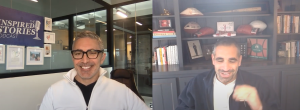
🎙️ From Sushi Concert Random Encounters to Dual CEO Leadership: Matt Winn’s Journey Building Maple Hospitality and Arrive In this inspiring episode, Matt Winn, CEO at both Maple.
Hospitality Group and Arrive, shares his journey from Orlando sushi concert champion seeking Miami opportunities through serendipitous encounters with mentors who immediately took him under their wings, accumulating two million Delta miles while leading a 1,200-person Cushman Wakefield team across 40 countries, launching Elysian Hotels boutique luxury brand during the 2009 financial crisis, and now operating top-grossing restaurants in Chicago, Dallas, and Arizona with Boston and New York expansions plus international vision. Balancing his “designated survivor partner” airplane schedule, Matt reflects on lessons learned from father’s wisdom-through-screwing-up philosophy, private equity Capital Group’s dig-deeper underwriting, and a 10-year Cushman Wakefield relationship that evolved into Maple & Ash partnerships with Danny’s two Michelin stars at Ria. He explains how luxury brand strategies like New York Times Magazine city-targeting ads and Scottsdale expansion certainty shaped growth, and why his three-things-right philosophy—great food, great service, nice atmosphere—combined with local customization creates celebration destinations. Businesses, he says, are like children with unique personalities requiring strengths maximization and weaknesses navigation, transforming from restaurant to enduring company through Prudential, Starwood, and Cushman corporate structure experience.
✨ Key Insights You’ll Learn:
- CEO of both Maple Hospitality Group and Arrive Hospitality, balancing dual leadership roles Miami headquarters anchored by Maple & Ash’s 20,000 sq. ft. restaurant complex
- Direct growth strategy: hire the right people, avoid running out of money, senior leadership fundamentals
- Father’s wisdom: experience comes from screwing up — career philosophy shaping leadership style
- Cushman Wakefield leadership of 1,200-person team across 40 countries, foundation for later ventures
- 2009–2010 financial crisis lessons from opening at the wrong time, shaping resilience and strategy
- 10-year Cushman relationship evolving into Maple & Ash global sensation partnership
- Maple Hospitality growth: one restaurant expanding to 10 across five cities (Chicago, Miami, Dallas, Scottsdale, Santa Barbara)
- Top-grossing restaurants in Chicago, Dallas, and Arizona markets demonstrating operational excellence
- Expansion vision: Boston and New York openings next year, with international growth on the horizon
🌟 Matt’s Key Mentors:
- Father: Wisdom-from-experience-from-screwing-up philosophy guiding career approach and failure acceptance Serendipitous Brief-Encounter Mentors: Successful individuals taking Matt under wing within minutes saying “come with me” teaching
- Capital Group Private Equity: Dig-deeper underwriting lesson teaching make-all-money-on-buy and timing sale properly
- Cushman Wakefield Leadership: 1,200-person team, 40-country, five-continent experience building global operational capability
- Elysian Hotels Partnership: Head-of-development desk-in-office relationship enabling Brazil-tomorrow call coordination
- Danny (Maple Partner): Two Michelin star chef Ria restaurant creating food-forward heart of everything philosophy
- Jim (Maple Partner): Restaurant experience creating amazing operating entity three-things-right execution
- Prudential Starwood Capital Experience: Large enduring company corporate structure and systems knowledge informing maturation
👉 Don’t miss this powerful conversation about serendipitous career encounters, holding-on-for-dear-life between private equity buy and sale, and transforming single restaurant into enduring company through three-things-right philosophy and corporate structure systems.
LISTEN TO THE FULL EPISODE HERE
Transcript
Anthony Codispoti (00:01)
Welcome to another edition of the Inspired Stories podcast, where leaders share their experiences so we can learn from their successes and be inspired by how they’ve overcome adversity. My name is Anthony Codispoti and today’s guest is Matt Winn. He is a partner and the chief development officer of Maple Hospitality Group, a company founded in 2015 to redefine hospitality through unique dining experiences.
Maple Hospitality operates luxury restaurants like Maple and Ash, Monarch, and Kosaku, delivering exceptional meals in vibrant settings. Under Matthew’s direction, they became a national leader and earned recognition for their innovative approach. He guided the group’s expansion from a single restaurant to a top performer in hospitality, ensuring consistent quality at every step. Matthew also co-founded and is the CEO of Arrive, which makes business meetings better.
They leveraged three distinct elements in their approach to make meetings more engaging and effective. And we’ll learn more about that today. He previously served as the global retail COO at Cushman and Wakefield and Olshan Properties, guiding operations and strategy in the real estate and hospitality fields. Matthew has lectured at Harvard University’s Graduate School of Design and other top institutions, sharing insights on leadership and growth.
Now, before we get into all that good stuff, today’s episode is brought to you by my company, Ad Back Benefits Agency, where we offer very specific and unique employee benefits that are both great for your team and fiscally optimized for your bottom line. Imagine being able to give your restaurant employees free access to doctors, therapists, and prescription medications. And here’s the fun part, the program actually puts more money into your employees’ pockets and the company’s too.
One recent client was able to increase net profits by $900 per employee per year. Results vary for each company and some organizations may not be eligible. To find out if your company qualifies, contact us today at addbackbenefits.com. All right, back to our guest today, partner and chief development officer at Maple and co-founder and CEO at Arrive, Matt Winn. Thanks for making the time to share your story today.
Matt Winn (02:22)
Anthony, thank you so much for this opportunity. I’m very excited for our conversation today.
Anthony Codispoti (02:27)
All right, let’s jump right in. So Matt, you’ve got a pretty storied business career that for the most part has woven together real estate and finance. But your undergraduate degree was in art and architectural history. How did you first find your way into this finance real estate comp?
Matt Winn (02:48)
Well, know, Anthony, I think unlike maybe many of the people that have been on, I’m going to start by talking about a failure that I learned a life lesson from, which is I really wanted to be an architect when I was in school. But the labor of creation was much bigger than my ability to create. And so I had to pivot. ⁓
I loved the idea of the built environment. I’ve always loved sort of being in cities and walking around and seeing how people use space. And so that led me to this career in art and architectural history, which actually got me my first job. I was talking to a man at an art opening. We were discussing a painting. said, I love the way you walked me through that. I’m going to hire you.
And amazingly savvy kid that I was, I looked at him and I said, that’s fabulous. What are you going to hire me for? Because I have a degree in art and architectural history. I’m not sure I’m trained for it. And it turned out he was the head of the mortgage finance group at Prudential. ⁓
Anthony Codispoti (03:52)
the
Matt Winn (04:01)
And my job was to go with all of these people who were looking at the numbers. I graduated in the early 90s when loans weren’t doing very well on the property side and look at whether any of these properties would be functionally obsolescent or what could you make them into. And they taught me finance as I went. So I was using sort of my skills of observation. ⁓
and that idea of analyzing space in a new way for me. And that’s how I started my career.
Anthony Codispoti (04:32)
So what did this gentleman see in you as you were walking him through this art piece that was like, ⁓ this guy would be really good in a finance role.
Matt Winn (04:42)
⁓ I think maybe he saw that I didn’t have training. And so he always joked with me that the good thing was I didn’t have any habits that I had to unlearn. And he could mold my finance training and my ability to analyze an investment in a way that ⁓ was in his image.
And so it’s so valuable to have a great mentor like that, where for whatever reason you click, it’s one of my favorite hiring practices, which is that midnight in an airport rule. If you’re stuck at midnight in an airport, do you want to be talking to this person? If the answer is yes, you should probably hire them.
Anthony Codispoti (05:28)
Interesting. So as I think about this, I think about art anyways, and I think like right brain stuff, I think about finance, think like left brain stuff. But clearly there was a crossover that ended up making a lot of sense and working in the way that your brain operates.
Matt Winn (05:48)
Well, and I think for all of us who grew up in property and in any venture that deals in real life, that’s part of it, right? You have to deal at a human scale. It’s not just numbers on a spreadsheet. I’m not, I didn’t grow up as an accountant. I’m a numbers oriented person, but I’m not necessarily an only numbers person, right?
You’ve got to be able to address when you’re doing a physical product the people who use it.
Anthony Codispoti (06:24)
And so that first stop along the way, which group was that? you with? that Prudential? Okay.
Matt Winn (06:28)
That was prudential, yup.
And so I went from there and then I was gonna go back to business school. And you’re gonna get a sense that I can talk my way into things. But I was doing a practice interview, because I hadn’t interviewed in five years. And you had to do interviews for business school. So. ⁓
I go and I answer an ad, this is back when you did classified ads in the newspaper. I was working in New Jersey, so I answered an ad in Connecticut, figuring that there would be no crossover and they wouldn’t see that I was looking ⁓ or looking to go back to school. And I’m in this little place and this guy walks through and he’s got his dry cleaning slung over his shoulder.
And, you know, it doesn’t, the interview had no pressure. So I say to the person I’m interviewing as he walks through, you know, I just want to work somewhere where you work so hard, you don’t have time to do your dry cleaning. And this guy stops dead in his tracks. Right. And he looks at the woman I’m interviewing with and he goes, Hey, when you’re done, send them to my office. And, know, as a ⁓
kid in his 20s, you’ve just been called into the principal’s office. So I kind of sheepishly walk in and he says, well, who are you and what are you doing here? And I say, well, I was interviewing for an analyst role. ⁓ And I was just exploring it to see if it was the right fit.
And he says, ⁓ OK. And he goes, what happens if you don’t do this? I said, well, really, I’m going to go back to business school. ⁓ And this was just practice. And he goes, you could do that, or I’ll personally mentor you for the next two years. That man was named Jeff Rosenthal. He was the chief operating officer of a group at the time that people had heard of, but it certainly wasn’t this sensation it is today called Starwood Capital Group.
⁓ And so I joined that company when it was pretty young and got this amazing hands-on experience with somebody who remains a friend. Yeah.
Anthony Codispoti (08:42)
Time out. mean,
both of these encounters that you’re describing sound incredibly brief, you know, over the course of minutes, I don’t know, maybe an hour or two. And in that time, both of these successful gentlemen are like, I’m going to take you under my wing. I don’t know you. We haven’t met before. But there’s something in this very brief interaction that says, all right, Matt, come with me. I’m going to teach you a few things.
Is this for real?
Matt Winn (09:13)
better lucky than good, totally for real. Couldn’t make it up if I tried. Couldn’t make it up if I tried.
Anthony Codispoti (09:17)
All right.
Is that how all of your jobs
have come about?
Matt Winn (09:23)
⁓ not quite. I got plenty of crazy stories, Anthony, like how many hours do we have? Look, you know, I’ve been lucky enough. So, you know, from there, just to give you a sense of how crazy these stories can get, you know, I ended up having a consulting practice that got folded into Cushman and Wakefield.
Anthony Codispoti (09:24)
Do you have any more of those crazy stories?
Matt Winn (09:45)
where I led a team of 1,200 people in 40 countries on five continents. And, you know, I’m sad to say I’m a two million miler on Delta with, you know, almost as much combined on all the other airlines. I got stories all day.
Anthony Codispoti (10:10)
Okay,
so start with capital group. Biggest lesson you pulled away from there.
Matt Winn (10:16)
Dig deeper. can always learn more and you can never do enough underwriting for the challenges that you face if you’re trying to grow a business.
Anthony Codispoti (10:30)
Say more about that, you can never do enough underwriting.
Matt Winn (10:34)
So look, we make bets. The most important thing that you learn when you’re dealing in private equity is you make all your money on the buy and then timing right on the sale. ⁓ on the in-between, you’re just holding on for dear life and doing everything that you can to make sure your bet comes through.
⁓ Especially in those days before private equity guys were really co-GPs, you’re counting on your operators and the partners to sort of do what they say. ⁓ But you’re really making momentum and market bets. so asking the right questions of them.
is the most important thing you can do. And not just taking their answers for granted, but working with them for what’s the real root and what does it really mean.
Anthony Codispoti (11:35)
Do you have a couple of go-to questions that you find really help to get to the story beneath the story?
Matt Winn (11:45)
Well, you know, I think I’m learning, but one of my favorite things that I like to say to folks as a first question for almost anything is, what would you do? Because at least then you can get to their motivation and understand where they’re coming from.
And I also hope that I’ve been able to empower people that I work with in the same way that I was empowered by. were talking about all my great mentors at the beginning of my career, the same way they empowered me. It’s easy to tell, but, you know, businesses are like children. You birth them into the world and they each have their own personalities and you’ve got to make the most.
of what those personalities are, play to their strengths and work around their weaknesses.
Anthony Codispoti (12:41)
So I want to fast forward a bit because I know we could spend quite a bit of time digging into some interesting stories at multiple stops for you along the way, which are very impressive. But ⁓ how did the opportunity to join the Maple Hospitality?
Matt Winn (12:58)
Well, so one of the things that I hope I’ve been able to do in my career is to build lasting relationships. And I do believe I can call almost everybody that I’ve ever had the chance to work with. Maple Hospitality is actually one of those stories. When I was at Cushman and Wakefield, ⁓
I was running a team and we were expanding a nascent hotel brand called Elysian Hotels. And the goal of that was to create sort of an entry level experience at the peninsula level and become sort of a boutique luxury brand. And this was 2009.
So the first one opened in 2010 and right in the middle of the great financial crisis, exact wrong time, know, another great lesson learned. ⁓ But we had their head of development had a desk in my office and literally could say, I’m going to Brazil tomorrow. Can you call the head of the Brazil office at Cushman and get me a tour of XYZ? And we would make that happen. ⁓
those partners are the partners that created Maple and Ash. My partner, Danny, won two Michelin stars in that hotel dining room called Ria. And so ⁓ that lasting relationship 10 years later kind of came around and now we’ve been able to create this other global sensation called Maple and Ash that celebrated its 10th anniversary in Chicago last week.
Anthony Codispoti (14:42)
So what was the state of the restaurant group when they tapped you on the shoulder and asked you to join them? yeah, tell us a little bit about where you are today.
Matt Winn (14:54)
Yeah, so when I got involved with Maple and Ash, there was one of the restaurants, just one. ⁓ And they said, know, gosh, it seems to be going well. Let’s talk about how we make this into something.
⁓ What’s the strategy for expansion, right? I’ve been lucky enough to work with brands from Apple and Abercrombie all the way to Zara and kind of every level of the alphabet in between all over the world at this point. And I said to them, well, it’s pretty simple for a luxury brand, which is open the New York Times Magazine on Sunday and look at the bottom of every one of those brands and what cities are they in. Those are the targets.
And ironically then, the first one that we opened was Scottsdale, Arizona. So people go, well, how did you get to Scottsdale? Like that’s not usually, and especially not pre-pandemic. That really wasn’t on everybody’s list. And the answer was, there was some certainty there from a business risk perspective. We had the same meat provider.
You have a lot of people who winter in Scottsdale who live in Chicago. So we had sort of a built in audience. And, you know, we always joked that the market wasn’t that sophisticated so that if it didn’t work out, you just say, well, the market wasn’t sophisticated enough, close it and no one would notice. Right. Exactly. You know, that restaurant, since its opening in 2019, has been the top roasting restaurant in the state of Arizona.
Anthony Codispoti (16:24)
blame it on the market. Yeah.
Wow. What did you guys get so right there?
Matt Winn (16:41)
Well, great question. And I can’t take credit for it, right? My again, Danny, my partner, who’s the chef and Jim, who’s got a lot of more restaurant experience than I will ever have, have created this amazing operating entity there. It’s a simple business, Anthony, you have to do three things right. You have to provide great food, great service in a nice atmosphere. We believe that we do all three.
You can see I’m sitting here in Miami. If I panned up, you would see there’s this sort of upside down palm frond that’s the chandelier in this place. So we try to make it local. And for a lot of people who don’t know us, they believe that their restaurant is the only one, because it is their local place to celebrate.
Anthony Codispoti (17:37)
⁓ So you didn’t really have any restaurant experience before coming into the Maple Group?
Matt Winn (17:44)
I’ve never been in-house with a restaurant brand. ⁓ And so I’ve worked on the real estate side with multiple brands at multiple levels of restaurant, but I am not an operator. I don’t pretend to be. ⁓
Anthony Codispoti (18:00)
So
really what they brought you in for was that real estate experience. Help us find the locations, help us negotiate leases, help us open them, yes?
Matt Winn (18:10)
That’s where we started, right? And then, you know, my role has evolved, ⁓ I think, within the partnership. We always say we’ve gone from a restaurant to a business, and now we’re trying to create an enduring company. ⁓ And given my experience ⁓ at large enduring companies, like Prudential, like Starwood Capital, like Cushman and Wakefield.
those corporate experiences have become really important for us as we try to put structure and systems in place. ⁓
Anthony Codispoti (18:46)
So, sorry, remind me again, Matt, 10 locations?
Matt Winn (18:50)
So 10 restaurants, it’s five locations, it’s five cities. So it’s Chicago, Miami, Dallas, Scottsdale, Santa Barbara. We operate the top grossing restaurant in Chicago, Dallas, and Arizona.
Anthony Codispoti (19:09)
That’s incredible. Okay, so go ahead.
Matt Winn (19:11)
Yeah, opening. Yeah,
we’re about to open two more. So we’re starting an East Coast expansion. We’ll be opening restaurants in Boston and New York next year. ⁓ And hopefully we’ll be taking it internationally sometime soon.
Anthony Codispoti (19:25)
and the new ones on the East Coast, what moniker will they be under?
Matt Winn (19:30)
Maple and Ash in Boston and New York TVD.
Anthony Codispoti (19:35)
Okay. ⁓ So today we’ve got Maple and Ash, Monarch, 8-Bar, Maricela. Am I missing any? Kasaku, we mentioned, yeah, in the intro. And what is sort of the common thread that weaves between them?
Matt Winn (19:44)
Kusaku.
Well, I think kind of like we talked about, right, you’ve got to do these three great things first, which is we’re food forward, right? Danny’s food is the heart of everything that we do. People talk about great service, but our team really embodies it. You know, we hire people who can make special occasions, even out of an everyday meal. So we want you to leave here feeling like you got a big hug.
And then, like we were saying, they’re just beautiful spaces. ⁓ All of our designers, Karen Harrold at Studio K, ⁓ Simeone Deary, everybody who’s done designs for us really works with us to make sure they embody the essence of the brands that we want.
Anthony Codispoti (20:44)
Hmm.
A lot of people talk about great service. ⁓ I’ve got, you know, folks that come on here in fast casual or quick service to talk about great service. And I believe them. I believe that, you know, they really go, you know, as far as they can to try to take care of their guests. I have a feeling that the service that you guys provide is maybe next level, like, like what I read about in the book, unreasonable hospitality. I on the right track? And if so, is, can you think of a
a story, an example that you guys like to tell sort of folklore of, you know, what one of your staff members did to just wow a guest.
Matt Winn (21:23)
Sure, so we can talk about one that’s become part of our corporate culture. So when we first opened, the way you order the tasting menu at Maple and Ash, it’s called IDGAF, which stands for exactly what you think it is. You tell me whether you want me to pronounce it or you want to bleep me out or whatever we’re doing.
Anthony Codispoti (21:45)
I don’t give a fire truck.
Matt Winn (21:45)
That’s, there we go. Well,
so we had a captain, ⁓ Mason, in our original restaurant, and he would write in marker, happy effin’ birthday, and hand you a menu. That then became part of the culture, so now we print menus for special occasions.
So like for my, I did one for a friend the other day. ⁓ His fiance had just passed her medical exams. And so we did a menu for her that said, you’re an effing doctor. And we did one for him that said she’s an effing doctor. So, but that little, little bit of.
Anthony Codispoti (22:28)
That’s fun.
Matt Winn (22:33)
just giving people a menu for whatever their occasion is, graduation, wedding, know, just welcome to Scottsdale. All those things have sort of built it into an internet sensation and helped people understand our level of hospitality.
It’s within our culture, right? So when you sit down, I’m sitting in the restaurant now, right? We give you, I don’t wanna give away all our secrets, but one of the things we do is instead of doing an amuse-bouche of a little bite, we do amuse-bouche and give you a little cocktail because the most awkward moment when you sit down for any meal is waiting for that first drink.
So if we can get that to you, you’re relaxed right away. And that’s what we want. We want you to be happy. This is a happy business.
Anthony Codispoti (23:19)
Hmm.
So I’m looking at your website, lots of beautiful restaurants here. mean, each just incredible in their own right. But it strikes me that, wouldn’t it have been easier and maybe more financially efficient if you guys picked one concept and replicated that?
Matt Winn (23:50)
⁓ Absolutely, I think that works for a lot of people. For us, we really pride ourselves. And if you look at fine dining and those chefs who are Michelin starred like my partner Danny is, we want to match the concept to the location. So, for example, Monarch, we started talking with our partners there.
about a Maple and Ash and it just wasn’t the right location but there was this opportunity to develop this unique restaurant that’s on the 49th floor of a building in downtown Dallas that needed to have its own identity because Maple and Ash one of the things that our designs do is they’re almost like a tic-tac-toe board.
And the way they’re designed, all the energy gets moved into the center square. And so we always say, you know, we can tell if it’s a good night. If you see people taking pictures on their phones, it’s a great night. If you see them scrolling on their phones, the team better jump in because it’s an off night. Monarch is actually quite the opposite, which is it’s all about the view. And it’s about having this dining experience where the view becomes part of it.
rather than that maple and ash where the view is what’s happening inside the restaurant.
Anthony Codispoti (25:16)
Is that what made that particular location not a good fit for Maple and Ash?
Matt Winn (25:21)
Yes, I mean, it’s it’s you know, I look at some of the other brands. ⁓ One of the things that my friend, Jay Lassard and Abercrombie taught me a long time ago is the way that you can sort of tier a concept. So, you know, Abercrombie and Fitch was famous. There would only ever be one Abercrombie and Fitch in a market. Way back when this is this is pre pandemic, this is years and years ago, but there could be six Hollisters.
And so we sort of look at it the same way, which is there is a flagship maple and ash. There will only ever really be one in a market. We’re not trying to make it so that they’re everywhere. We’re trying to make it so that it’s the right spot for you to come and celebrate. And it’s a special experience.
Anthony Codispoti (26:09)
And so maybe as part of the strategy of doing multiple concepts is that you can put ⁓ multiple restaurants into the same metropolitan area so that you’ve got growth, but you’re not, it’s still unique in that space. That it’s just the one maple and ash in, you know, Chicago, for example.
Matt Winn (26:30)
Right, so originally and during the pandemic, if you look at the history of the company, we had another partner and we were doing a different level of experience called Etta, which was more of an everyday brand where you could come two, three, four times a week and get, it was pizza, pasta, salad, small plates.
we ended up splitting the company apart and he took that. There were 20 of those under development at one point. And for example, in Chicago, there were two that were open and operating. So that was something that you could scale and do multiples of. We’re looking at different ways to do that now as we look at what’s happening with 8 Bar and Kasaku in some of our smaller restaurants.
Anthony Codispoti (27:23)
So what happened with that concept? ⁓
Matt Winn (27:25)
Well, so
we ended up splitting up the partnership ⁓ and our former partner took those restaurants. ⁓ And so we’ve sort of gone on divergent paths. When we did that, we really focused on, again, these big restaurants and making big experiences. And so now that we’ve found our footing with that, we’re sort of looking at what’s next.
Anthony Codispoti (27:55)
So you join the company, there’s one location. You guys have grown substantially. There’s more growth along the way. You know, in my experience, as you kind of reach different tiers of growth, it’s almost like the infrastructure that you have in place needs to be broken because it doesn’t work anymore. And you’ve got to put sort of new scaffolding in place. And I see you kind of nodding your head. So you think back at what different points in the past
Have you guys had to do that there?
Matt Winn (28:27)
I think at every point when you go for, know, restaurants are like children. One is like two, two is like 10. And so, you know, I think we had to do it when we were in multiple locations because all of a sudden you realize somebody can’t be in every restaurant all the time. And now when you get to a footprint like ours where we’re literally in every time zone in the United States.
you have to deal across those time zones and have those systems in place. So we’re in process always of trying to improve those and improve our internal communication to make sure the teams get what they need.
Anthony Codispoti (29:07)
So for you then, has the journey been more this process of tweaking and continuous improvement, or have you had more big moments of, wow, our structure right now just is not working. We kind of have to set fire to part of it and start over.
Matt Winn (29:27)
look, we have no problem tearing things down and rebuilding them. We’re going through it right now, in part, as we look at sort of the next phase of our expansion, we’ve realized that we have to almost start all over. And so we, and that started from the top. What are the roles that my partners and I are gonna take on?
Anthony Codispoti (29:41)
Wow.
Matt Winn (29:49)
who’s running operations, who’s running finance, who runs strategy, right? There’s sort of three things you have to do as a CEO or a partner, which is set the right strategy, hire the right people, and make sure you don’t run out of money. If you can do that, you’ll create an enduring business.
Anthony Codispoti (30:12)
Let’s shift gears. ⁓ Tell me about the co-founding of Arrive. Where did the idea for this come from? What’s the problem that you’re aiming to solve?
Matt Winn (30:18)
Yeah.
Sure. So the genesis of that company came out of a group from Israel called Meet in Place that I was a consultant to pre-pandemic back when I was, I think I had just left Cushman. And what that company does is it makes businesses
better by making them more effective, engaging, and enjoyable. It does that with space, with stewardship, and with ⁓ service. ⁓ And so the way that we look at that, ⁓ and then there’s this sort of added layer of science.
⁓ What makes that business different than what you see out there, whether it’s coworking or groups like Industrious and Convene, is they’re renting space and we’re providing better meetings. So on our board is a man named Dr. Steven Rogelberg. ⁓
Anthony Codispoti (31:14)
science.
Matt Winn (31:36)
I cold called him, if you see a theme here, after reading his book and said, hi, you my co-founder and I are creating this business to rent conference rooms and meeting rooms on demand. We’d like to enlist your help. And that created a ⁓ set of tools called Sparks, which are…
Anthony Codispoti (32:04)
And who is this person?
Why were you calling to enlist their help?
Matt Winn (32:08)
So Stephen Rogelberg literally wrote the book on the science of meetings. And so ⁓ he’s been with us sort of every step of the way of how do you take care of it? How do we make sure the way that you did with me, can you see me and hear me when you log in? What are the key questions that you want to answer and talk about today in a meeting?
How can we make this interaction meaningful for you? And then we’ve got, we’ve essentially gamified it. So we’ve got a deck of cards for different situations where you could play one, right? So Anthony, you and I don’t know each other. So we might’ve opened to this conversation with an icebreaker that said something like, well, know, Halloween just passed. What did you want to dress up as when you were 10 years old?
And it’s a way of sort of allowing people to share in a unique manner and connect in a business setting in a way that’s really hard when more and more processes are being done remotely and by AI. Meetings are the culture carrier now for organizations and are more important than ever.
Anthony Codispoti (33:33)
So I’m not coming to arrive and saying, hey, I just need a conference room. I’m going to meet with some potential clients and I want to do a presentation. I’m coming there because maybe I want to meet with my whole team and we’re trying to brainstorm new product ideas and you’re going to help lead that meeting.
Matt Winn (33:55)
⁓ So we’re not going to be in the room. The space is yours. We’re going to give you tools that you can choose to use or not. So in your rooms are notebooks that look like this one. And these cards ⁓ that say, you know, every meeting needs a spark. Here are our meeting sparks that will walk you through beginning, middle and end. How do you have a better meeting? You can choose to use those.
Anthony Codispoti (34:07)
Okay.
Matt Winn (34:25)
or you can choose to just have your own meeting. ⁓ But even the spaces that we’ve designed and worked with our partners in that business on are better than the other things that are on the market. So just starting at a baseline, we’re providing a premium product.
Anthony Codispoti (34:44)
Interesting. So I’m looking at your website here and the first picture that I see, it’s a nice, like well lit, airy space, good natural light, big windows, you know, some greenery. ⁓ yeah, it looks like the kind of place that I would want to have a meeting. And then in addition, you’re providing people with these branded, notebooks, you know, something they can take their notes in. And you’ve got these cards that could kind of help break the ice and, know, ⁓ get people a little bit comfortable.
Sort of like the, were you, you held up that little cocktail glass. The first thing you want when people sit down is to avoid that awkwardness of sort of the first drink. much in the same way in a meeting, like there’s sort of like a who’s going to talk first, what are we going to talk about? And so like, let’s just be silly and, you know, ask what costume you wanted to wear when you were in fourth grade.
Matt Winn (35:19)
Yes.
Correct, not just that, look, it’s all about the people in the end, but it’s also understanding how the people use the space. So one of the things that we do that’s pretty unique, we have a coffee machine that’s in the room. Because what happens inevitably is, and I start talking and three minutes later, Anthony, somebody looks at you and they go, wait, I forgot to get my coffee, I’ll be right back. The flow of the meeting is completely broken then.
for the time that person is out of the room and then when they come back in, because you have to catch them up. So I was going to say, it’s just trying to think through, what’s the goal? How do people use it? And then design a product around
Anthony Codispoti (36:10)
So, go ahead.
So, ⁓ Dr. Steven Rogelberg, right, that’s the name of the gentleman that is literally wrote the book on, you know, how to run effective meetings. As you know, through your time working with him, what was like the biggest, like knowledge bomb he dropped on you? Like, ⁓
Matt Winn (36:42)
well. ⁓ How about agendas don’t work?
Anthony Codispoti (36:47)
Okay, say more.
Matt Winn (36:48)
So most people, go, so just so we get a sense, meetings are a little bit like drivers, right? Everybody thinks they can do it effectively. And 71 % are considered ineffective by those who attend. So it’s kind of like driving, where 66 % of the people think they’re a better than average driver. Somewhere, that math doesn’t work out.
Anthony Codispoti (37:04)
Yeah.
Matt Winn (37:18)
Just putting a structure up there doesn’t necessarily work because one of the things he’s taught us is meetings are about answering questions. So if it’s just an update, it can probably be an email. If you’re answering a key question, that requires discussion and sharing and communication.
And so that’s why we start with not what’s the agenda. We start with what are the key questions for this meeting.
Anthony Codispoti (37:51)
How many locations so far?
Matt Winn (37:54)
One so far, we have this amazing partnership with a group called NextSpace. So arrive at NextSpace is in North Scottsdale, Arizona. And what we were able to do was take a group that had designed all of these spaces as showrooms to sell AV furniture, carpeting, flooring. They’ve developed this really cool partnership.
But if I’m being nice, it was a meeting museum. If I’m being cruel, it was a meeting morgue. And so we’ve come in and activated that space. And to, I think, the credit of both groups, both the design and then our service, we’ve got a greater than 50 % win rate.
for people that we’ve called for meetings and a 39 % return rate. Thanks to my partner, Dana. Yeah, it’s amazing. She’s done an amazing job of locking in those operations.
Anthony Codispoti (38:52)
Wow.
And so is this exclusively meeting space? it have like co-working space? Like somebody can have a desk there. It’s just, this is where you come to have your meeting and then you go.
Matt Winn (39:10)
Yes, we always say it’s only meetings based on science. So it’s just meeting space. You you could hold an event there. If you wanted to give a lecture, we have space where you could do that. ⁓ And there is some social space. There is a bar in this space. So there’s the opportunity to socialize, but it’s not coworking. We don’t rent desks out by the hour or by the day.
Anthony Codispoti (39:38)
even offices.
So what’s the growth plan? What’s the future look like?
Matt Winn (39:40)
No, no, So
yeah, thanks for asking. It’s an amazing opportunity. feel like office is going through what retail went through during the Great Recession, which is you have all these people investing without really knowing how people are gonna use the space. So 88 % of office building owners are investing in shared conference amenities.
we are talking to six different landlords right now about activating those amenities the same way we’ve been able to do in Phoenix. So we want to take.
Anthony Codispoti (40:19)
So going into
an existing place, it’s not fully yours, but the meeting space is something that you guys take over and manage.
Matt Winn (40:28)
Correct. So, you know, they have all these shared spaces that are underutilized. Our goal is to make that a better experience, both for the existing tenants in the building and then to bring people out to the building. So, you know, it’s almost like the ping pong table was for a little while in venture capital, right? You had to have one to attract talent. And I feel like people have done the same thing with meeting rooms. It’s our goal to make it not just a marketing tool, but an
actual sales and productive revenue generating space.
Anthony Codispoti (41:03)
Yet to my understanding, ⁓ lot of the coworking spaces, know, coworking was kind of in the process of like exploding pre-pandemic. And then it completely imploded during the pandemic. And a lot of them are still struggling to come back. Many of them had shut down. Is this kind of what you’re describing? Like where the opportunity is? Places like these coworking spaces, like a WeWork and Industrius, they’ve got this underutilized space that opens up.
an opportunity for you guys.
Matt Winn (41:34)
Yeah, I mean, look, they also manage fractional space and I don’t want to belittle anything that they’re doing. This is really more what you find is the office building owners who build out suites of four to six larger conference room spaces that are for use by the building. And so if you think about the way that office is changing, 90 % of people only want to come into the office to meet.
And so we want to provide the best experience and give them a return on their meeting investment. If your average executive makes $500 an hour and you’ve got 10 of them in a room for an hour, that’s $50,000 of meeting space. Did I do that right? $500 for an hour. Sorry, that’s $5,000 an hour.
⁓ But we tend to do half and full day meetings. And so when you start to look at the return and what you’re investing in that meeting, the space is the least of it.
Anthony Codispoti (42:41)
So you want to make the most use of that valuable talent and labor you’ve got in the room when you can. So let’s shift gears again Matt. Life has its ups and downs both personal life as well as professional life. What’s a big challenge that you’ve overcome in your life? How did you get through that and what did you learn coming out the other side?
Matt Winn (42:48)
Yes.
Yeah. Wow, it’s a great question. First, have to say, first and foremost, ⁓ before I enter the question, one of the best decisions, the best decision I ever made was the woman I married. And she has been by my side through the ups and downs, and I absolutely could not do it without my fabulous wife, Sher. ⁓
she’s watched me reinvent myself, right? So during the course of my career, as you highlighted, I’ve done these different things. I started in sort of real estate and finance. I thought I was gonna be like my own guy. I wanted to do it on my own. So I went out and I had some friends that were selling a business. And I said, you know what? I’m just gonna take it over.
And I pretty quickly realized that not only were they not my friends, but that they didn’t care ⁓ and that we were never going to come to a deal. That made sense. And so ⁓ I actually lost a personal fortune doing that and almost had to start over from ground zero.
and I will forever be in my wife’s debt for hanging with me through that. ⁓ What I realized was, you know, it’s one day at a time. You pick yourself up, you figure out, okay, what do have to get done today? How am I gonna, you know?
get on to next week and then build from there and know that you’ll be successful. That’s what ended up in part driving me to Cushman and Wakefield, which was a whole nother phase of my career where I worked globally and in some sense kind of propelled me to this next phase. So I’ve been through a couple of those in my life, none of them as financially devastating, but opportunities where I really had to reinvent myself. And so I tell people,
Don’t be scared. We’re done with the days of you sign on at 22 to one company and you work there for your entire life. I guess if you’re lucky enough to invent a business, you get to do that, but very few of us do.
Anthony Codispoti (45:31)
So in this example, Matt, was there a single moment in time when you suddenly realized that this is not working? Or was it a gradual process of, oh man, this is frustrating, things aren’t going well, I’m not getting the full story, but I’m gonna keep drawing, I’m gonna give them the benefit of the doubt, I’m gonna keep trying at this. How did it unfold for you?
Matt Winn (45:57)
Yeah, no, I mean, was literally I was sitting at a negotiating table trying to get through a purchase and sale agreement and realizing that the goalposts kept moving and that we were never going to get to a deal. And that the way that I’d structured is I tried to structure and protect the downside where there was a hefty breakup fee that would cover my expenses.
this group ended up being a little bit more litigious than that. So we ended up going to litigation. And so then not only did I not get that break up fee, but I had to pay for all of those lawyers. And that moment of realizing like, wow, not only is this not gonna work, this is an absolute disaster. And I remember looking at my lawyer and he was almost in tears for me. And I thought, ooh.
You know, this is going to be tough.
Anthony Codispoti (46:53)
So where you lost your money was in out of pocket on due diligence upfront, as well as the legal action on the back end to have to break everything up.
Matt Winn (47:06)
Right, I mean, look, you can’t make money without spending money. Right, my wife and I would be in a incredibly different place financially today if I hadn’t taken those risks. If it had worked, we’d probably all also be in an incredibly different place. So you know what? I don’t regret it. I do regret what it did to
my family and the stress that it put them under.
Anthony Codispoti (47:36)
Yeah. You know, this is an example of one door closes, which allows you to find another door that opens, and opens up a whole new world of opportunities that you never would have been seeking otherwise. So it’s easy to kind of look in the rear view mirror easier to look in the rear view mirror and connect the dots and probably have a little bit of gratitude for you know what unfolded there because now look at this amazing place that you’re in. But when you’re going through that,
You don’t have the benefit of that rearview mirror and you don’t have the benefit of a crystal ball to know where it could be going. It’s just questions and doubt and financial stress and worry. You mentioned your wife. She was a rock that you were able to lean on and get through with. Can you talk more about how you sort of, you know, manage the ups and downs of the day to day as that was kind of falling apart?
Matt Winn (48:31)
⁓ I don’t think I did it very well, Anthony. So I don’t know that I have some great life lessons. Now that I’m older, I probably would. I was in my early 30s when that happened. And so again, it was a case of ⁓ intellectual arrogance, I think, that drove me to do that. ⁓
Ironically, I’m not sure I’m any really less cautious, just more ⁓ comprehensive when I approach these opportunities. As you can see and hear from this, ⁓ I by nature am kind of a risk taker and a builder.
Anthony Codispoti (49:16)
Yeah. You know, and what’s interesting about your response is I was hoping for here’s the worldly piece of wisdom of how I was able to, you know, set all my ego and my emotions aside and figure this out. But I think the reality of this is great for everybody to hear like, yeah, it feels pretty ungraceful when you’re going through these really challenging times. ⁓ You know, you can look back on it and say, I learned X, Y, and Z, but sometimes it’s
It’s really bumpy going through the dark tunnel.
Matt Winn (49:50)
It was an incredibly dark time. mean, look, when we look back on it, was also the birth of my second son happened to literally concurrently with all of this. So I guess the good thing was I could take the night Phoenix because I wasn’t sleeping anyway. so hopefully, you know, I showed up for him.
Anthony Codispoti (50:20)
Yeah.
Matt Winn (50:20)
⁓
That’s the most important thing is you continue to show up for your family and it’s not that they can’t see it, but you have to be able to sort of compartmentalize and not let it dominate your life.
Anthony Codispoti (50:34)
Yeah.
Well, and now today talking about, you know, your night responsibilities, they’re taking care of your son. You’ve got your nighttime job with the maple and ash group or maple hospitality group, and then you’ve got your day job with, arrived meetings. How challenging is it for you to sort of juggle these two?
Matt Winn (50:54)
⁓ Very, you know, look, hopefully one of things that’s come through is I’ve never been afraid of hard work, right? The 40 hour work week, unheard of for me. So that’s like a start. You schedule it, you try to do it in chunks. know, again, one of the things I believe I’ve learned over time.
to accomplish things, you have to get to the most minute and then give yourself the time to do them. You can’t just expect it to happen. You have to give yourself the dedicated time to sort of focus and switch between the two. And so for me, that tends to be sort of by day. So I have certain days of the week where I’m working on one or the other.
and other days where I’m focused on the second business. And that can vary by week. And then, you you just try to make sure that every day, one of the things that I would tell people is one of my most important lessons is I wake up every morning and I write down three things. And I am not going to stop working during that day until those three things are done.
Anthony Codispoti (52:14)
I like that. Matt, I’ve just got one more question for you today. But before I ask it, I want to take care of three things. First of all, anybody who wants to get in touch with Matt Winn, W-I-N-N, you can find him on LinkedIn. So search for his name, Matt Winn, with two N’s, Maple Hospitality Group and Arrive Meetings. ⁓ Also for the brands, maplehospitality.com, you can see all their amazing concepts there. And then arrivemeetingswithanS.com.
We’ll also try to scrounge up their Instagram handles and have that for folks in the show notes too. And as a reminder for listeners, if you want to get more restaurant employees access to benefits that won’t hurt them financially and carries a financial upside for the company, reach out to us at addbackbenefits.com. Finally, if you’ll take just a moment to leave us a comment or review on your favorite podcast app, you will hold a special place in our hearts forever. Thank you.
So last question for you, Matt, a year from now, you and I reconnect and you’ve got your fist pumping in the air. You’re super excited. You are celebrating something big. What’s that big thing that you hope to be celebrating one year from today?
Matt Winn (53:27)
Stability.
Anthony Codispoti (53:31)
Yeah, every entrepreneur
is chasing that, aren’t they?
Matt Winn (53:35)
⁓
Look, I think we’re at these great inflection points in both businesses.
And so I’m super excited. I’d love to reconnect in a year. I hope I’ll have some other interesting stories to tell. In the meantime, you know, look, I’d love to host you if you’re ever in either, you know, any of the cities where you have restaurants or you happen to be in Scottsdale and need a meeting space, we’d love to have you. But yeah, a year from now, I’d love to be able to celebrate the stability. when I say that, I mean that we’ve been able to put in place systems
that allow us to grow with shared goals and opportunities.
Anthony Codispoti (54:20)
Matt Winn from Maple Hospitality Group and Arrive Meetings. I want to be the first to thank you for sharing both your time and your story with us today. I really appreciate it.
Matt Winn (54:30)
Many thanks, Anthony. Look forward to doing it again soon.
Anthony Codispoti (54:34)
Folks, that’s a wrap on another episode of the Inspired Stories podcast. Thanks for learning with us today.