Glass Eater: Lil Roberts on Grit, Growth, and Reshaping Accounting at Xendoo
Lil Roberts, founder and CEO of Xendoo, shares her journey from a childhood marked by poverty, an abusive home, and losing three brothers before she turned 22, through eight businesses including a manufacturing exit, to winning pitch competitions in front of Jason Calacanis and Steve Case, appearing on CNBC’s premiere episode of The Job Interview, surviving COVID by pivoting her marketing budget in real time, and completing a landmark acquisition of BotKeeper’s AI assets that is set to reshape the accounting industry.
Key Insights You’ll Learn:
Built and exited multiple manufacturing businesses before recognizing that print was being decimated by technology and deliberately choosing to be on the technology side of the next industry she entered
Chose accounting over legal and insurance because 92% of small business owners run their businesses from their bank account and 85% of those fail due to cash flow, not profitability
Won Emerge Americas pitch competition in front of Jason Calacanis and Pitbull, then joined Calacanis’s incubator and later secured investment from Steve Case, with no prior venture experience
Appeared on the premiere episode of CNBC’s The Job Interview in 2017, two months after Xendoo generated its first dollar of revenue
When the board pushed for 30% salary cuts during COVID, refused and instead shifted marketing budget toward trade services and e-commerce clients, growing 30% while a major competitor with $90 million raised shut down
Hurricane destroyed a third of the roof on a 13,000 square foot manufacturing facility and 54 of 55 employees showed up the next day, with competitors allowing her team to run overnight shifts in their facilities
Acquired BotKeeper’s AI assets and co-founders out of an assignment for the benefit of creditors, a once-in-a-lifetime deal that positions Xendoo to serve both small business owners and the 152,000 CPA firms across America
The three tax mistakes costing small business owners thousands annually are staying as a single member LLC past profitability, not keeping monthly books, and missing major deductions like Section 179 which allows up to $2.5 million in immediate depreciation
Hires exclusively for heart-led people who run into burning buildings and lifelong learners, determined through interview questions about weekends, core values, and how candidates approach everyday errands
Never expected to live past 24 after losing three older brothers by that age, and when she did, had to completely reimagine what her life was for
Lil’s Key Mentors:
- Jason Calacanis: Opened doors to venture world.
- Steve Case: Investor who brought credibility and network.
- EO South Florida: Peer accountability community.
- Manufacturing Team: Proof of culture when 54 of 55 showed up after a hurricane.
- BotKeeper Co‑Founders: Brought AI tech and industry relationships.
Don’t miss this conversation about what it takes to rebuild a life and a business from nothing, why the accounting industry is ripe for disruption, and what a glass eater looks like when she actually runs through the glass.
LISTEN TO THE FULL EPISODE HERE
Transcript
Anthony Codispoti (00:00)
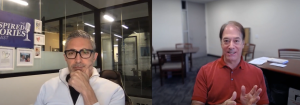
Welcome to another edition of the inspired stories podcast where leaders share their experiences so we can learn from their successes and be inspired by how they’ve overcome adversity. As you listen today, let one idea shape what you do next. My name is Anthony Cotaspodi and today’s guest is Lillian Roberts. Lil is the founder and chief executive officer of Zendoo.
a cloud-based bookkeeping, accounting, and tax company built for small businesses. Zendoo started in 2016, and their team combines real accountants with smart software so owners get clear numbers every month. Their platform links with QuickBooks Online and Xero and shows key data on a custom dashboard. Now under Lil’s directions, Zendoo has been spotlighted by Ink Magazine, Bloomberg, and the South Florida Business Journal.
Lil also writes for entrepreneur, sharing practical tax tips for owners. Before launching Zendoo, she built and sold a manufacturing company so she understands the daily grind of an operator. That firsthand knowledge pushed her to fix the pain points she faced with traditional accounting. But before we get into all that good stuff, today’s episode is brought to you by my company, Adback Benefits Agency. Listen, if you run a business, you’re likely stuck in the cycle of rising insurance premiums. You’re paying more, but your team
is getting less and many people can’t afford coverage at all. We do things differently. We offer a solution that provides your employees with unlimited access to doctors, therapists, and prescriptions that’s always free for them to use. But here’s where you really need to pay attention. Unlike every other employee benefit out there, our program puts more money into your company’s bank account. As an example, we recently helped a client increase net profits by $900 per employee per year.
Gains like that can change how a business is valued. Results vary, but the consultation is free. Imagine being the advisor that becomes a hero by introducing this to your clients. See if they qualify today at addbackbenefits.com. All right, back to our guest today, the founder and CEO of Zendoo, Lil Roberts. Thank you for making the time for us today.
Lil Roberts (02:08)
Thank you, Anthony. A pleasure to be here.
Anthony Codispoti (02:10)
So before starting Zendoo, serial entrepreneur, you had multiple businesses. And I know one of those in particular we mentioned in the intro, you successfully exited a manufacturing company. Can you tell us about this company and what that exit process was like?
Lil Roberts (02:25)
Sure. And so I actually had a few manufacturing businesses. It was wholesale manufacturing in the print space. So I watched the ⁓ print space get decimated really by technology. So when I exited my last business, I wanted to go sit on the other side of the table and build technology that was going to reshape an industry.
Anthony Codispoti (02:46)
So the printing, why did it get decimated by technology?
Lil Roberts (02:51)
It went from being a local analog type business that when in probably 2008 when the internet was really starting to hit its stride for commerce that you could buy anywhere. And so when that happened, you started to see some really big companies come in that were hundred million, $200 million size. And that when you have that kind of scale, it changes the pricing and so, and gives people the opportunity. So as an example,
business cards that sold for you know $20 wholesale became $10 wholesale and if the smaller companies can’t it’s a high capex business and if they can’t afford to invest in the equipment to get to that size and they don’t have the level of business to compete at that size they lose out. So we saw all the local businesses going out kind of like Home Depot to hardware stores.
Anthony Codispoti (03:41)
Okay.
Gotcha. Okay. So big technology shift took place rather than buying local. Now people are buying from a Vista print online or something like that. And the writings on the wall. So you’re like, okay, I don’t want to be on the wrong side of the technology table and what I do next. So how did you cook up this idea for Zen do?
Lil Roberts (04:06)
Great question. So I lived through the wrong side of the table for eight years as I re-engineered that business and put a lot of technology forward. And that business is still alive today. And a lot of my old team are still there today. And so it’s a matter of how do you branch into the products that are modern day world products? And so I did that. How I came up with this idea is that after I exited the business, I built a scorecard. I’m big on scorecards. And I built a scorecard. And I listed.
the things that were important to me and I love small business and I love small business owners so I’m super passionate about that. I wanted a technology first business so I wanted to leave the shoreline. I wanted to be out of a business that was analog first. I wanted to build a business that was technology first from the shoreline and I wanted it to be able to be scaled to 100 million or higher in revenue not for money but just to build that bigger you know climb a higher mountain. I wanted it to be venture backed because the prior seven
businesses were always on my money on my back in the bank’s money together right and so I wanted to go the path of venture raising capitals for that learning I’m a lifelong learner and I wanted to reshape an industry and so it was either legal accounting or insurance and I chose accounting.
Anthony Codispoti (05:23)
Why did you choose accounting out of those three?
Lil Roberts (05:26)
Because it’s a lifeline and it is the oxygen of a business. There are, of the businesses that go out of business, 92 % of the business owners run the business from their bank account. They wake up in the morning and say, oh, I’ve got money to live another day. 85 % of those businesses, according to US Bank, go out of business because of cash flow, not because they were profitable. So imagine you’re climbing to a highest peak that you’ve always wanted to go to, and you’re just a few meters down and you turn around.
because you just run out of fuel. You have no more water. And that’s what a business is. Finance to a business is oxygen, it’s cash flow, it’s how it can grow and survive.
Anthony Codispoti (06:07)
but you didn’t have a background in accounting yourself.
Lil Roberts (06:10)
That’s what helps. I have the background.
Anthony Codispoti (06:13)
Fresh perspective.
Lil Roberts (06:14)
Yes, I have the background as a small business owner. And so I know what’s important. And I know the life that all of us business owners live and what we need from accounting. And then on the flip side of that, because of my manufacturing background, I understand process and I understand what it takes to deliver work in a timely manner. And the industry, the accounting industry filled with amazing good people, but they didn’t have the right tools.
So I set out to build the right tools and that’s what we’ve been doing. And then we also have our own team. So when they come to work, they feel like they’re running downhill when typically the accounting industry comes to work feeling like the climb in a hill every day.
Anthony Codispoti (06:53)
So talk to me about those early days when you thought about putting together the plan, finding the investors, building the team. Because I get what you’re saying, Lil, that from a small business owner perspective, you knew what you needed. But you need somebody on the accounting side of things as well to ⁓ kind of bridge those two worlds. So talk to me about how you started to cobble all these pieces together.
Lil Roberts (07:20)
Great question. ⁓
As you know, and people listening that are entrepreneurs and that want to be entrepreneurs, when you focus on something, you become a pit bull and you just go after it, And so for me, I knew you start out with an idea and a thesis. And so first I had to vet the thesis that was the industry big enough for this to happen? Was it the right time for the industry? So you need to go through all those pieces of it. And once you get to those pieces to know that you can build a business and it’ll reach
the size that you wanted to get to become. Then I had a co-founder who that was, know, early days, I, you know, to do it over again, it wouldn’t have been, I picked the wrong guy. ⁓ And so we parted ways after a year, year and a half. And there’s lots of lessons in that. ⁓ Doesn’t mean he’s not a nice guy. He’s a nice guy, but it was just a wrong match. And so you bring in somebody that knows accounting and from observing that and doing business analysis, you build how you believe
Anthony Codispoti (08:04)
Mm.
Lil Roberts (08:23)
that you can now start to deliver P &Ls in five business days, 10 business days, 15 business days. How do you help the team have the right tools? What are those right tools? And is it the right process? Just because you’ve done something one way always doesn’t mean that that should be the way that you apply to technology. You have to look at it and look at it from the end backwards and from the beginning forwards and from the middle out. And when you take that approach to any problem, you’re going to arrive at something that’s going to be different.
And then what’s the test? How do you know that you’re going to succeed? for people, a lot of people will stay with their beginning idea and never change. And some of the most successful businesses are those that have pivoted. ⁓ If you look at Airbnb, his story, a lot of stories out there. So just be open. Never dig your heels in. Be open.
Anthony Codispoti (09:14)
And you mentioned that the co founder that you initially had was not the right person. Say more about that.
Lil Roberts (09:21)
⁓ Good guy just didn’t want to work the hours. He was a CPA and when you’re an entrepreneur your hours are always and it’s 14 hours, 16 hour days when it needs to be and the world doesn’t wait. An opportunity doesn’t wait and if you want to go down that path you have to be prepared for it and he just wasn’t prepared for it.
⁓ And so he didn’t contribute, he went and looked for something easier and he actually wasn’t really passionate about the industry as a whole anyway, it was just more he was a ⁓ practitioner, I would say. And so he used a lot of the learning that we were doing and how we were building the technology and he applied it to a different industry. So we parted ways.
Anthony Codispoti (10:06)
Okay.
So looking back, were there signs, would you do it differently? Maybe is my ultimate question. You know, were you seeing things early on that now with the benefit of hindsight, you’re like, ⁓ that should have clued me into how this was gonna go.
Lil Roberts (10:24)
There is a saying in founder world, and the saying is, don’t have a co-founder for a position that you could hire. And that isn’t anything mean or bad.
it’s there’s a certain ethos that comes with co-founders and founders. know, founders and you know this. You have to be willing to jump off the ledge and figure out how to fly on the way down. And that has to be fun to you. Like that’s fun to me. And it’s fun to all the other founders that I know. And if you don’t have that core piece of who you are as a human, then it’s you’re not in the best. You’re not putting yourself in the best spot for you.
Anthony Codispoti (11:05)
Okay, so tell us specifically what it is that you do for your clients.
Lil Roberts (11:10)
So Zendu takes care of, specifically what we do is we deliver financial peace of mind. It’s a little bit different depending on what each client, right? Some clients that are new in their journey and maybe have a business that’s, you know, four or 500,000 in annual revenue to a million, $2 million, then they need cash basis bookkeeping and accounting done. And we take care of that for them. And we do that on a monthly basis. We touch their books every single week and then we publish the reports.
would like taxes at the end of the year, their IRS tax return done, we take care of that. Businesses that are, you know, call it 3 million to 15 million typically will fall in either modified accrual or full accrual and businesses above that. We have businesses that are as big as 80 million, 100 million in size and we have four public companies that we do the subsidiary of. And those businesses need full accrual which is much more involved accounting and typically they’ll have a team in
and we’re integrating with their team internally to deliver the monthly financials and help with maybe fractional CFO work or controller work. But at the core of it, Anthony, it’s about that you want to know somebody has your back for your books. A lot of small business owners, they don’t look at their books monthly. They just want to know they’re ready for them to understand what they owe for taxes. But in my opinion, people should look at their books every month, know were they profitable? Did they make money?
money and how do they tweak their business. It’s a monthly health check on your finances.
Anthony Codispoti (12:45)
So that monthly
health check, what specifically would you coach a business owner to be looking at on a monthly basis?
Lil Roberts (12:51)
There’s three components of a business that you should always look at, right? It should be your cost of goods, cost of wages. Well, actually four things, your gross margin, and it should be your net income. And those should be the four metrics. And you should know what those numbers should be for your industry. In manufacturing, I knew that my cost of goods needed to be 23 to 25%. And I knew that my cost of wages needed to be 30 to 33%. And so every industry has a range
of where their business should be and the business owners should be laser focused on getting there because if your cost of goods are high, you either have theft or your pricing is off, right? Or you’re not buying properly. ⁓ And if your cost of wages are high, then same thing. You have people, you’re overstaffed and it’s okay if you’re overstaffed for growth. But if your cost of wages are low, are really low, then you’re driving your team too hard and then you may be setting yourself up for not having the proper retention rates, right?
So as you know, you and I align very much on this that that the human capital of a business is the most important part of a business.
Anthony Codispoti (14:00)
And so how do you think about the human capital side of your business? How do you focus on recruiting the right folks? And once you’ve got them holding onto.
Lil Roberts (14:11)
lot of ways. ⁓ First off, you have to know who you’re looking for. So the people that we look for are heart led that will run into a burning building.
So no matter what their skill set is, they must be heart led. ⁓ People tell us when they walk into our company that you feel the love. It could be just anybody. could be a vendor that walks in and they’re like, wow, there’s a really great vibe here. And the reason being is we hire heart led people who run into burning buildings. then how do you retain them? There’s a lot of ways. ⁓ We also only hire lifelong learners. And so through our interview questions and practices,
we determine if somebody is a lifelong learner and if they’re a lifelong learner, they’re going to love being here because we’re constantly learning. And then you just feed them the food that they want. And that’s both figurative and literal, right? We have snack table, we have lunch on Fridays, we have food, we have camaraderie, we have people that really, you know, watch each other’s back in life and when they’re going through through tough times. And it’s a culture of the company.
everybody will say that has a successful company, that it’s the culture of their company.
Anthony Codispoti (15:27)
So what kind of interview questions are you asking to determine if a candidate is heart-led ⁓ and a lifelong learner?
Lil Roberts (15:37)
So unfortunately, I don’t get to interview that much anymore, but I’ll give you some of the things that typically I’ll find out from them. I’ll say, so tell me what you do on the weekend. What does a Saturday look like, a Sunday look like?
And then if they tell me that, know, ⁓ throughout the noon, that’s okay on one day. I’ll say, that’s great. You know, what about the other day? And I’m trying to find out what it is they do. If they say, well, you know, weekends, I spend a lot of time with my family. We go to the park and we have family outings. You know that there’s somebody that love means it’s important to them. know, same thing if they share with you what they’re doing with their friends. You’re going to get a sense of who they are through that, that are
they heart led? ⁓ We’ll ask, know, tell us a time. We take our five core values and on a piece of paper we ask ⁓ interviewees before we even sit down to interview them, we ask them to fill out what the five core values mean to them. So that tells us about their heart. And then if they run into a burning building, it comes down to really, you know, how engaged are they? How engaged in life are they? Are they a problem solver? ⁓ I’ll ask them when you run your errands on a Saturday, you know.
walk me through that. I’m looking to see, what’s their process, what’s actions. ⁓ They tell me they sleep till noon and it’s both days, you know, good for them, but they’re not going to make it in our business.
Anthony Codispoti (17:07)
Okay. So in the intro, we talked about how you have built integrations with tools like Xero and QuickBooks Online, which are great bookkeeping accounting platforms for smaller companies. But now I’ve also heard you say you work with much bigger companies, publicly traded companies. So I’m guessing you’re not just locked into those two platforms.
Lil Roberts (17:29)
Believe it or not, the subsidiaries of the public companies are on those two platforms. Yes, because, you know…
Anthony Codispoti (17:35)
Really?
Lil Roberts (17:39)
Zero, I’ve seen ⁓ a couple of billion dollar companies on zero. yeah, and ⁓ yeah, and you know, Anthony, our business, what we’ve built is we built a CPA practice management software that we use internally, right? So our software is built really on a concept called the knowledge workload. So it’s data-driven prioritization, workflow and measurement. And then just iterate, iterate, iterate on that.
Anthony Codispoti (17:44)
Okay, today I learned.
Lil Roberts (18:09)
for our team, when they’re working on a customer, they have everything that they need right at their fingertips, like being in a fighter jet cockpit, right? And the customer has the ability to upload and give us the documents digitally and have a lifeline that inside our mobile app, they can reach out and talk to their accountant. They can schedule a meeting. They can call them right from the mobile app. so truly the CPA practice management software is our secret sauce. And so we use it for our
team and we have about thousand customers across the United States and also in other countries that have a US based business. But I’ll share with you some really exciting news. And that news is that last week we completed the acquisition of Bot Keepers assets and Bot Keeper is an amazing company that had built AI to help the accounting industry. And so they have a lot of accounting customers
CPA firms, and many of them, they sold their software to top 100. And what happened was they just ran out of money. They ran out of money before they got to that, what happens to venture-backed where one as well, where you hit that break-even point and start to become profitable.
And so we love the founders. The co-founders are brother and sister and their CTO is a great guy. And so we in the acquisition of the assets of the intellectual property, we also they have joined us. And so we’re just at the beginning of the new chapter of Zendu. We’ll continue what we’re doing on our mission of helping small business owners. And with that, we’re going to take all the great pieces of our CPA practice
management software married with Bot Keepers AI and in their processes and we’ll be able to continue to do Bot Keepers mission which is to support CPA practices across America and there’s 152,000 of them so it’s a huge huge you know problem that we’ll be solving.
Anthony Codispoti (20:16)
So with this new acquisition, this is a way not so much to better serve the small business clients that you have, but to go after a different set of clients, which are other CPA firms.
Lil Roberts (20:29)
Same mission, it’s the same mission, our mission.
in our BHAG, right, Big Hairy Audacious Goal, is we want to help 50,000 small business owners by 2030. And there’s so many products, you know, we should talk in six months or a year and I’ll share some of the new products that we’ll be introducing. But with that mission, we’re going to help the supply chain of the CPA practices that need that best-in-class software that’s going to help them serve their customers, which are small business owners.
So we’re still on the same mission. We’re just touching a different part of the supply chain of that mission.
Anthony Codispoti (21:10)
Fascinating. ⁓ Wow. Okay. That brings up a whole slew of questions. Actually, let’s go back to early days first for Zendoo and then we’ll come to, it’s called Bot Keeper, right? The acquisition that she’s just made. So early days of Zendoo, how do you get that first client?
Lil Roberts (21:20)
Yes.
⁓ put out the website and it was actually the first client came from a trade show. part of my process of saying is this problem to be solved, is the timing right? And so years ago, I’ve always been in tech and at the leading edge of different parts of industries. And years ago, I used to go to Comdex, which is now CES.
And at Comdex, I would see all these amazing things that were going to come out. And a lot of them didn’t come out. And so I would watch and say, why didn’t they come out? And it was timing, right? The market has to be ready. It could be the greatest thing in the world if the market’s not ready. You have to prove the market is ready with your concepts. So for people listening that have a concept, especially with AI at everyone’s fingertips, everyone has a problem to solve. Make sure the market’s ready. So what I did is we spun up the bare bones. And I put together a
a trade show booth and I went to where I felt that I could spend a day and there’d be thousands of small business owners. And I did that in three different cities. And so in the first city, it was Atlanta, picked up three customers. Second city was, was New York at the Kravitz. And actually we were picked to be on a TV show at that. And so there picked up three customers. And then the last place was Miami and picked up three customers. And so I said, okay, market is ready.
And that’s how we got our first customers.
Anthony Codispoti (22:55)
And then how did you go from that to scaling to, think you said a thousand current customers.
Lil Roberts (22:59)
thousand.
Clawing, digging, painful, you name it, scratching our way there. It’s hard. ⁓ know, through paid media, through organic, through, ⁓ you know,
I’m asked to speak a fair amount and I’ll go and I’ll speak at different events and we’re not there. For customers, of course, they come when you’re out in the public, but we do it through a repeatable process. ⁓ We don’t say yes to all the customers who want to come to us. They have to be a good fit. And so instead of having a team of ⁓ bulldogs that’s just going to whip in every customer, we go through a process to make sure that it’s a fit on both sides because we’re here to take care of the small
business owner. Like we live to take care of the small business owner and we do that through accounting.
Anthony Codispoti (23:51)
⁓ Tell us about the TV show. You’re at the New York Javits Center for your second trade show. What’s the TV show? How did you get involved with this?
Lil Roberts (24:00)
So a casting guy from ITV.
came by the booth, really loved our booth, started talking to us about what we were doing. And he liked my energy and my co-founder was there. And he said, hey, would you guys, we’re doing a TV show on a major news channel. He wouldn’t tell us. It ended up being CNBC. And he said, it’s going to be on a major news channel and we’d like you to audition. We’re going to audition 100 companies and we’re going to pick 12 out of the 100. And so we went ahead and did the audition and it turned out we ended up being
premiere episode and it still runs because it comes back this 2017. Our first dollar of business was August of 2017. I started the company in 2016. That’s when I started building the technology. ⁓ But anyway we ended up being on the premiere episode in November and it was wild. It’s been amazing. It’s called the job interview. The job interview. The show was about
Anthony Codispoti (24:53)
What’s the name of the show? What was the premise?
and then what was the show about?
Lil Roberts (25:01)
people coming for interviews and you asking them questions and then how you look at who you’re going to hire. And, you know, we had a lot of questions like, you know, one of the questions is, ⁓ praise financial and productivity. That was one of my questions. Put them in the order. That’s important to you.
Right? And so you’d be amazed. A lot of people will say praise number one. And so then one of the outtakes they took was, I’m like, get your praise at home. Like when you’re at work, as humans, you should be at a job to be productive in life. That’s what makes us all good humans. And then financial comes naturally from doing well at your job. then praise, of course. And we’re very good about patting our team on the back and always acknowledging that
wins and all of that, but they shouldn’t be at a job for praise.
Anthony Codispoti (25:57)
Yeah. You mentioned this time around, you wanted to go venture backed, right? In the past, all the businesses that you started were on your back, your the debt that you’re signing for personally with the banks, et cetera. Tell us about some of those investors. Who are they?
Lil Roberts (26:13)
So Jason Calacanis, who is an all-in podcast, ⁓ amazing. He’s an amazing human. ⁓ Steve Case, founder of AOL, another amazing human. ⁓ Deep Work Capital out of Orlando, just incredible managing partners, the founding partners there. Mitchell is our board member and our main person there, Mitchell Lasky, ⁓ as well as a lot of private, high net worth individuals that have invested in us, Mark.
your heart, Brad Tuchman, just, you know, the list goes on. There’s other investors on the cap table, but probably the ones that people would know mostly, Steve Case and Jason Calacanis. Correct.
Anthony Codispoti (26:56)
But this was your first time going the venture route, right? You were completely
green to this. How did you approach it?
Lil Roberts (27:03)
⁓ I approached it with zest.
Anthony Codispoti (27:08)
How did you know where to get started? What was the first call that you made? Because you didn’t have relationships with these folks before.
Lil Roberts (27:13)
You’re right. But that’s what we do, right? Like, how did you know what you wanted to do on your podcast? You didn’t know. You just did it, right? And what was going to be your theme? ⁓ So what happened was I knew that it would, you know, I’m from South Florida. And so when I was first in South Florida, wasn’t sexy. Now South Florida is sexy, right? We’ve got Larry Page and Sergey and, you know, Zuckerberg’s here. We’ve got all of them here. ⁓
I pitched at Emerge America’s. so Emerge America, Manny Medina, Melissa Medina, the family, they wanted to make South Florida a tech hub. And this was 20, I think they started in 2014 or 15. And anyway, when I, they would take in 500 startups and they’d pick 100 of them to be in their startup showcase, super hard. And out of the 100, they would pick 25 to pitch and you would pitch
you’d go through two rounds and you then got down to five and five went on the main stage in front of 3,000 people. I had never pitched before. I had never built a pitch deck, any of it. And ⁓ I pitched to Pitbull, Jason Calacanis as the celebrity guest, which was just super fortunate. We’ve had a lot of super fortunate moments in our journey. And then somebody from Comcast.
And that was it. And so we won. We didn’t win any money. They weren’t doing money back then. It was that I was going to sit down with the founder 45 minutes with the founder of Y Combinator, which was hugely important to understand. And Jason said, I’m inviting you to my incubator. We weren’t looking for any money. We had just raised a million to just really friends family round. Right. And and so it was a big decision to go out to SF, give up, you
when you’re with an incubator, you give up a fair amount for their investment. And I’m like, you know what? I don’t know what I don’t know. And I need to get to California and understand how the venture world thinks and how startups think and how you look at problems. And so that was it.
Anthony Codispoti (29:29)
All right. What do you think that they saw in you that they were so excited about?
Lil Roberts (29:34)
They told me. They told me I’m a glass eater. They look for founders that are glass eaters.
Anthony Codispoti (29:41)
Explain that more.
Lil Roberts (29:43)
So they look for people, founders that have the grit and the resilience and the passion to get it done. And they want people that no matter what comes their way, eating glasses like you don’t care, it’s a ride or die, you’re gonna get it done. No matter what, you’re gonna achieve the mission. And that’s what they look for to invest in. And look, I was at a disadvantage. I’m older and I’m a female. And so I was invested in this past year.
$73 billion was invested in females, which is like the highest ever. Prior to that, females get maybe 1%, 1.5 % of venture capital.
Anthony Codispoti (30:27)
That’s fun. ⁓ Fun that you were able to rise to the top there. ⁓ And with this acquisition, BotKeeper, ⁓ so this is not getting infused into helping your current core customers. This is going after another segment. Or do you see some of their AI tech being applicable to what you’re doing with the small businesses?
Lil Roberts (30:33)
Thank you.
100%. So a lot of our, and it’s a specific product we bought. We bought their infinite product, By Keepers infinite product.
And so we will pull in some of their best of their software into our platform. So our platform is a single tenant platform and their platform is multi-tenant platform, multi-tenant rails. And so we’re going to take the best of the best of ours and we’re going to migrate that over into ByKeeper so we can share that with the CPA industry and help them achieve a higher gross margin, give them more time back so they can spend more time helping small business owners. And we’re going to take the AI ⁓
components
of infinite from BotKeeper and move that into our platform. And actually it’s going to allow us to where when a customer say under three, $400,000 a year in revenue, it doesn’t make sense. Our lowest package is $3.95 a month. So that’s $5,000 a year. It doesn’t make sense for somebody who’s a hundred thousand, 200,000 a year in revenue, small business just starting out to pay five grand for monthly books. This product now will allow us to package
in the next 45 days or so, ⁓ package product just for them, for the beginning stage, right, of the life cycle of a small business owner, we’ll take care of that big middle stage. And then now we have product to really truly help the CPAs. Which by far was doing, they were truly helping.
Anthony Codispoti (32:20)
Interesting.
So within 45 days, you’ll think you’ll be at a point where you can help those really small businesses, $100,000, $200,000 a year. And is that because the AI tools allow for the process to be much less labor intensive? The tool can do the bulk of the work with maybe a quick human spot check?
Lil Roberts (32:43)
100%. So actually, the human spot check will happen by the small business owner. So in a smaller business, AI can do 70%, 80 % of the work. And AI can still do 70 to 80 % of categorization, depending on the industry of a business. But AI is not, and I don’t believe will be, and I’m a huge AI fan, huge AI. Like, I had a problem in my back
I have chat and I have video on and I’m chat the problem and it’s telling me all the different things and what I can do to fix it. So I’m all about AI everywhere, right? ⁓ But you have to keep critical thinking in line with it and you have to make sure that you have guardrails on it. so accounting requires precision, consistent precision, and AI doesn’t have that. And so for larger businesses, a business that’s half a million dollars on up, they should have a professional doing the
books. Smaller businesses, I think all day long you could have AI, you’re not gonna have as many transactions, you don’t have as much going on in your business. And you know your business, you know at that level you see everything in your business because you are the one doing everything in your business.
Anthony Codispoti (34:00)
So, Lil, I want to get a better sense of how far your services go into the company. Obviously, you’re helping to present data to them, right? That’s sort of step one. You need the data in order to be able to make informed decisions. Are you going beyond that in helping them make those informed decisions or guiding them, counseling them on, here’s what this data means, here’s what we suggest you should do?
Lil Roberts (34:24)
Two ways that can happen. So one, if they wanna have fractional CFO work, where you’re now diving into the data and you’re strategizing and thinking about their future, accounting has two components to it. Accounting P &L balance sheet type accounting is from this point in time backwards.
So you’re looking in your rear view. Fractional CFO work is from that point in time through the future, looking in your windshield, looking through your windshield. And so, yes, we do have fractional CFO components. If it’s something easy, mild, similar, I’ll give you an example of something. I don’t often get to talk to customers. I will talk to them any time they want me to. I had a situation where I was chatting with a customer. They were in the pet industry.
and they were losing money. ⁓ And when I looked at their P &L, you know, I saw where they had this new division that they were, that was costing them a lot of money. Basically, you know, they weren’t getting the sales, they were buying a lot of inventory, and they were branching out into this new area. And so I just chatted with them, business owner, you know, to business owner, hey, you know, what are you looking to achieve with this? Is it worth it? It’s taking you backwards. If you don’t have enough money to invest
in it for how long it may take to come around, it may be best to go ahead and just sunset that.
and come back another time with it. And a few months later, we connected and they had sunset it they were back to profitability. But sometimes when you’re in the middle of something, you can’t see the way out. And somebody on the outside, no matter who it is, can just say, hey, there’s another door over there. Why don’t you go through that one? It’s as simple as that. But it happens to all of us. I belong to EO. I don’t know if you know EO, YPO. And I belong to the EO South Florida chapter.
We’re 300 plus members, all Eye of the Tiger, all out there forging ahead, building. We employ, I think it’s 25,000 people in the South Florida community and account for $3 billion of revenue in the South Florida community. So it’s great because you share with fellow founders what’s in your heart and your head.
Anthony Codispoti (36:41)
you know, I think would be helpful for others to hear is that it’s like you just said, like these rough times, they happen to everybody, right. And sometimes we lose vision, can’t see the forest through the trees, kind of whatever metaphor that you want to use there. Zendu is doing really well, you guys have been on an incredible growth trajectory. But there’s probably a story somewhere along the way of when things weren’t going smoothly, a hardship that you had to overcome with
Lil Roberts (37:06)
100%, lots of times, lots of times.
Anthony Codispoti (37:10)
Can you choose
one and just talk about it and how you got through it?
Lil Roberts (37:13)
try to stuff them all the way in the back of my head, Anthony, I’m have to pull one to the forefront. There’s several, look, one of them was obviously the wrong partner, the wrong co-founder.
And that was very distracting and very hurtful to the business. And it cost me probably a year and a half a time, even though the focus of it was six months. It cost you a year and a half because any time that you’re taken off of your traction, off of your rhythm to move forward, it hurts you.
COVID was massive. Here we were, a tiny little company. ⁓ In COVID, we were about one fifth the size we are now. And the board said to me, cut everyone’s salary 30%. And I said, I’m not gonna do that. I said, we’re gonna grow.
And we’re going to use this time to really become stronger and built. thank God the board, you know, cause they can fire me. Thank God the board supports me. And I didn’t cut the team salary and we did grow 30%. And we grew through 30 % through a couple of little tweaks in the business. So one, I didn’t stay at home. I stayed coming to work. were in a, we had just sub-leased a large space for growth. And so there’s plenty of room. Everybody was safe. Anybody wanted to come in was safe.
And it was on a highway and every day I would eat soup looking out the window on the highway thinking who’s on the road, who’s working, what businesses are working. And I kept seeing trucks and ladders, trucks and ladders, trucks and ladders. And I shifted our budget, our marketing budget to trade services and EECOM. And we grew 30%. It was something as you you look back at it now, of course,
it was massively stressful, but it was something as nuanced as that of you could either put your head in the sand and say, we’re not going to make it through this. One of our competitors failed during that time. Scale factor. It was a big article in Forbes. They had had $90 million and they went out.
Anthony Codispoti (39:34)
And so you attribute ⁓ your success through that difficult period to tweaking the marketing that you were doing, noticing the industries that were really strong at the time and let’s focus our ad budget.
Lil Roberts (39:48)
and to take that up.
you know, from the ground level to say 10,000 foot view, I attribute that to not sticking my head in the sand and going, ⁓ what was us and we’re going to just go out after seeing one of our major competitors go out. Instead of doing that, we popped our head up and said, you know, there’s always an opportunity and every tough time in life, there’s always an opportunity. And you have to be a person who the glass is overflowing, not the glass is half empty. It has to be
The glass is overflowing. Go figure it out.
Anthony Codispoti (40:25)
Can you think of another example in your career where there was a big challenge that you chose to look at as an opportunity? Because I think hearing these stories, the one that you just gave us is great, and listeners would benefit from hearing another one.
Lil Roberts (40:42)
Yeah, you know, look, I’ll give you one of a disaster that happened to one of my manufacturing businesses.
You know, a couple million dollars in equipment, 13,000 square feet. We had a hurricane that hit, ripped a third of the roof off, and water was 12 inches high. I got to the building as soon as the storm passed, and just complete devastation. And we made it through that and grew even stronger. And how we did is, I’ve always had a strong culture in my companies, and I had 55 employees in that company.
54 of them showed up the very next day and we didn’t wait for insurance. We didn’t wait. you know, ripped out the stuff, the bad soaps, carpeting and everything else. My team did that. And I had great relationships with my competitors. It was a local business and I great relationships with my competitors and they didn’t have the damage we did. And they let me employ my team and run in the middle of the night in their place.
and
Anthony Codispoti (41:49)
Wow.
Lil Roberts (41:50)
Yeah, and so, know, the, and it gives me chills right now when I think about, you know, going in and I walked in that building and I, and I looked up and I could see daylight through the roof and water everywhere. And I’m like, I got 55 families to think about. And what are we going to do? And, and we just went into action and we just stayed looking through the windshield and we didn’t, you know, take a moment to go home, you know, woe is us. And I think those are the same stories you hear from anybody, whether it was people in California through
the fires or you know people through floods but as a business owner you have a choice and you can you know put your head in your knees and and call it a day or you can you know do what you need to do to take care of your team.
Anthony Codispoti (42:39)
Do think you’re just wired that way?
Since we’re talking about overcoming challenges and hardships, let’s stay on this track for just a moment longer. I be curious to hear a little about a serious personal challenge that you’ve had to overcome.
Lil Roberts (42:58)
Boy, you’re a tough guy with all these serious things, huh? Great question. ⁓
the from the outside, you wouldn’t know the childhood I had, right? Because I’m a super happy, good, lucky person, always positive, ⁓ rarely ever in a bad mood. And if I am, I hopefully I don’t show it. ⁓ I try not to. But I grew up, you know, super poor. I had a dad that was abusive to my mom. He would beat my mom and I would see this. And there were five kids had there was four boys to me. I was the fourth in line. My dad
died
of a double heart attack at the age of 38. Left my mom, I was 10, left her with, you five kids, 15 to eight. And by the time the very next year, I lost my only grandmother. The year after that, I lost my first brother was my second oldest. And by the time I had turned 22, I had lost my three older brothers. So nobody lived past 24. And I was the first one to live past 24.
years old. And so grew up super poor. mean, last two weeks of the month, we ate spam while we were eating and cube steak was like a really great meal, like big, big, know, big time, but, you know, didn’t have enough food on the table. I didn’t think I was going to live past 24. So I ran like hell and accomplished a lot before I was 24, made a fair amount of money. And when I turned 25, I didn’t know what to do. I had to rethink my life because
I thought I was gonna be gone. that was, you know, wild. It was a tough childhood. But what it taught me is that no matter how dark a day is, the sun always shines. And, you know, I look at life as a third of your life is really, really good. A third of your life is really, really bad. And a third of your life is so-so. And so the positive spin for me is I got the third of my life that was really, really bad out of the way. So I’m in the third of my life that’s really, really good now.
now.
Anthony Codispoti (45:10)
So, you know, there’s a lot of people that have really tough circumstances growing up. And anecdotally, I would just presume that most of them don’t make it out, right? They don’t know a way out. They don’t have a path out. They don’t have the education, access to opportunities. You didn’t let that stop you. Why do you think you made it out in the way that you did?
Lil Roberts (45:36)
I have incredible guardian angels. I believe in God, I believe in guardian angels, I believe in reincarnation. ⁓ I have incredible guardian angels every step of my life. Even right now, what we just accomplished in the business when I share with you that we acquired BodyKeeper.
You know, that’s on a level that you would think not possible. They went in, they went out, they went into an ABC and there’s a ton more companies that have a lot more money that could have swooped in to buy them. And they were trying and it was, I was just in the right place at the right time. I met the co-founder a week before at a conference. We had never met in all the years in the same industry, knew of each other, never met. And he said,
We’re going out in a week. If I wouldn’t have been there we would have never had the opportunity. This is gonna take Zendu where we’ve always and where we were headed to go, but it’s gonna take us there faster.
Anthony Codispoti (46:47)
your superpower.
Lil Roberts (46:49)
I’m a connector. If you ask people, ⁓ I’m a connector. Like I’ll have friends go, da-da-da-da-da, they need this. go, hang on a second, I gotta my phone. And it could be somebody I haven’t talked to in five years. They’ll pick up and I’ll be able to connect my friends. And I get nothing for it. It’s just doing the right thing.
Anthony Codispoti (47:16)
You recently wrote about the three tax decisions quietly costing small business owners thousands each year. Can you highlight what those three oversights are?
Lil Roberts (47:27)
Yeah, so one, entity type, right? If a small business owner, they don’t know. They don’t know how to set up what’s the right way to set up.
They’ll start out as a single member LLC. They’ll leave themselves as a single member LLC. And they don’t file for an S-election. And they leave thousands and thousands of dollars every year on the table that they paid to the IRS that they could keep. ⁓ So very important. Once you’re profitable more than, 30 grand a year, you need to be an S-election. entity type is number one. Number two, their books aren’t up to date. So I don’t care who you are.
books monthly and the end of the year comes, you’re going to miss out on tax write-offs that you could have had throughout the year. You’re going to miss out on opportunities that you could have done in your business so the books aren’t up to date. And then the last piece of it is that there are major tax deductions to take that people don’t take. Section 179, you can take up to $2.5 million that you can write off in section 179. ⁓
Cheap is expensive. People will be cheap. They’ll go to H &R or they’ll do TurboTax and they’ll leave. They won’t understand that you need to go to somebody who is degreed and licensed to do what you need in order to maximize the savings. There’s an Augusta rule where you can run out your house 14 times a year and have a team meeting. And the money you would pay a local Marriott, you pay yourself. And that will help you take it tax free.
So a couple of those things.
Anthony Codispoti (49:11)
Tell us more about
section 179 and this $2 million write-off. 2.5.
Lil Roberts (49:15)
2.5.
So ⁓ and the administration just put it back in. So when you go say, you know, my last business manufacturing, we had a million dollar press. So what that means is that say I had a million dollars in profit for the year and I go out and I buy that press. And even though I’m buying the press with a loan from the bank, the IRS allows you to write off that full million dollars in that one year. So that million dollars of profit, if you
use the rule of you’re going to pay 30 % in tax. would have had a million dollars in profit to keep it easy in round numbers. I would have paid the IRS $300,000. I would have had to pay them in business taxes, right? I was in that selection, so it would have flown to me. But by buying the million dollar press, instead of depreciating it over five years or seven years, the IRS let me depreciate it all at once, wiped out my tax bill. So it helps the small business owner to retool their business.
That’s section 179. You know, we live in a world today where it’s there’s not many businesses that are capex, right? It’s all vaporware. It’s all in the air software. But but the IRS allows you to write off software. So whatever investment you’re making in your business, you should be looking at it through the lens of how profitable are you? When’s the right time to put it against the taxes so you keep the money in your pocket? And that’s how Fortune 500 companies make so much money.
because they pay no tax.
Anthony Codispoti (50:51)
And they’re doing that in part because of these accelerated depreciation schedules, rather than having to do it over five or seven years, you can do it in that first year now.
Lil Roberts (50:56)
100 %
100 % and they plan when they do things based on forecasting their profitability and what write-offs are at the best time, right? And there’s bonus depreciation, there’s all these things. Now, I’m not a CPA or an accountant, so I’m just giving you the layman, you know, explanations.
Anthony Codispoti (51:18)
⁓ Lil, understand you’re bit of an adrenaline junkie. How do you get your fix?
Lil Roberts (51:24)
I love danger. it used to be a buddy of mine had a helicopter, so we’d go up and fly. I like to fly in small planes anytime that I have an opportunity to have a friend that has a plane that flies upside down. I have a friend that has an acrobatic plane, so I’ve gone up in those. Just recently did a 29 mile over four days hike in Machu Picchu to hike the Inca Trail without any prep. Not too smart on my part.
But it was grueling. But I went with it was two couples and the other couple was entrepreneur friend of mine and him and I, we didn’t do any prep, not too smart. ATV rides.
Anthony Codispoti (52:07)
In terms of
any prep, you just mean you weren’t like in good physical condition for the hike? that what? Okay.
Lil Roberts (52:12)
didn’t
do the six months of, walk three miles four times a week. Didn’t do that. We hiked.
⁓ 14,000 feet was the highest point. It was called Dead Woman’s Passing. And you certainly felt like that with no air at 14,000. Gorilla trekking, water repelling, waterfall repelling, just whatever I can. Once or twice a year, I get out and do something ⁓ somewhat dangerous. ⁓
done that through the years. Actually, in one of my companies, my team asked me to stop doing it. it was back in the days when you signed the checks. Maybe they wouldn’t have it 100%, right? You have to let them know. So how about you? What do you do for fun and adrenaline?
Anthony Codispoti (52:54)
They want to make sure you stick around for a little longer.
Uh-huh. That life insurance policy was getting too expensive, huh? Yeah. Yeah.
I am not an adrenaline junkie. You and I have a lot of similarities. That is not one of them. I do not enjoy going up in small planes or roller coasters or no. My fix, I love conversations like this. I love being creative and growing businesses. ⁓ That’s what checks the fulfillment box for me. So I’ll live vicariously through your danger stories and be just fine with that. Yeah.
Lil Roberts (53:34)
That’s awesome.
How about pickleball? You play pickleball?
Anthony Codispoti (53:37)
I have not played pickleball yet. Is this a big passion of yours? And I just had a guest on who just opened a, they call it Toledo Pickle, this giant facility on the Bay, how is it? The Maumee River, think where they’re located in Toledo, Ohio, just an incredible facility. ⁓ What part of the country are you in, You’re South Florida, okay. So you’re probably not making it up to Toledo too often, but just an incredible facility.
Lil Roberts (53:41)
Yeah.
South Florida. See you.
Amazing.
Check out PlayTheFort.com. That is the world’s first pickleball stadium. Your friend would like to see that. PlayTheFort.com. He probably knows of it. So it’s amazing.
Anthony Codispoti (54:12)
Okay.
Yeah. Little, do you have any daily practices that help you get your day started or keep you on track?
Lil Roberts (54:27)
⁓ Probably need more of them, but I have a couple of songs that I like to listen to in the morning. yeah, I like listening to in through the in the evening, Led Zeppelin, ⁓ Eddie and the Cruisers. Yeah, but I love.
Anthony Codispoti (54:33)
What are they? What are those songs?
It’s some old school rock here. Yeah. I like it.
Lil Roberts (54:51)
Chris Cornell, Nothing Compares to You, and also Amazing Grace, Andrea Bocelli. But the one where he’s in front of the, he’s in Italy and he’s in front of the cathedral. It’s just so powerful.
Anthony Codispoti (54:57)
⁓
Terrific. Any podcasts or books you want to recommend to the audience that have been helpful for you.
Lil Roberts (55:11)
Well, of course, yours. So now that I know you, I’m to be listening to yours. And also the All In podcast. If you really want to know what’s happening in the world of AI and all that. I love yours. As I did the research on yours, I love yours because it’s founder stories and it’s people’s stories. And I think that that’s huge. And I think people should always keep a component of the human side. And remember that we all started from somewhere.
and it’s about just doing the right things every day, right?
Anthony Codispoti (55:46)
Lil, I’ve just got one more question for you today, but before I ask it, I want to do three quick things for the audience. First of all, if you want to get in touch with Lil, the best way to do that is share with us,
Lil Roberts (55:58)
Well, if they want to get in touch with me personally, it’s lil.roberts at zendoo.com. If they are interested in maybe becoming one of our wonderful customers and joining our family, that would be to go to sales at zendoo.com, x-e-n-d-o-o.com. And that would be the best ways.
Anthony Codispoti (56:23)
Great. And we’ll have links to that in the show notes if you’ve missed it, folks. And if you’re enjoying the show today, please take a quick moment to subscribe wherever you’re listening. It helps to send a signal that helps others discover our show. So thank you for taking a quick moment to do that right now. And as a reminder, you can be the hero advisor that helps clients give their employees access to therapists, doctors, and prescription meds while paradoxically increasing their net profits.
Real gains that can change how a business is valued. Contact us today at addbackbenefits.com. Okay, so the last question for you, a year from now, what is one very specific thing that you hope to be selling?
Lil Roberts (57:03)
We will have either recap the business with a growth equity partner that is going to give us the fuel to scale to the 50,000, or we will have raised a significant round that will take us to the same direction.
Anthony Codispoti (57:23)
Okay, fun stuff that gives us a reason to check back in with each other in about a year. Lil Roberts from Zendoo, I want to be the first to thank you for sharing both your time and your story with us today. I really appreciate you being here.
Lil Roberts (57:27)
I love it. I love it.
Thank you so much, Anthony. It was an absolute pleasure and an honor to be with you. I love your energy. It’s just awesome.
Anthony Codispoti (57:41)
Thank you folks. That’s a wrap on another episode of the inspired stories podcast. Thanks for learning with us. And if one thing stood out, put that into action today.