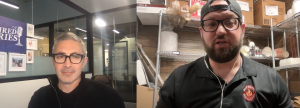
From McDonald’s at 14 to the Restaurant Whisperer: Jason Schofield’s Journey Building Hive V.O.C
Jason Schofield, CEO of Hive V.O.C, shares his journey from chasing happy childhood memories at Tampa restaurants, through 10,000 hours mastering every station in a kitchen, running a multi-concept restaurant group, filing bankruptcy after a costly personal guarantee, and ultimately building Hive V.O.C into a full-service supply chain company that helps restaurants save money through rebates, deviated contracts, AI tools, and now US-based manufacturing of pizza boxes.
Key Insights You’ll Learn:
- Started at McDonald’s at 14 before working through pizzerias, corporate catering, private chef work, and eventually opening a multi-concept restaurant group
- The most expensive lesson was trying to elevate a market that wanted cheap wings, not his upscale vision — you are in business to make money, not to change people
- 95% of restaurants fail in year one and 90% of survivors fail in year two, but mastering every position first and hiring to your weaknesses can tilt those odds
- Filed bankruptcy after signing a personal guarantee on a lease he talked himself into, then used that reset to rebuild the right way
- Hive V.O.C aggregates invoice data from restaurants, submits it to over 350 manufacturers, and returns rebates restaurants are owed but never claim
- A $2 million restaurant can expect $12,000 to $15,000 in annual rebates just for participating, with no contract and no upfront cost
- COVID wiped out a major contract overnight, but the pivot to PPE then paper goods led to owning trucks, importing from seven countries, and manufacturing pizza boxes in Sarasota
- AI tools like Google Gemini can already photograph an invoice and produce a full pricing variance analysis in seconds, removing hours of manual work
- The three skills that determine success are human, technical, and conceptual, but without conceptual thinking to solve problems you will eventually hit a wall
- Future growth includes acquiring small regional distributors whose owners want to retire and rolling them into the platform as strategic business units
Jason’s Key Mentors:
- His Father: Took him to every type of restaurant in Tampa as a kid and to Baskin Robbins afterwards, planting the association between restaurants and joy that drove Jason’s entire career
- Delaware North Sports Service: Corporate chef experience at Kentucky Derbies, Super Bowls, and major arena events that showed him what logistics, contracts, and scale actually look like before he went out on his own
- His Daughter Maddie: Put her hand on his face during the darkest night of his restaurant career and told him he was too good at everything to fail, the moment he credits with pulling him back from the edge
- The Bankruptcy Itself: Forced the humility to stop thinking he knew it all, start hiring people smarter than him, and focus on what he was actually good at rather than trying to do everything himself
- Buyers Edge and Dining Alliance: The GPO platform that gave Hive V.O.C the infrastructure to aggregate purchasing data at scale and pass real rebates back to independent restaurant operators
Don’t miss this conversation about what it really costs to open a restaurant, why the money restaurants are owed in rebates goes unclaimed every single quarter, and what a guy who has been through bankruptcy, COVID, and a supply chain pivot can teach you about building something that lasts.
LISTEN TO THE FULL EPISODE HERE
Transcript
Anthony Codispoti (00:00)
Welcome to another edition of the inspired stories podcast where leaders share their experiences so we can learn from their successes and be inspired by how they’ve overcome adversity. As you listen today, let one idea shape what you do next. My name is Anthony Codispoti and today’s guest is Jason Schofield. He is a nationally known restaurateur and senior consultant with Hive VOC, a company that helps restaurants save money and run smarter supply chains.
Jason (00:09)
I’m sure if can me. I’m if you can me. I’m I’m not if you can me. I’m I’m you can me. I’m not
Anthony Codispoti (00:30)
Hive VOC uses AI to examine every purchase, unlock rebates for more than 350
Jason (00:30)
I’m not sure you not can I’m not can me.
Anthony Codispoti (00:36)
manufacturers, and give independent owners the buying power of a large chain. Their team also designs kitchens, guides menu costing, and even offers food safety training. Through these programs, Hive VOC connects clients to over $20 billion in collective purchasing power. Jason’s insight has shaped many of those services.
Jason (00:38)
Thank you
Anthony Codispoti (00:59)
In 2024 alone, he wrote a series of LinkedIn articles on industry’s trends and the role of AI in hospitality, earning him the nickname, the Restaurant Whisperer from many thankful operators.
Hey Jason, I’m going to stop recording just for a second.
Jason (01:16)
you
Anthony Codispoti (01:18)
But before we get into all that good stuff, today’s episode is brought to you by my company, Adback Benefits Agency. Listen, if you run a business, you are likely stuck in the cycle of rising insurance premiums. You’re paying more, but your team is getting less. And many people can’t afford coverage at all. We do things differently. We offer a solution that provides your restaurant employees with unlimited access to doctors, therapists, and prescriptions. That’s always free for them to use.
But here’s where you really need to pay attention. Unlike every other employee benefit out there, our program puts more money into your company’s bank account. As an example, we recently helped a client increase net profits by $900 per employee per year. Results vary, but the consultation is free. See if you qualify today at addbackbenefits.com. All right, back to our guest today, the CEO of Hive, BOC, Jason Schofield.
Jason (01:50)
So, So,
Anthony Codispoti (02:15)
Thanks for making the time to share your story today.
So Jason, let’s start with your roots. What initially sparked your passion for the restaurant industry?
Jason (02:26)
As a kid in Tampa, my dad would go to all the restaurants and they would say, Mr. Schofield, your table’s ready. we just go for your table’s ready. So we’d go to a steakhouse, a Spanish restaurant, every type of restaurant you’d ever have. And then afterwards, my dad and I would go to Baskin Robbins and Britain Plaza.
He’d get his butter pecan ice cream and I get my ice cream and then that was the happy time. So I wanted to chase those happy times as I got older. And those were my happy times was eating ice cream with my dad, but I associated that with restaurants. So then I worked my way in as a chef, a restaurateur and stayed in the industry.
Anthony Codispoti (03:04)
So what was your first job in the restaurant? Were you like in high school?
Jason (03:08)
My first job in a restaurant, was 14 years old and I worked for McDonald’s right across the street from my dad’s pawn shop there in Tampa. And I didn’t want to work for him. So I went and worked for $3.25 an hour minimum wage. I was making, actually at McDonald’s when they made biscuits still in house fresh. And it was, it was a great learning experience and I just loved it. I just, and then it went from that to then pizzerias and making pizzas at my cousin’s restaurant.
playing basketball afterwards and then going, you know, just one after the other.
Anthony Codispoti (03:42)
And so at some point you started a restaurant group or was this a family business, Schofield restaurant group.
Jason (03:48)
No, it was, was my restaurant. I just, I’d been a corporate chef for Delaware North and then I had been a private chef for our, for some well-known people. And then I’d done all that I had done and I was like, I want to go try to my own. then I opened my first one, then it came in the second one and it turned into a third, fourth, fifth, and then it kept growing. Then it was just a group. So everything from.
Anthony Codispoti (04:11)
And what kinds of restaurants were these?
Jason (04:14)
fine dining where we would mill our own flour, do our get-hole hogs, goats, and break down and make our salumi and charcuterie to cheeses, to pasta, milling our flour, doing everything to a coffee sandwich shop, to a tiki bar, to a bowling alley bar, to a sports bar, to a juice bar, to craft cocktails, pizzerias, ⁓ just
Whatever I felt like when I wanted to do it, just love food and I enjoyed doing what I did. And I still do. I still do it. I just do it now for charity, but I don’t cook anymore professionally. No, done.
Anthony Codispoti (04:50)
Do you still have any of the restaurants or did you sell them?
Why do you say it that way?
Jason (04:57)
You people don’t realize what it is to do and be successful in a restaurant.
It is stacked against you. And I find that the more people want to do it. And I I’ve come to realize why they want to open a restaurant. And it’s because usually the majority of all Americans why they were in college or in high school, their first job was a restaurant hostessing or cooking or why they were in college. They would wait tables. So it’s nostalgic then brings you back to those times of your life that were happy and good. So people think, well, let me open a restaurant. It’s sexy. It’s glamorous. It is anything. But you’ve got to love it. ⁓
And it’s it’s it if you don’t love it, it will eat you up and spit you out. And like I said, the odds are stacked against you. It’s 95 percent of them fail the first year and the 90 percent of those ones that made it the first year fail the second year. And there’s just so many things that are stacked against you that you’re just one disaster away from, you know, failing in a restaurant. But there’s no shortage of ones opening up all the time.
Anthony Codispoti (05:55)
What do you think you were doing differently that allowed you to be successful with multiple operations?
Jason (06:02)
man. Well, being a corporate chef, I figured that if you ever, if you got to be good at anything, I’ve learned that you have to master your craft. There’s like that 10,000 hour rule, right? Basketball, 10,000 hours, perfecting your craft, 10,000 hours of ⁓ playing a violin, 10,000 hours of shooting a free throw. It kind of goes with the same. Just you need to be able to work every position in a restaurant before you want to go open a bar or every, every
every job there is in a restaurant to ever even open a restaurant for many years before you go do it. And I think that once you realize that you’re going to find out what you’re good at and what you’re bad at, and then you need to hire accordingly. So I think that what set me apart was I got to work in those jobs.
I got to see what it is. got to be a corporate chef for Delaware North Sports Service arenas, huge sporting events, Kentucky Derby, Super Bowls and see what it takes to do that negotiating contracts. Then also working for a hotel year. The other side of it, what it looks like to the design side of it. What does the ambiance, the feel, the new Disney effect? What is it that the Instagrammable moments, all those play an intricate role in to being successful in a restaurant. And I got to learn all those before I stepped into my own.
Anthony Codispoti (07:15)
Thinking back to your time with the Schofield Restaurant Group that you were running, what was maybe one particular challenge that, a hardship that you had to overcome during that time that really shaped and influenced the way that you continue to run businesses today?
Jason (07:33)
That’s a good question. I get goosebumps. That’s a very good question. So it was a very hard, painful lesson. I went into a town and I was like, I’m Jason Schofield. I’m gonna change the way they eat. Get rid of this. We’re gonna do this, this, this, and this, and this. And then I was like, it’s an affluent area. They’re here. They’re gonna come and they’re gonna buy the droves. Great.
Very painful. wanted their, they wanted their, what they wanted. And I realized that I’m in business to make money, not in the business to change other people. I’m not a Michelin star chef. I’m not, I’m not the TV star where they’re going to come here just because they want to be, you know, something it’s a very
to get to swallow your pride to be successful. It’s not the same. You know, you need to be able to a you’re in the business to make money. You have a family or you have your own personal stuff. So that’s first. And that was the hardest lesson I had to learn. I was like, you know what? This is a half million dollar lesson I have to learn. Like I need to read this. Go back to give them their 10 cent wings or nickel beers and their whatever. And then let them happen. And then it was packed. It was like, all right, cool. I’m going to make this amount of profit. I make this amount of margin. And that’s what I’m in the business to do.
Let me go do that in other places where they might appreciate it and then do that. I think that that’s what set me apart with that. It was a very hard lesson. Pride. So,
Anthony Codispoti (08:47)
So yeah,
it sounds like you had this idea, you wanted to put all this fancy food out there, you were gonna elevate their dining experience. And what you learned was, flow with the river, right? Go with what your customers already want and do that really well.
Jason (09:01)
Pivot and persevere. Yeah,
pivot and persevere. Yeah, no, you’re there. Nowadays, it’s even harder. You have you have so many restaurants vying for the same dollar in the same town, and they’re popping up everywhere. You have oversaturated areas that you know that we’re busy that now aren’t and you have to differentiate yourself and you might have to change the way you do business. It’s just a landscape has changed a lot.
in just the last five, 10 years with social media and the algorithms and how they place you and the people’s preferences. And it’s just it’s very hard now. You need to have a lot of information and to be successful in these days.
Anthony Codispoti (09:36)
Say more about that. What’s changed in the last five years? You’re just saying like, in order to be successful, you’ve got to get like the right influencer to snap a shot of you? Is that what you’re talking about?
Jason (09:47)
All of that plays. Yeah, you have to have, can go into a restaurant and you can look at a, see where a chef is at and they’re in there.
culinary career, how they play, how they present and the flavor could be good, but if it just slopped on a plate, it’s not an Instagram moment. Someone’s not going to take a picture of it and put it out there and get like, my God. So now it’s like this wow factor called the Disney effect, like the Instagram mobile moments. You have that part of it. You have social media that ranks you. You have to set your part. You have to set yourself apart where you are a, you are a drop. Imagine the ocean.
your one drop and that little ripple effect that you might be in a little pond and you if you have every other restaurant is vying for that same thing in that little pond, you have to make a big enough ripple where you have to set yourself apart. And that’s very hard. So if you’re not using tools, know what your costs are. Know what your break even point is. Who’s doing your social media? What can you automate if you’re not responding to someone fast enough on a Facebook? If you’re not having someone answer your phone, if you’re not getting back to an email, if you’re not dealing with all these things that you can now have a eye
to help you with or you can have outsource it or put someone there to do that. There’s other restaurants that are that are going to be more successful and get that dollar that you might miss.
Anthony Codispoti (11:00)
So help me with the timeline here. You had multiple locations with the Schofield Restaurant Group. At some point you start high VOC. Did one wrap up before the other started or was there some overlap?
Jason (11:16)
So no, I ended up exiting Scofield Restaurant Group. And after a while, like, you know, I didn’t get to see my son grow up and my kids grow up. And I dropped my son off to college and I had Maddie’s crafting crew at the time. And I was like, I’m not going to see her grow up. It’s OK to have restaurants named after her, named restaurants after her kids, but you’re not going to do it. So I exited. I walked away and I did it happily. ⁓
And then I was like, what am going to do? Well, can be the used car salesman and be a consultant and kind of do that. was like, but everyone’s doing that. How can I set myself again in the restaurant? What I had learned? How can you set yourself apart from everybody else? Well, I knew that the future was always going to be virtual. The younger kids are using their phones or using their technology. They’re going to be on this or on social. They’re you know, this would be for tick tock. So in 2015, 2016, it was like I knew that the future is coming. So we came up with high virtual operations consultant. So we came up with an app and then we came up with an online
learning management software to help train your staff and to do that. And then we came up with a way to take your tests and things like that online, serve it up safe at highvoc.com. And then it was kind of like that. And it just.
Then it just kept growing and growing. And then we got connected with buyer’s edge platform and give rebates to restaurants. How can I help the little man be a big guy? Take what I had learned and pass that onto them so they could be successful. I remember what it was like looking at your phone. If you can make payroll, if I could order food, how can I help them not do those pitfalls that I did? So that’s where Hive came from. And then it just pivoted. Then the pandemic happened. Then we pivoted again. And then after the pandemic, it, that was a race to zero.
Only so many masks and gloves and things like that. the country, two thirds of the country was closed. Florida was open. So then it went into supply chain and then now manufacturing and distributing paper goods. So we do that now. So again, the lessons.
Anthony Codispoti (13:01)
So
it started out as, well, I want to be a restaurant consultant, but that feels sort of tired. Like lots of people are doing that. How can I set myself apart? And so you came up with some ideas to use like onboarding and training systems on your phone. Is that what you were building at the outset?
Jason (13:11)
Yeah.
Yeah. So it’s kind of, it’s called having,
yeah, hive university. You could go on and train your staff. So the biggest part of what makes the restaurant successful, Darden group, look at them. Why would I want to reinvent the wheel when someone like a Darden group or, or Chick-fil-A, they have spent millions and millions of dollars. Disney has spent millions and millions of dollars of putting all these training and all this stuff into effect. Why wouldn’t I take a part of their book and just make it my own? So by training your staff,
This is what a bourgeois wine is. This is what a Bordeaux is. This is what a confit means. This is what I want them know what’s on my menu for my restaurant. But how can I have that to other restaurants? So we made an online learning management software that you could upload tests, randomly select people, push notifications like, this person go on this staff when they get onboarded. Did they have their did they have their food manager card? Did they have their serve safe? Do they have their tip certification? And it was just a way to like onboard that. So that was why we came up with first. And then
my silly brain, it would even take your recipes and put it in the app. And then if you were hired as a,
A salad station. had a picture of what your salad station looked like. What went into everything, what was on your station. It was all broken down by station. So you could onboard an app and you could see if he was actually learning on the app, if he actually looked at his menus and if he was doing it. So you, you, there was no excuse for them not to cause here’s your recipes. Here’s your costing. Here’s this. And then it was all paper. So now it was, I, put it on a phone and the virtual operations consultant and that’s what we did.
Anthony Codispoti (14:51)
⁓ fascinating. And then what happened in COVID?
Jason (14:52)
Yeah.
So then we were about ready to sign one of the biggest deals that we had done, two of them. We went to a company out in Utah. I won’t say their name, but they’re a huge company and they were going to bring us on board to give rebates to all their customers. They had about 10,000 of them.
Signed the papers up. We went out there. They had a hive summit. They brought some of their other channel partners in. They introduced us like you should do business. This is what we’re going to do. Papered everything up, went out to dinner, went to New Jersey. And now this was what was it? March, the first week of March, March 10th or 7th, like the world shut down. So end of February, we’re in Utah. First week of March, we were in New Jersey.
at a it’s a famous sub shop out of New Jersey on the beach. Everyone sees them and we were going to go up there and do that and then came back ready to like life’s going to change us pop bottles. And then I was watching the basketball game. They’re like, we have to close down. Like what? What’s the like? Everyone has to go home. I’m like, what is this COVID stay in place lockdown? And then they canceled our contract. They canceled everything. Everything said, and I was like, what do I do again in the restaurant?
Pivot persevere. All right, well, we have this platform. Florida’s open. How can we save them? How can we get the money? How can we do this? We have the platform. We have the reach. So we just pivoted, started bringing in COVID test kits, started giving gloves, started getting masks, started getting hand sanitizers. So then we added that part of our business.
And then it transpired to a race to zero during COVID. And then we knew there was not going to be, you know, can’t sell out back all of their COVID test kits, can’t sell Bass Pro Shop, all their COVID test kits, because that’s going to eventually go away. Let’s bring in paper goods. Let’s start bringing in trash bags. Let’s bring in portion cups. Let’s start doing this and start a paper company. And we did. And that’s where we’re at today. And then now we’ve grown that.
Anthony Codispoti (16:51)
Okay, so yeah, give me give me the lay of the land today. So we still have the hive university, right, the training, the learning management system, you’re doing a lot of paper goods. And so what you guys are buying these and massive quantities that you get price breaks, and then you’re passing those price breaks onto your clients. Is that how it works? Okay.
Jason (16:56)
Yep. Yep.
So
we actually own and operate our own trucks ⁓ in Florida and then we do we do RFQs for national chains outback blooming brands ⁓ Anybody that needs custom goods or paper products or a portion cup or a saddle bag School districts and we do that on a national level But then we in Florida we actually have our own trucks where we are cut out the middleman and just import it manufacture it and then distribute our own selves We have our own port of our own platform
our own inventory management software. You can download our app from the phone, from iPhone or iTunes and Google Play Store and order products. ⁓ And now we manufacture pizza boxes. actually are bringing manufacturing back to the US because ⁓ it’s not easy right now. And I have this little adage, you probably know better than I do. Like everyone’s like, a, ⁓
dishwash, not a car wash, buy a laundry mat. So cool. So much money. When you hear about it, it’s already too late. Right now want to get ahead and bring manufacturing back. in four or five years when everyone’s trying to do it, we’re already be on our way out. And that’s all we’re manufacturing pizza boxes. We manufacture those right. And our warehouse out here. So my hands are kind of dirty, but we do all that kind of stuff and we’re bringing it back and
Anthony Codispoti (18:32)
mean, business must be good because yeah, your hands are dirty because you guys are moving into a bigger warehouse today.
Jason (18:37)
Yeah, we are. So we’re moving from one warehouse into another and just getting ready for another machine to come and it’ll spit out 250 pizza boxes a minute. Just, yeah, it’s fun to watch.
Anthony Codispoti (18:48)
And so what
does that manufacturing process look like? Are you guys getting like large like rolls of corrugated and you put them into this machine and it cuts them into the right sizes and folds them?
Jason (18:59)
So we get imagine like a sheet like the size of a coffee table. We get sheets that like that and it’ll go in the machine and it might cut six boxes. It might cut four boxes and it might cut three depending on the size and then it might cut one, but it will eat them as fast as I can feed it. It’ll spit them out. It’ll shake them. It’ll count them and then put them through a right. Another automated rail that go through a vacuum sealer and it will shrink wrap them and then someone’s just palletizing them. And it just, can do custom up to four colors on one big printer and I can do
as many colors on the digital printers that we have.
Anthony Codispoti (19:34)
So paper goods, other kinds of inventory items that restaurants need?
Jason (19:39)
Everything you can think of the only I don’t really touch as perishables. We, I mean, we’re a Heinz distributor, we’re a Monon syrup distributor, we’re canned tomatoes, a distributor, flower distributor. We are getting into goods that are, that I can be as a convenience to, ⁓ the big boys. I’m going to be better on pricing as far as the paper goods is cause we don’t have the overhead. They might be better on other things, but I don’t want to get into dairy and produce and stuff, but
We do well, we do really well on all that.
Anthony Codispoti (20:10)
And so you guys are in Sarasota, Florida, right?
Jason (20:14)
We are in Sarasota, Florida. Yes.
Anthony Codispoti (20:15)
And are most of your customers regional? like I hear you say you own your own trucks.
Jason (20:21)
So we do regional, we deliver directly to the customer. So we import, probably we manufacture products in about seven different countries. We import containers and then we distribute it, warehouse it and repalatize it. We sell it to other wholesalers throughout the nation and other in Florida. And then we actually deliver now directly to the end customers in Florida. ⁓ So we go from anywhere from hotels to food trucks to restaurants to multi chains, you name it.
Anthony Codispoti (20:47)
And so you are what is known as a group purchasing organization, am I right?
Jason (20:52)
Hive VOC is the parent company of Hive Disposables. So we are ⁓ an aggregator of data and we take that data and give rebates to restaurants for free just to participate.
Anthony Codispoti (21:03)
What does that mean? What kind of data are you aggregating?
Jason (21:07)
So if you imagine like a restaurant, typical restaurant might have 300 skews that they’re ordering on a daily basis. French fries, Don, ⁓ tablecloths, you know, everything that is a branding, Genpak, Pactiv, all those things, they all have rebates. And what we do, we take your invoice level data from your customer number and the big box re the manufacturers want to know who their customers is. Well, the middleman doesn’t want to give that. the bridge from the manufacturer, the
the Cisco’s and the Cheney’s of the world to the customers, we bridge the gap by giving the data and then they get the rebate. So we compile what they purchase from the retailers and we take that rebate. We take a little piece of that and then give the rest of it to the customer and it’s their money. Every restaurant should be getting, there’s a hundred and we can give about 150,000 rebatable items.
on a quarterly basis and there’s about I think up to now 50,000 deviated contract prices. So that’s how we do it. We take that data and say, there’s 10,000 people buying this. Give us a rebate and give us a deviation. Here’s the data. Here’s where your customers are. Here’s the type. Here’s the demographics. And we give them all that data as much data as they want as that we’re allowed to give just that personal info. This is where it’s going. This is zip code, this state, this region.
And then they give us a rebate based on that and a deviated cut price. Every restaurant gets to participate in it. Hence every restaurant participates in deals that are sweet as honey. So the hive gives them back their honey, their money that they’re already buying. That’s their money. We just put all that through because you would have to take all that invoice level data, submit it to each of those 300 manufacturers and then wait a quarter and then get it back. have your, you’re a plumber, you’re a dishwasher, you’re a server, you’re a hostess, you’re a cook, you’re everything when you’re an owner.
So we do all that heavy lifting for you just by aggregating it.
Anthony Codispoti (22:58)
Interesting. So the purpose of all of these suppliers providing these rebates is because they want some data on who their customer is. You’re providing that data, but you’re stripping out the personal information. It’s like, here’s the zip code, right? Here’s the zip code that it’s going to basically. Okay.
Jason (23:07)
Yeah.
Here’s the
zip code. It’s a Mexican style restaurant that is, you know,
on this side of the road, this address and it, know, whatever that is in it, here’s the history. I’m not, don’t know who owns it, what they’re doing, giving emails or phone numbers. None of that. It’s just the type of restaurant where it’s at and the zip code and it’s, is it Italian? Is it a fast casual? Is it a QSR? Is it a hotel? That kind of data. There’s no different than when you buy a car, you get a rebate or a phone or your, your glasses you wear, you get a rebate. Everything has a rebate by the Walmart. You get a rebate. We just take the time to send it in.
That coupon is there for everything that you buy. It’s no different than when you go to Publix. Yeah.
Anthony Codispoti (23:57)
Fascinating. So
give me an idea, say, I don’t know, ⁓ a pretty good restaurant is doing $2 million a year. What kind of rebates might they expect on an annual basis?
Jason (24:06)
Yep.
So $2 million restaurant, they’re, if they’re in their pie of like the successful restaurant, they’re at 33, 30 % food costs. So we’ll just say 30 % of 2 million, 600,000. So $600,000 in purchase cogs. Imagine 2 % of 600,000. So two times six, they’re about $12,000 to $15,000 a year that they’d get about a thousand, a little bit over a thousand dollars a month on average.
but it would come quarterly. So they could get a three to $4,000 check. And that, it’s free money.
Anthony Codispoti (24:36)
That’s nice for not having
to do anything because you guys are doing and so what is your tech stack without giving away secret sauce? What does your tech stack look like? Because if you guys are going through receipts and invoices by hand like this is cumbersome. It’s not worth it.
Jason (24:51)
no, so it’s all it’s all a it’s all it’s all through daddy aggregation. So imagine like your customer number, your email, that’s what takes it. And then it now eats all that. So every item has a manufacturer product code.
And then it has a skew from that box retail, but the manufacturer product code is the same. And it doesn’t matter which one of your distributors are buying it. They might put their internally, they might put a number on it, but that manufacturer product code never changes that little skew or that G 10 code or that bar code never changes. And that’s what’s the rebates based on. And that’s what the manufacturers want to know that type of data. we just take that number, take what they’re buying, what they purchased to catch weight.
27 line items that we capture on that data. And that’s what we give back to the manufacturers and it’s all automated.
Anthony Codispoti (25:43)
So it’s
easy for you guys to do this for the products that you’re supplying to your customers. But what about like the perishable items or the items that you don’t touch?
Jason (25:54)
It doesn’t matter. the items that we don’t touch.
Anthony Codispoti (25:57)
Are you like tapping into their accounting
software? Is that what’s happening?
Jason (25:59)
So,
no, so the items we don’t touch are just like, what we personally sell to the restaurants. So our disposables, that’s what we are distributor. We’re just a paper and distributor like that. But it doesn’t matter who you’re buying from or what state you’re in. If you’re buying from a little guy and they’re part of the platform and they’re doing it, we, there’s 350, probably 400 distributors now that participate in this. So you could be one of 400 that you’re buying something from and they’re going to give the rebate cause they’re giving the data because we have to basically take what you purchase and match it
with what you bought and they have to line item and then that’s how the data just does it automatically based on the customer numbers. So it does not, just a customer number. So you participate, you say, hey, I own Joe’s Pizzeria. Here’s my customer number from Cisco, PFG and Chaney brothers. Here’s my customer number. You say that we want to participate. You give us permission to just to get your invoice level data.
Anthony Codispoti (26:35)
How are you getting that data from the customer?
Jason (26:53)
You still order the same. You still call your rep up or you put your order online. We just get a data feed. And by doing that, either you can upload it, you can take pictures of it, or we just get an email or we automatically, ⁓ we can tie into that purveyor and they might actually just give us the data and you participate and you use no contract. You don’t pay me.
You don’t do anything. We get our money just for allowing you. That’s what we want. And that’s how we go and negotiate contracts on a big scale for the big 10,000, 15,000 units. That’s how they get to get their prices way cheaper than a normal place because they’re part of their own deviated contract prices and rebates.
Anthony Codispoti (27:33)
We just mentioned that you guys are moving into a new warehouse as we speak, but say more about that. Like why specifically now? Why a bigger one? What’s going on?
Jason (27:43)
So right now we bring in manufacturing and so we are now moving to bigger warehouse because we have this, we have another machine coming next week. It’s 55 feet long and about 12 feet wide and it’s another pizza box machine, but we’re going to manufacture them in the warehouse that we still sell products out of. We also are going to be adding some of digital printers that will print on cups and coffee cups and foam cups so we can get those customers in and help the mom and pops. Everything I do, I want to be able to save a restaurant money.
That’s my heartfelt thing. I want to just be able to help them because I knew what it was like when I had my restaurant and I forgot to pay my bill and my lights were off and my kids came home and I was like, oh, we’re going to get the 10 out and we’re just going to camp in the living room. Let’s make fun of it. And like, let’s do this. But they didn’t know that they were like, oh, we get to camp out in the living room with dad. But it was just because I had to make payroll or I forgot or I didn’t have enough money to bank because I didn’t know what I wasn’t. I didn’t know what I didn’t know when I was first starting out. So everything I do is to help restaurants do that. So we just
They just participate. There’s no contract they signed with us. We get their data, we go negotiate stuff for them. They participate and they can pick as much or as little as they want.
Anthony Codispoti (28:52)
Say more about camping out in the living room with your kids. What led to that?
Jason (28:55)
Yeah, there’s
no lights. They can’t camp out in the room. there’s not just just owning a restaurant and you have to pay your employees before you get paid. So I might not have paid my electric bill that month or forgot and it got turned off, but it was turned back on the next day. You know, just it happens more times than you think. You know, it’s no different when you’re struggling and you’re you have a restaurant, but you want to make sure your kids get fed and you’re not going to eat because you can eat at the restaurant.
You know, like, I mean, it’s just what happened. So but when you have a family and you have your little kids and they’re over that weekend because it’s your weekend and you’re like, oh crap, we’re camping out in the thing and we’re going to bring a pizza home from the restaurant and we’re going to like tell stories and like this is scary, but scary stories with the flashlight. Like, and they’ll remember that, but it is what it is. It happens a lot more than you think.
Anthony Codispoti (29:48)
What did it feel like on
the inside for you going through that?
Jason (29:53)
Like I remember crying my daughter one time. Like I just she was like, why are you crying? And she was probably eight. And I said, because I don’t want to fail you or your brother. She goes and she goes, she looked at me and we were laying down there in the little pillows and she goes, put her hand on my face. She was, you can’t fail. I said, why? Because you’re too good at everything. And I was like, was like, you’re in trouble now. Go to your room. I am in my room. I’m like.
Anthony Codispoti (30:18)
Hahaha
Jason (30:20)
let’s see, just put a little hand my face dad. You’re good at everything. And I was like, but I felt defeated, like no lights on. Like I’m crying because I’m sitting here. They don’t know that you’re a hundred thousand dollars in debt in your restaurant. You borrowed everything. You’ve leveraged everything to put in this restaurant and it’s failing or you’re trying to make payroll or you’re, you’re just, you don’t know what you don’t know. And I knew a lot. And the more I realized I knew, I didn’t know anything at all.
And I had a swallowed pride and then that’s a coming to Jesus moment with yourself. Like I don’t care what I think, what do they want? What am I not doing and how can I hire to replace what I’m weak at? I’m not good at bookkeeping, hire a bookkeeper that’s way better than me. Not good at this, hire someone who’s good at that. I’m not good at like this, hire someone who’s good at that. I’m good at what I’m good at, let me focus on what I’m good at. I can learn the other stuff, but learning to hire.
There’s, I’m going to say this last thing and that’s it. There’s three skills, human skill, technical skill, and conceptual skill. Two of you, two of these get you promoted into the next level to get to the restaurant. But if you don’t have conceptual skill to solve problems and you make yourself thinking that you’re indispensable, but I can do it all, you’re going to fail. That’s the recipe for failure. And that’s a hard lesson to learn.
Anthony Codispoti (31:35)
You know, I’m so glad that you shared some of these stories here, Jason, because these are the things that don’t get talked about very often. And people see with a bit. It’s not fun, right? It, it feels terrible. And, and admitting it out loud to others is like, ⁓ that’s just this ultimate blow to your ego. But this is the kind of stuff that is so common when people are starting businesses, right? And you see it probably from a lot of your customers today.
Jason (31:41)
no, is that funny? yeah.
So common. And they’ll, Oh,
and they don’t want to ask for help. And it’s, it’s, it’s, it’s, it’s hard to ask for help. It’s hard to say as a grown person that you’re failing or that you don’t know what you don’t know. And you get overwhelmed, you get bogged down. And then it just takes one thing after another. Every day in a restaurant, there is a problem. You are a, if you’re not a good problem solver in a restaurant, you will not, you will not, you need a higher one. If you’re not one.
You need to hire someone that can solve problems and just be like, all right, the dishwasher didn’t come in. Hey, Chris, you’re going to go over there and do this. You two are going to work the line. I need you to be the hostess. So you’re going to take tables. We’re all going to. And if you can’t move that and then problem solving a restaurant. And that’s one thing I was really good at conceptual thinking and solving problems. like solving them. So it’s just that is my superpower. That is.
Anthony Codispoti (32:41)
Is that your superpower?
Jason (32:45)
That is one thing that and I love the chaos and it’s a sickness. You’ll find most restaurant tours or good chefs or people that love this. They love getting beat up every day and coming back the next day and doing like, can’t believe I did this. And then you like, man, I just did that. Holy crap. Let’s do it again tomorrow. And you do that. You go do a Super Bowl. You go do you feed 30,000 people and and and one sitting and then you’re like, let me do this again. Logistics planning.
it, it, it, it, there’s a recipe for success. You follow the rest, you follow the recipe. It’s great. If I tell you to bake a cake and don’t give you recipe, it’s probably not going to work out. If I give you a recipe and you follow it, can you tweak it later on? Yeah. Can you make it better? Yeah. But it will come out good. It will be a cake. It might not be pretty, but that comes through experience that comes through those 10,000 hours. just, yeah.
Anthony Codispoti (33:15)
Mm-hmm.
So one of the big things that you’re able to help restaurants do is get back some margin points, right? You’re getting them some
better pricing, you’re getting them these rebates. I wonder if there’s a particular client story that sticks out in your head where you were really able to help them out of a jam.
Jason (33:54)
Well, I don’t know if it was ⁓ a particular story, but we went into one, one group and they had very successful restaurant group and they’re here in Tampa, Tampa Bay area. And they probably had like 15 places print money. You would know it if I told you the name Prince money going down. And I met with the CEO at the time as a friend. Now he’s a good friend of mine, David, and I probably spoke too fast and he’s just like, I asked, asked him for a bill.
I saved him money, gave him $15,000. She’s in the next door. She’s right in the other room. Saving $15,000 on one invoice. Just took a picture of it and he’s like, you just saved us $15,000 like that. What else can you do? what else would you like me to do? Gave me his credit card processing, dropped that. Gave me his rebate program. Sign him up for that.
did insurance drop that when we were set and done, I’d probably say this restaurant group a half a million dollars within two hours of me leaving it. And they didn’t sign any contract with me and didn’t pay. I’d get paid on the backend, but not from them. And then it was like, then it became a lifelong thing. Like, Hey Jason, can you help this guy out? Hey Jason, can you help this guy out? And, and, and that was half a million dollars to your bottom line. Like if I can give you 10 to 15 % savings, just by having a conversation with me,
But no one wants to do that. No one wants to be told what they’re not doing right. So you have to make it their idea to be like, I’m here to help you if you want it. If not, don’t worry about it. Call me when you need me. I’ll be here. It’s pride. ⁓
Anthony Codispoti (35:28)
more about that? How do you make it their idea? How do you help them
sort of arrive at the idea?
Jason (35:35)
Um, you, I don’t, I don’t know. I, I, I, I, I’ve, I still have a hard time with that to this day. I, it’s like an adage. I don’t know how to say it. I don’t know how to make them do that. It comes through. They, they like trust and want to do business with you. Yes. At the same time, everybody comes in and tries to sell them something. Everybody’s coming into a restaurant to, they look out there and like, Oh, I’m not here. They take your card. You get it. And like, I did it. Like I’ll get.
You get business cards and you just, you know, it happens. You don’t want to be told what you’re not doing right. So you have to be like, chef, how can I be of service to you? I’ll come and place your orders for you every week. Let me walk you through that. Here’s, here’s, here’s an, let me do your order guide for you. Let me take your pricing and go back and do working for you. And I’ll give you a laminated one. I find that when I solve a problem for them, that’s one less thing that they have to do. One less problem they have to solve. And that’s how I get them to trust me.
And to do stuff is like, have to solve a problem for them. I have to be a service. If I’m just another liability, then they already have 50 of those that walk in the door and they pay every day as a liability. Every day. Piece of equipment, people that, so if I can take one of those things off and solve that problem, make it as easy as possible. Then it, it, then it’s a trickle effect. Then they call me and then they send me text messages, you know, like, Hey, can you help me with that? Sure. problem. Make an email. Here you go. Boom.
Anthony Codispoti (36:55)
Why do so many people
call you the restaurant whisperer, Jason?
Jason (37:00)
I got that name from another guy that gave me a podcast. It’s just because I’ve failed enough. I failed enough to learn what I, what I’ve learned and they’ve been painful lessons and all this stuff is out there for them. Rebates are for them. You don’t need me. You can sign up for rebates. There’s plenty of programs out there. can dining lines, buyers edge, RPP, Consolidated Concepts, FRP, G1. There’s so many restaurant people out there that are GPL.
But they’re not told you because here’s the here’s what happens when I’m a cook in a restaurant and I’m getting my 10,000 hours in and I’m to get my chance to go open my restaurant and this guy’s going to believe in me. I take all those food purveyors and all those salespeople that were my sales rep when I was there. I solved the problem now going into them because now I have all this. I have a produce guy, a dairy guy, all this. Those guys were all in commission. Those guys are all making money because that’s their one thing. Your insurance guy, your ice guy, your all those guys are on commission. They don’t tell you that.
His margins are based on commission. I’m going to tell you like, look, there’s a better way to do it. Here’s a rebate for you to offset that. You can negotiate prices. You can ask them like, Hey, I need a better price on my chicken. Hey, I need to shop it around. Cause if you’re not doing it, those margins go up. That’s where the whisper part is. I’ve learned those lessons and, and, and I’m there to advocate for the small guy. I want to, I know what it was like. It’s painful, man. So hard now. I couldn’t even, I tell people when they come to me like,
Don’t do it.
Anthony Codispoti (38:27)
Don’t start a restaurant.
Jason (38:29)
No, if you if you have $200,000 put that into something that’s going to give you a 10 % guaranteed return, go buy a house, go do something else.
Anthony Codispoti (38:38)
You feel pretty strongly about it. Even, even though this is your business, this is your industry. You’re like, go look somewhere else.
Jason (38:39)
95, you’re gonna fail 95%.
And let it’s so hard
because if you, if you, if you don’t own the property and you don’t own the liquor license, you have nothing to bank on. If you’re not going into it to build good books, good clientele and sell the business to somebody that wants to take over your business in five or 10 years and you have an exit plan going to it, you’re not going to get anything out of that restaurant.
No one wants to come in and buy your chairs or your FF &E. I go buy restaurants for pennies on the dollar when they close. That you might’ve spent $100,000 on this pizza oven. I’m going to give you $5,000 and you’re going to pay me $3,000 of that to take it out of there because if not, it’s going to stay there. And the landlord is going to give it away for free because he wants it out because there’s another client that comes in that doesn’t want a pizza in there. He’s going to put a taco place in there. So he lets me come take it for free. I’m at least going to give you something for it. That’s the dirty side of this business.
So there’s some recipes for success, but there’s also, you you have to have that vision, like already knowing that I’m gonna do this to do this, or I’m gonna do this forever.
Anthony Codispoti (39:44)
Let’s talk about sustainability and long-term planning, Jason. How do things like ethical sourcing, community impact, environmental responsibility fit into your business?
Jason (39:55)
don’t think it fits into my business being a distributor. Yes, it doesn’t matter to me. I work for the customer. If the customer wants it, I’m gonna do that. But for the customer, it goes back to that intricate story of what sets you apart from the guy down the road. If you think that that’s very important to you, then stick to who you are because people wanna come to you because A, you’re authentic. You are what you say you are. So if you believe, you know,
sustainability and you believe in all those practice. Yes, they are good for the environment. You should buy sustainable cheese and meats and produces and all that stuff. You should for the our planet. We all live on it. But that comes down to the story that the restaurant tour wants to tell. A can they afford it because it’s very expensive. It’s not cheap. You know, you want to get a PLA plastic cup. It’s one hundred and ten dollars a cup where I can get a RPT, which is a recycled one hundred percent PET recyclable cup for. Half to a third of the price.
How many of those cups can you justify to sell to get that $110 case versus a $50 case? Again, you have to know these things and look at your numbers, know what your break even is, know how many pizzas you have to sell. A lot of people don’t know what that those formulas are that are out there. And that’s sad.
Anthony Codispoti (41:12)
You’ve written a lot about AI’s potential in the restaurant industry.
Talk to us about that. Where do you see it being used now? Where do you think it’s going?
Jason (41:24)
You can, I use a, it’s a, AI is open on the screen right here. That’s this one. It, can go in here and it will never forget a conversation that I have. And I can say, you are now my virtual gym GM. And I have a little thing in here. It’s my virtual, my virtual management helps me with everything. Take my emails, put in there and I can go back and reference the things that I forget.
Imagine you having a tool that you could talk to that, you know, it will be here soon. You’ll have to be able to put like a general manager. You have a little camera on that. Remember everything and help me like recap today for me. Table 12 did this table six to that. These this this boom boom. All those things that you forget. AI can do that now for you. Those glasses, that little AI pins that you can wear, the things that you can do on the computer. You can create little ⁓ AI agents.
that answer things for you and automate. And if you’re not doing it, someone else is doing it they’re going to get your dollars. You have to embrace technology. Unfortunately, it’s I mean, as much as people don’t want to say there’s so many tools that are coming out, Gemini is great. If you want to do, if you want to take up, you can, here’s a great one.
Anthony Codispoti (42:23)
So what can restaurants do right now with AI? Low hanging fruit.
Jason (42:39)
You get a PDF of five or six vendors, even your purchases right now. And you want to put that into something and compare prices. You can ask Google Gemini, take this PDF, put it in a Google sheet for me like that. Tell me the price variances and start on this. And you can just start telling you what to do. And it will take a PDF or even a picture through its Google Oculus. This is what we use to take pictures of the stuff like that. I can take pictures of a… ⁓
a PDF, put it in here and it will take that and put it all in columns and it will, it’s miraculous. So imagine doing that with the data that you don’t want to spend there and a key in one at a time and do this and like look at this and key it in like I used to have to do. You can say, take this picture. Can you put this in here? Boom, boom, boom, boom. And I’ll say, sure. Here it is. Would you like me to export this into Google Sheets? Yes. Can you put that in the table to me and tell me, let’s add a weather table. How does weather affect or how does this concert affect or how do you can
Any idea you have, can tell the AI right now and make these models and it will never forget a thing. That’s low hanging fruit. Imagine having that data like that. Crazy.
Anthony Codispoti (43:49)
Jason, behind most success stories, there’s usually a chapter that
almost broke someone. If we haven’t already talked about your example, what’s a serious challenge that you’ve overcome, personally or professionally?
Jason (44:04)
Man, probably one of the biggest ones I did.
I’d signed a personal guarantee for a lease and I, it was a costly mistake. I knew going into this lease, wasn’t, it was a chance. I was like, I convinced myself I’d sold myself and I bought myself. It’s usually on any conversation. Someone’s buying and someone’s selling. If you know where that is, you know where, but I was on both ends of this conversation. I talked myself into it.
bought it and I was like, yes, this is Half million dollars later, had to file bankruptcy early in my career to be able to do this. And I was like, never again. And I, I was like, either I can just feel like I’m going to give up, don’t want to do this. I’m going to be this. I’m going go be a cook forever. I didn’t want to be the 50 year old cook that was working for the me at the time, a 30 year old chef and had like I wanted to
I wanted to do all kinds of great things. And I had to swallow my pride, man. A lot of restaurant owners and a lot of people don’t want to swallow their pride. They think they know it and they think they know it all. But if you’re the smartest person in the room, you were in the wrong room, You need to hire a talent. You don’t want to hire people that you’re better than so that you can feel better and stroke your ego. You want to be around other people that are better than you.
All it’s going to do is elevate you. You want to be a millionaire? Hang around millionaires. You want to be a billionaire? Hang around billionaires. You want to be broke? Take advice from broke people. There are people way smarter than us that came up with that. It’s the same thing in the restaurants. I thought I knew what I knew and I was like, forget that. And I F’d up seriously. Seriously.
Anthony Codispoti (45:55)
What was that like for you going through that period? What was it like for you going through that period of time where you’re filing bankruptcy and you’ve got all these uncertainties and these bills and this debt hanging over your head?
Jason (45:57)
What’s up?
lot of soul searching, a lot of like, what was me, ⁓ boo, who feel sorry for myself. But then I realized I read this book and it was, I don’t remember the name of the book, but it was an adage, like suddenly a man with no options has every option in the world. And I realized it’s done. It’s over. Now I can do anything I want. can rewrite it, but now I can rewrite it with like the right stuff and the things in mind. So,
It was scary. I didn’t know what I was going to do. It’s never as bad as you think it is in the moment. You break a bone, it hurts. It hurts so bad. But two months later, three months later, you never forget it. It’s done. A hurricane lasts a day, eight hours really bad, four hours like, my God, it’s gone. Then it’s pick up the pieces and life goes on. It’s a disaster. Pick up the pieces, move on, learn it, rebuild it, build it stronger. If you don’t learn from it, you’re going to make that same mistake twice.
Anthony Codispoti (47:04)
So you got to a point during all of that where you were, there was this realization that, okay, this is actually a helpful reset point. Now I can go out and I can do things the right way and I can do anything. The sky’s the limit. What did it take to get to that point though?
Jason (47:18)
Yeah. Yeah. 100%.
You
Believing in myself, surrounding myself with people that believed in me, having your daughter put your hand on your face and telling you you’re good at everything and remembering who you are and what got you there. I think that you have to know who you are and know what you’re capable of. If you think you can do something and the other person thinks they can’t, you’re both right. It’s not up to me to tell you. So that’s the biggest thing is like, I believe I can do anything and I know I can.
I might not. I might not bake the cake right the first time, but give me 10 times 20 times by that 50 time that cake is going to be beautiful. By the 100th time, imagine what it’s going to be. That gets me excited. Imagine what it’s going to be in the future like I keep putting in the work. Imagine what it’s going to be like tomorrow.
If you go around thinking about how bad things are gonna be every day and how bad it is, you’re just gonna see more of the bad, but like, man, I got some wins today. Dude, I got, set myself up tonight for tomorrow. Put out my pans, make sure I pull out my, that little bit of stuff when you go and you leave, like, here’s my stuff, put the tongs, put the, I would make sure anyone set the kitchen, like, here’s your pans, here’s your spatula, here’s your ladles, here’s everything I need when I come in the morning. Because that’s a win that day. I started off the day with a win. Doesn’t matter, I’m one up.
But if I come into that day every day, like not setting myself up to future me for success, I’m just gonna have more of that. I’m carrying yesterday in the day. Yeah.
Anthony Codispoti (48:53)
Lots of attention to details, lots of planning, lots of focusing on the good, because the good and the bad are always going to be there together, right? Where are you going to focus your energy?
Jason (49:01)
Yes.
Yeah. And it’s a choice. You want to change you have to choose to make the change you get nothing’s going to come by wishing or you know, as much as I love to pray and then I do all the time. I still have to put the work in for every action is a reaction. That’s science. That’s a fundamental law of nature. Like for every action is reaction. So if I want to change, I have to put a change in it to get it out.
I ain’t gonna wish it. So.
Yeah.
Anthony Codispoti (49:32)
Jason, we’ve already talked about Hive VOC is, you know, as we speak, moving into a new warehouse, you’ve got this new 55 foot piece of equipment coming in. What are some other exciting things on the horizon for Hive VOC that we haven’t talked about yet?
Jason (49:47)
Let
me think. We will be, we are going to have a machine that is coming where we will actually be able to make ⁓ number three craft boxes, boats, ⁓ French fried boats, things like that. I’ll able to brand them. We’ll be able to ⁓ do many, actually manufacture things in the U S this year, not just including cups and stuff like that, but we’ll actually be able to start.
bringing that back. That’s that’s exciting for me. ⁓ We have a patent on a we’re the distributor of safe seal pizza box, which is a global patent on a Tampa proof pizza box. So you have a terror strip on it so no one can get in there and open your pizza for delivery. I think that’s going to be a we’re doubling down hard on that. That’s safe seal. ⁓ I mean, I don’t know. I wanted to I want to keep growing and keep doing what I love so I can go do the other things that I love after this.
Anthony Codispoti (50:44)
What’s that?
Jason (50:45)
Man, I do a lot. love I love doing the stuff I do with charity. I do a lot with the Children’s Cancer Center. I auction myself off and I do in home cooking experiences and then it raises money, you know, anywhere from twenty thousand dollars a pop for ten people in their house. But I bring in one of my chef friends from, New York or a craft cocktail guy from here. And we do this whole experience in your house and we donate it, we cook it. And then it’s like, I do that. And then I cook class every month for them. ⁓
And then the kids with cancer and I love it. If I could do more of that and just be involved, like my whole wall over here is just got little things of like that. I want to do more. Just you only hear once man. That dash is all you get born this day, dead that day. That dash is everything that matters. So I got to make sure that counts for something. So this is all doesn’t mean anything. I can’t take it with me, but I can take those memories and those lives that I touch. So that’s what I want to do more of.
Anthony Codispoti (51:43)
I love that. Jason, I’ve just got one more question for you today. But before I ask it, I want to do three quick things. First of all, anybody who wants to get in touch with Jason Schofield today, go to their website. Very easy to remember. Hive voc dot com. And there’s a contact us page right there that you can get in touch with them very easily. Hive voc dot com. Hive voc dot com.
Jason (51:44)
Yeah, man.
Thank you.
Anthony Codispoti (52:06)
Also, if you’re enjoying the show, a quick comment or review on your favorite podcast app goes a long way towards helping others discover our show. So thank you for taking a quick moment to do that right now. And as a reminder, if you want to get more restaurant employees access to therapists, doctors, and prescription meds that as paradoxical as it seems, actually increases your company’s net profits, reach out to us at adbackbenefits.com. All right, Jason, last question for you today.
Jason (52:15)
Thank you.
Anthony Codispoti (52:35)
what is one specific thing that you hope to be celebrating a year from now?
Jason (52:45)
Oh, man, I would have put a dent. want to have doubled or doubled my revenue. And that’s going to come through some urgent acquisitions. And I have some things on dinners next week in South Florida that that might be a very reality to be able to grow this into something that I can do some damage with. That’s exciting.
Anthony Codispoti (53:07)
man,
the most interesting thing right there at the end, there’s some &A planned here, huh?
Jason (53:12)
Yeah, lots of M &A this year. A lot of the guys want to retire. A lot of them just writing it down on like little books, mom and pop 65 year old guys that have been doing it forever. They just, don’t have any technology. They don’t have the technology stack. They don’t can’t do it. I want to buy them and just let them have money and give them treat them like a 1099 employee and give them a commission on it. And we just take over all their business and develop it and us as an SBU. That’s what I want to do. Like the RV world guy.
He had told you guys his big, went around all the little RV guys, strategic business unit, SB Udham into his big one, then exited one day and then he gave them all a piece of the EBITDA again on top of it. And against the kind of fits into the hive. You have all these little hives everywhere and you just make them alike and really grow it. And that’s the plan. Yes.
Anthony Codispoti (53:54)
I love it. We’re going to check back in in 12 months. See how that’s coming along.
Jason Schofield from HiVOC. I want to be the first to thank you for sharing both your time and your story with us today. I really appreciate you being.
Jason (54:06)
Thank you.
Thank you so much.
Anthony Codispoti (54:09)
Folks, that’s a wrap on another episode of the Inspired Stories Podcast. Thanks for learning with us. And if one thing stood out, try putting it into action today.
REFERENCES
Website: hivevoc.com