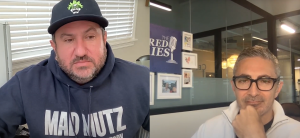
🎙️ From Engineering Careers to Pizza Empire: Matt Stanfield’s Bold Journey Building Mattenga’s Pizzeria
In this inspiring episode, Matt Stanfield, co-founder of Mattenga’s Pizzeria, shares his remarkable journey from civil engineering to building a seven-location pizza empire across San Antonio. Through candid stories about buying a failing restaurant with fraudulent financials, living seven days a week in the business for two years, surviving employee sabotage attempts, and choosing boldness as his 2026 mantra, Matt reveals how an engineer’s systems mindset—combined with Texas hospitality and obsessive quality standards—transformed multiple struggling locations into Pizza Today’s 2024 Pizzeria of the Year and Pi Award winner for best social media use.
✨ Key Insights You’ll Learn:
- Career pivot from New Mexico mining engineer to Texas pizza entrepreneur with 18-month-old twins
- Discovering fraudulent financials: cash register scheme and homeless employee living in restaurant
- First two years grinding seven days weekly to reach positive cashflow in August 2016
- Michael Shepard’s “Growing Pizza” book: following directions when overwhelmed by inexperience
- Systematizing training through YouTube videos: pizza stretching tutorial became top-five ranked
- Second location strategy: 800-square-foot $1,700/month space versus $520,000 buildout risk
- Opening three locations in four weeks: cultural disaster requiring two-year recovery
- Dave Portnoy’s 7.1 rating and closing underperforming stores increased sales 20%
- Third-party delivery economics: 30% restaurant fees plus customer markups create 50% price inflation
- Hired-not-owned insurance skyrocketed from $10,000 to $80,000 annually post-COVID
🌟 Matt’s Key Mentors:
Michael Shepard (Author): “Growing Pizza” book provided foundational systems when Matt had zero restaurant experience
Chamber of Commerce Restaurant Manager: Taught hiring, menu pricing, and operational standards during critical early months
Shirts Health Inspector (Lions Club): Provided guidance on food safety compliance instead of citations
Matt’s Wife Enga: Obsessive personality created training videos at 5 AM and manages award-winning social media
Domino’s Betrayal Experience: Former employees’ sabotage attempt fueled competitive fire to outlast competitors
👉 Don’t miss this conversation about engineering mindset applied to hospitality, outlasting vindictive competition, and why 2026 is Matt’s year of boldness.
LISTEN TO THE FULL EPISODE HERE
Transcript
Anthony Codispoti (00:00)
Welcome to another edition of the inspired stories podcast where leaders share their experiences so we can learn from their successes and be inspired by how they’ve overcome adversity. My name is Anthony Codispode and today’s guest is Matthew Stanfield.
Matt is the co-founder of Matengas Pizzeria. He and his wife, Enga, opened their first store in Shirts, Texas in 2014 after walking away from steady engineering jobs. Matengas now dishes up pizza, pasta, and wings across multiple San Antonio communities. They use real ingredients, treat their staff like family, and make every guest feel at home. Community service is baked into the brand. Each year, the team donates more than
500 pizzas to local schools and nonprofits. In 2025, Matengas won Pizza Today’s Pie Award for best use of social media. Matt brings an engineer’s mindset to the kitchen. He studied at the New Mexico Institute of Mining and Technology, and he still loves testing dough formulas and new processes that keep the lines moving. Now, before we get into all that good stuff, today’s episode is brought to you by my company, Ad Back Benefits Agency.
You know, if you run a business, you’re likely stuck in the cycle of rising insurance premiums. You’re paying more, but your team is getting less and many people can’t afford coverage at all. We do things differently. We offer a solution that provides your restaurant employees with unlimited access to doctors, therapists, and prescriptions that is always free for them to use. But here’s where you really need to pay attention. Our program is engineered to put money back into your company’s pockets.
We recently helped a client increase net profits by $900 per employee per year. Results vary, but the consultation is free. See if you qualify today at addbackbenefits.com. All right, back to our guest today, co-owner, co-founder of Matengos Pizzeria, Matt Stanfield. Thanks for making the time to share your story today.
Matt Stanfield (02:07)
Thanks for having me on, I appreciate it.
Anthony Codispoti (02:09)
So Matt, you and your wife, Anga, were both engineers before the pizza business. What kind of engineering were you both involved in?
Matt Stanfield (02:18)
So she’s the smart one. She’s got the electrical engineering degree and I’m the civil engineer and so we we did that together at New Mexico Tech and had like, you know, two overlapping classes and economics and What was the other one? I think it was music and so yeah, that’s our background I worked at a mining company before she stayed at the college after and before we moved to Texas
Anthony Codispoti (02:42)
And is that where you guys met was in college?
Matt Stanfield (02:45)
Yeah, yeah, we met, got married junior year, my junior year.
Anthony Codispoti (02:49)
Okay. And when you moved to Texas, was that specifically to start the piece of business or did you still have engineering jobs that you were moving for?
Matt Stanfield (02:56)
No, actually we we changed careers states and everything in that same two-week span we jumped off a cliff which I would not recommend with an 18 month old and an eight month old ⁓ boys at the time, but ⁓ you know, sometimes when you’re you’re committed you got to go do it so we ⁓ Wanted to be in business. We had tried an online business in New Mexico I wasn’t working we needed more experience. We’re like, you know, how hard can a restaurant be?
Yeah, exactly. When you don’t know, you don’t know. And you’re like, oh, I got energy, we got time. So solar.
Anthony Codispoti (03:30)
Yeah.
Sometimes it’s that
naivete that gets people to take those first steps, yeah.
Matt Stanfield (03:37)
Yes, yes. Now, what did I get myself into? I mean, I could hear myself think that for the first two years in business for sure.
Anthony Codispoti (03:44)
So
what was that first online business that you guys tried and why do you think it didn’t work?
Matt Stanfield (03:50)
⁓ it was actually lab coats and, ⁓ which is very ironic, but, now that I think about it and we were putting prints on the back because every time you go to the doctor or the hospital, you know, it’s a white lab coat and I’m like, why, why not use this canvas? We don’t, you know, who cares about it being clean and white, like put something funny on there. And so we had some funny designs and stuff like that, but it, ⁓ I, we didn’t know enough about business, I think, or sales to make that.
work like we needed to at that time.
Anthony Codispoti (04:22)
Do you think that idea has legs or would have had legs if you had had more sales and marketing experience? Knowing what you know now, would that have worked at the time?
Matt Stanfield (04:33)
I don’t know. I think it would have been interesting being ready for COVID. ⁓ It definitely could have done something then, you know, all the doctors and nurses. ⁓ I really don’t know if it would work still or not. I mean, you still look at lab coats and, you know, doctors uniform are still plain and boring. I don’t know if it’s personality of the people in them or if it’s just the hospital standards.
Anthony Codispoti (04:49)
You’re still playing white.
Well, guess that way you can see if they’re clean or not. I don’t know. All right.
Matt Stanfield (05:02)
Maybe in the
business, I don’t have to worry about that. You can see on my, know, our uniforms, I’ve got a pizza slice, you know, we got gunslingers, Texas, all kinds of things.
Anthony Codispoti (05:13)
You’ve kept it fun and colorful. okay, talk about jumping off that cliff. Where did the idea come from? How did this all unfold that you’ve got two kids under the age of two and decide to drop your careers and move states all at the same time?
Matt Stanfield (05:28)
So in that part of New Mexico, it was not a lot of things happening and we really wanted to be in business. Loved hospitality. We were having people over to the house all the time. So in December of 2013, we decided to come visit Texas. Had never been really, I mean, I don’t count the airport or driving through the Panhandle. You know, we wanted to come see what Texas was all about. San Antonio, Austin, Dallas. And so over Christmas we came, we spent San Antonio. I love San Antonio. Great town, perfect for kids.
Went to Austin. I hated Austin. I don’t know if it was a hotel we picked. It just did not work for us. Then we went to Dallas and I’m like, this is, this is like Southern California 2.0. I’m not, I’m not just the way, the way it was built, the way it felt. And I was like, it’d be too difficult to, to, you know, stand out in that big a market initially, I think. So, and I’m originally from Orange County, California. So it,
Anthony Codispoti (06:08)
Just in terms of like congestion and the size, is that what you mean?
Matt Stanfield (06:25)
It was the same builders, I think, built a lot out there. so I was like, no, this is not for us. San Antonio has got the right mix of the relaxed, but still opportunity and rapidly growing. And I mean, when we moved here in 2014, I think San Antonio was just over a million and we’re at 2 million plus right now.
Anthony Codispoti (06:45)
my gosh,
I had no idea it was growing that fast.
Matt Stanfield (06:48)
yeah, it’s been crazy. It’s nuts. So, ⁓
Anthony Codispoti (06:52)
And
so how did the pizza opportunity come about? So you decide San Antonio is the place. Why pizza? Why there?
Matt Stanfield (06:56)
out.
we were looking at businesses in our price range. We knew what we’d get for our house and we like, okay, we can, and we’d save some. So we were like, okay, well, what can we do? And so restaurants were generally in the price range that we could go into. It seemed like a good idea at the time. So, and hospitality, we were already doing it. So it seemed to be a good idea.
Anthony Codispoti (07:20)
When you say you were doing hospitality, you were just having friends over, friends, family to the house and sort of entertained.
Matt Stanfield (07:25)
⁓ Friends, we
led a college ministry actually. And so we had college students that were in that ministry over all the time regularly and friends and stuff like that. So yeah, it was pretty consistent like two or three times a week.
Anthony Codispoti (07:41)
But you didn’t have any experience in restaurants or specifically in a pizza business.
Matt Stanfield (07:44)
or business
or employees or really anything. Yeah. Yeah. I worked at a desk and, you know, at the mine, I checked on things and, you know, managed the air permit and did stuff like that. Like it was not, yeah, it was not the same.
Anthony Codispoti (07:49)
Okay, you had a lot to learn.
This is great because I think people listening, they’re like, I can’t do that because I don’t have any experience. Experience certainly would have helped you guys here in the early days. And we’ll talk a little bit about some of the in-between stuff. But here you are several years later, you’ve got multiple locations, you figured a lot of things out, and you guys are doing well. So what was the state of the business when you first bought it?
Matt Stanfield (08:10)
sure.
So ⁓ it was sold to us by the business brokers. It’s like a cash cow. It’s doing great. When we actually got into the business and we didn’t know looking at the P &L, we didn’t really know what we were looking at. ⁓ And so when we actually took over and ⁓ found out what was going on underneath the surface of the business and then had to adjust from there, it was a nightmare and it was way under break even versus the so-called cash cow.
⁓ Probably by half of what it should have been actual sales. The craziest, the crazy, the P &L, like they give you a P &L like, you know, I’m paying these people. We got this sales coming in sales tax, you know, this stuff going out. But like the previous owner had like ⁓ two registers upfront. One was cash only and the cash only one is it’s very easy to not report.
Anthony Codispoti (08:59)
So what, you straight up lied on the financials or what?
put it right in your pocket.
Matt Stanfield (09:24)
Yes,
right in your pockets. You don’t pay sales tax on it. and then ⁓ he had, there was a actually a homeless guy living in the restaurant at the time. And he, was the dishwasher and the guy would pay him like $20 a day. And he slept in the restaurant, showered in the dish pit. Like it was, you know, the things that happened in restaurants are, you know, if people knew
Anthony Codispoti (09:45)
Okay.
Matt Stanfield (09:49)
People that don’t work in restaurants can, you have no idea what goes on in our industry. So he was the first guy I had to fire. And I had to, you know, it took me a month to figure that out. I wasn’t that good with people. I’m an engineer. I’m better with a computer. So had to fire him. And then the day I fired him, he had a van somewhere. It got towed as well. And I’m like, you know, you you feel for it. You’re like, feel terrible, but you can’t keep living in the restaurant.
Anthony Codispoti (09:55)
So question for you, you saw.
Matt Stanfield (10:18)
your bar of soap was out on the, you know, like it was, was not, not a good situation. The previous owner actually told us that he thought we’d be out of business in six months and that his name was still on the lease and he would just take back over after he got paid. And we had, you know, we had moved, committed everything. And so, yeah, that was, that was very motivating when he’s telling us. I kicked him out after the first week.
Anthony Codispoti (10:41)
When did he tell you that?
Matt Stanfield (10:47)
He was causing problems. It was not good. So yes, he was supposed to give us a month’s worth of training. One of the funniest training stories is terrible. So yeah, this is what not to do. There’s a restaurant depot you can go to where you can buy food to supply your restaurant if you’re not big enough or busy enough to get like Cisco or ⁓ Benny Keith to deliver to you. So you go to…
Anthony Codispoti (10:51)
You kicked the previous owner out.
Matt Stanfield (11:15)
restaurant depot and if a can is dented, food service, your health safety says that you can’t use it because if it’s dented, it can get a bacteria in it. So his training was to go in and drop five out of eight cans on the ground, get a dent in them and then get $7 per can off. And that was how he ran cheaper cost of goods sold. I am not kidding you. And it was
Anthony Codispoti (11:41)
This guy’s a real piece of work.
Matt Stanfield (11:42)
Yeah, and you go, ⁓ you get a case of pizza boxes, tear two of them so that they’re not useful, get a discount. Like it was, it was crazy. So yeah, after the first week he was out. And he’s telling us, and then I didn’t want to, you know, pay him the rest because he wasn’t doing the training that he was obligated to. And so it was not a fun situation.
Anthony Codispoti (11:53)
So Matt, let me ask you something.
So they presented the business as it was a cash cow, very lucrative, lots of money coming in. You found out quite to the contrary, know, pretty quickly after you took over, when you guys were doing your due diligence and, you know, I’m going to put you on the spot here and this isn’t to make you feel bad. You guys didn’t know what you were doing at the time, but did you see tax returns from the previous years? Okay. But then they told you, ⁓
Matt Stanfield (12:11)
Yep, six figure income.
Yeah, we saw tax returns.
Anthony Codispoti (12:32)
but there’s a lot of extra cash coming in that you don’t see on the tax returns. Is that kind of how the story was laid out?
Matt Stanfield (12:37)
I think I didn’t understand the connection between the tax return and P &L. They showed similar return, but reality is different. If you pay less sales tax, you can show a higher return, even though you’re collecting it on behalf of the government.
Anthony Codispoti (12:42)
Okay.
Okay. So looking back, knowing what you know now, what would you have done differently early on? What questions would you have asked?
Matt Stanfield (12:58)
So yeah, that happens.
Hmm to find out all that well, I would have checked to make sure everybody’s on payroll and not living there That would have been
Anthony Codispoti (13:20)
Ask around to see
is anybody showering in the sink here. Yeah.
Matt Stanfield (13:23)
Yeah, yeah,
is there a bar of soap in the sink? mean, that’s, I don’t know, to catch the numbers, knowing what I know now, I would have looked at the cost of goods sold and I’ve been like, oh, you can’t run a 12%. Like you can’t or that low a number, like something’s wrong. You know, I would have seen the labor number in the P &L was definitely artificially low. And it’s because when you pay cash under the table to employees, you don’t, you can’t report them on the P &L because then you’d have to pay the other taxes. So.
Anthony Codispoti (13:51)
Yeah. Yeah. Yeah.
So you guys had the deck stacked against you, right? You didn’t know what
Matt Stanfield (13:57)
Yeah, so we went from
college ministry at church to disaster, pizzeria, all these kinds of bad things going on.
Anthony Codispoti (14:05)
And the guy who was supposed to train you, you had to get rid of because he’s a disaster too. So how were you guys able to start cleaning up the business and getting things in order?
Matt Stanfield (14:16)
So the key was we had ⁓ my wife’s parents had moved and live with us and So we had three of us working at the restaurant one of us with kids at home because we had the two boys At that time we have four now ⁓ And so just had to start Grinding really we read a book. I think it was Michael Shepard’s book He’s pretty famous in the pizza industry from back then and we read his book and we’re just like, okay, I’m
I’m not smart enough clearly to handle this. I’m just going to follow the directions in this book. Did it started growing sales. ⁓ took about two years to get through that mess. Like I didn’t know how to buy a sign for a building, but we thought that the old brand would be a good brand to keep. And you know, it had decent reviews and supposedly, you know, sold well, ⁓ very quickly we realized we needed to change the brand.
and we could not keep that name. So we learned for six months under that initial brand, and then we said under new management and under new ownership and put a new brand on it.
Anthony Codispoti (15:23)
and why put a new brand on it?
Matt Stanfield (15:25)
The reputation of the old one was not, it was not going to scale. was not good. What’s funny is if I talk to people who’ve lived in the area long enough, they remember the restaurant that was two times before us, but they don’t remember the one in the middle. And then they remember us. Cause that space has had three different concepts in it.
Anthony Codispoti (15:27)
It was not as good as you thought.
So the name of the pizza chain now is Mattenga’s Pizzeria, combination of your first name and your wife’s first name, Matt and Enga. ⁓ So, and it sounds Italian, right? Extra bonus there. ⁓ How did you decide on that though? Was it just sort of like first thing that came to mind or did you deliberate? What did you like about it?
Matt Stanfield (16:00)
Yep, and it sounds a bit…
I don’t really remember the process where we came up through that. The lab code business, we had called it Labenga and we’d put my wife’s name on there because she was mainly wanting to do that one. And so I think it just kind of flowed out like, oh, well, this sounds kind of Italian. We’re looking at names. You know, can’t be Mario’s pizza. that’s, know, like how are you going to get a logo trademark? How are you going to do anything with that? And so, okay, well, you’ve got to come up with a new
You gotta come up with something new to get something different. Otherwise, know, Joe’s pizza, anything was not gonna, you know, Alamo pizza, I think there was at the time there was one. So we couldn’t use like Alamo, Alamo city. If I did shirts pizza, well, that’s not gonna go into San Antonio. So it’s not a scalable thing. we had to come up with, yeah, we had to come up with a name and ⁓ I, we had put it on the LLC when we started the LLC, cause it’s just, we,
Anthony Codispoti (17:00)
So Matengas it is.
Matt Stanfield (17:08)
call ourselves Matt and Enga, so it just, worked. And then I tell the story, it’s an island in Northern Italy, so.
Anthony Codispoti (17:12)
So.
An island, There are not a lot of islands in Northern Italy. Maybe in a lake or something.
Matt Stanfield (17:21)
If you’re bad at geography, you just say yes. If you’re
good at geography, you’re like, yeah, I got it. ⁓
Anthony Codispoti (17:27)
They do have some
beautiful lakes up there with tiny little islands in the middle, but yeah.
Matt Stanfield (17:30)
I’m sure at some
point we will have to go to Northern Italy and buy a sandbar and just put a sign that says Matanga on it.
Anthony Codispoti (17:39)
So in those first six months, as you guys are figuring things out the hard way, because you don’t have this guy there to train you, you pick up this book by, what was his name? Matt Shepard? What was his first name? Michael Shepard. And this was sort of like the Bible on how to run a pizza business.
Matt Stanfield (17:51)
That one’s Michael Shepard.
Yeah, I’m trying to remember the title. remember the author. I probably have it here somewhere.
Anthony Codispoti (18:03)
Well, we’ll find I’ll find it online. But tell me aside from that book, what did you guys have like anybody else to sort of lean on during this time? Like some mentors, people in the community were like, hey, let us help you out a little bit.
Matt Stanfield (18:20)
We had joined Michael Shepard’s book says to join the Chamber of Commerce. We didn’t know what that was, but we looked it up and they had one. ⁓ In his book, he also says to join the Lions Club. So we looked up both and we joined them. I didn’t know what the Lions Club was or the Chamber of Commerce was. It sounds very old school. So we joined both. The Chamber of Commerce was very good. had got connections.
that in part of the networking group, was this lady who was a manager of another restaurant. And she was like, you guys don’t know how to hire. You don’t know to do anything. You don’t have price of menu. Like you need to, you need to redo all of this. And she was able to provide a little bit of guidance there. Ironically in the lions club, the health inspector for the city of shirts was a member. So that actually worked out very well that we, had a good connection with health inspector because I did not know much. So he was able to come in and
hey you need to be doing this you know instead of giving us a hard time so that actually worked that was that was a good idea so following directions i don’t know it’s just sometimes it’s just easier
Anthony Codispoti (19:16)
Okay.
So again, I’m going to highlight why I love the beginning part of this story where I know it was really hard for you guys, because so many people discount their own abilities and say, I can’t do that. I don’t have the experience. I don’t know what I’m doing. And again, like experience would have been incredibly helpful in these early days. But don’t let that stop you if you’ve got a dream, if you’re heading in a direction, because there are ways there are this book. I just found it’s called Growing Pizza, How to Plant the Seeds to a Successful Pizzeria.
Matt Stanfield (19:44)
yeah.
Anthony Codispoti (19:55)
by Michael Shepherd. So there are all kinds of resources, whether they’re books or blogs or YouTube videos to watch. And I love what you did and just sort of going out in the community and was like, I don’t know what the Lions Club is or the Chamber of Commerce, but I’m to go find them. And then you sort of raised your hand and you talk to people and you ask questions and you know, who can help me? So at what point in this trajectory, did you feel like you can kind of breathe a little bit?
where there was actually some positive cashflow coming in.
Matt Stanfield (20:27)
I’d say we started in March of 14. I don’t think we got there until really of August of 16. So it was.
Anthony Codispoti (20:35)
Okay, that’s a long time
when you’ve got two little kids at home.
Matt Stanfield (20:39)
yeah, was a long while. ⁓ We didn’t get to a point, I don’t think we got to take a day off until October, November of 2015. And we’re seven days a week business. So, ⁓ like being able to hire somebody, train somebody, learning all of that from scratch. What’s a labor law? How do you pay sales tax? I mean, there’s a lot of things, little things that take time.
So in 2016 we got to we did it like a retreat We’ve gotten some business advice and stuff like that and we’re like, oh we need to go do a business retreat kind of do some planning like okay What is the most annoying thing in our industry? Okay, what’s training people how to make pizza and how to take an order and we’re hiring people They leave hire, you know constantly we’ve probably had I don’t know 1200 1500 employees in the last 10 years go through the business. So, I mean we have it’s restaurant
a lot, hire a lot of 15, 16, 17 year olds. So we did that and my wife, ⁓ she’s got a very good obsessive personality. And so she would go at five, six AM and record the videos on how to, you know, take an order, how to do stuff. And when she was doing that, she’d get, you know, once we did that, we systematized it, we got a taste for the systems and like, okay. So if I can systematize this, then I don’t have to put
as much effort into the next time because it’s here’s go watch this video and they were YouTube videos. mean our I don’t know if it’s still listed or not but our how to stretch pizza video I think is one of the highest views on our YouTube channel for the for the company and ⁓ I think at one point was like top five in YouTube when you type in how to stretch dough for pizza because we trained
Anthony Codispoti (22:29)
So these were publicly
listed YouTube videos. You weren’t keeping them private.
Matt Stanfield (22:32)
It was publicly
listed. Well, they had removed the private listing or whatever. YouTube made a change and it went public and then that one did well because we, you when you’re training people, okay, watch this two or three times until you get it. And it’s terribly shot. Like the video quality is not good. I don’t even remember. It was probably one of the early iPhones that we shot that video with. Like it was just, you know, we didn’t know anything about lighting, sound, but we trained our team with
Anthony Codispoti (22:59)
But the content
was there. People could piece together what you were doing and it was good instructions. you talk about, you hire a lot of young people, there’s a lot of turnover. What in the past 10 plus years you guys have been open, what have you learned to help improve that process, whether it’s from a hiring perspective or a retention standpoint?
Matt Stanfield (23:23)
Hiring, the key is to hire an HR department and ⁓ get that going. We’ve systematized everything. Like there’s either a training checklist, playbook, video combination for every, almost every task that I can think of in the business from how to wash dishes ⁓ to what is a bell pepper and why you shouldn’t touch the seeds and then touch your eyes. Like there’s a lot of things ⁓ that we put into those systems for getting people.
our industry have pretty much accepted the fact that we have high turnover in the industry. ⁓ It is very normal. ⁓ We’ve got some key people. think our longest lady we have, she’s been with us nine years, almost 10 years ⁓ of that time. So, I mean, you can get people that last a long time, but when you focus and pizza, you have the industry and then you have pizza. Pizza is at the, you know, a lot of people.
And this is the way I think about the business and the way I tell managers when they’re hiring and stuff like that. A lot of people will say, I had my first job in pizza. Like, was your first job in pizza?
Anthony Codispoti (24:29)
No Wendy’s hamburgers. Yeah, it was
Matt Stanfield (24:31)
Wendy’s, okay, but it was fast food, right? was
a restaurant. So, so many people, first job was in pizza, 16 years old, running deliveries. I hear that story a lot. They shouldn’t be running deliveries at 16 now. can’t be 18 with two years driving experience. And they’re so hard to find these days. It’s almost a unicorn. But they either think of that time very fondly and still make pizza at home, or they hated that time. And it was the worst of their, you know.
experience and then they moved on. So I see it as like, okay, we want to make sure that we set up things well and have, we want to be on that good experience, like, you know, where they want to come back and, you know, work at the summer during college or something like that. And we’ve had a lot.
Anthony Codispoti (25:18)
So ⁓ what is it about touching the seeds of bell peppers and touching your eyes? This is a thing I don’t.
Matt Stanfield (25:24)
you don’t know? ⁓ so because there’s capsaicin is on the seeds in the bell pepper. And so when you’re
Anthony Codispoti (25:28)
Even a bell pepper
has enough capsicum to make it irritate your eyes.
Matt Stanfield (25:32)
Yes, if
you touch your eye, will burn. It’s not as bad as a jalapeno or habanero, but there is still enough in a bell pepper that it will burn.
Anthony Codispoti (25:35)
Okay.
I have made that mistake
before with the Habanero and it was brutal for many hours. Yeah. I didn’t realize a bell pepper could have the same effect.
Matt Stanfield (25:46)
Yeah, that would be.
It’s lighter. It’s lighter, but it is there. Sometimes people, you know, talking to a 16 year old boy and you’re like, hey man, don’t do that. you know, whatever, whatever. like, you know, just touch that, touch your eye. Let me know how it goes. His buddies over there like, don’t do it, don’t. Yeah, I did it on accident. That’s how I learn, you know.
Anthony Codispoti (26:03)
You
Learn from my mistakes. at what point did you feel… Yeah,
some of the most painful lessons happen that way. So ⁓ Matt, at what point did you feel like things were going well enough that you were interested in opening a second location?
Matt Stanfield (26:24)
That took us till 2018. I ⁓ think we started in 2017, but you you go get a build out quote, you’ve got one location, we’re doing all right finally. And you’re like, okay, I want to go take a class. So we went and took some classes, I think that year 2017, maybe 2018. ⁓ There’s a guy named Pizza Man Dan who runs running a class on how to get to three units and being able to hire a
a unit manager for that because that’s ultimately where you go. And he says the number one pitfall in the industry is that second store because you, you go from being in one store 80, 90 hours a week, the whole time it’s open to now you’ve got a split time, but you can still kind of be in both places, but you’ve got to pull back. And if you don’t learn that skillset or you put the second location too far away to where you can’t manage it.
or it’s too big or the expenses are too much, it’ll sink your first store and you’ll be out of business. And so I was like, okay, I got to find, I went to look at a build out, like how to go build out an empty shell space. I think the estimate, and I wish I had done it because now it seems cheap. The estimate, I think it was like 520,000 for like 3,200 square feet, like a big, it would have been a nice end cap corner, beautiful looking space.
It seemed like a good part of town, but I don’t really know. There’s things you learn in experience on where to put a location, where not to. I saw that price tag, how much the payment would be, and I was like, this is going to sink. This could sink us if we screw this up. Do we really want to risk? We moved states, we moved everything. Do we want to risk that or not? We just had our daughter in 2017, so we’re three kids, have an infant.
Yeah, that’s not a good idea. And we ended up going, we’re literally around the corner is our second store. Got a message in 2018. Hey, I’m selling my pizzeria. You want to buy it on on Facebook? And I’m like, well, how much is the rent? How much is you know, you know, how big is it? It’s 800 square feet, 1700 a month in rent. Less than a mortgage. I’m in. My wife’s like, this is not a good idea. We shouldn’t do this, blah, blah, blah. And my second son was like, yeah, we got to do it.
Let’s do it. How hard? At that time, let’s see 18, he would have been five. He would have been.
Anthony Codispoti (28:52)
How old was your second son?
Okay.
So he’s on the Board of Directors there. He gets a vote in this process. Okay.
Matt Stanfield (29:04)
Yeah, you know, apparently, yeah, he’s
very, very much like mama. you know, anyway, so yeah, he was he was like, let’s do it. Let’s do it. I’m like, I think it’s a good idea. It’s low risk. What’s the worst case 1700 month? I mean, that’s an office space with an oven I get to play with like worst case it’s a it’s a pizza lab, in my opinion. It’s still one the most profitable stores we have. So
Anthony Codispoti (29:28)
So obviously you move forward with it. What was your wife sensing that she thought there was, that this was a bad idea, that there was risk here?
Matt Stanfield (29:30)
you
There
was issues. think we bought it for, ⁓ gosh, I think it was $24,000, $25,000. I think we paid cash. And then we got into it the first day we opened. So, bought it August 1st is when we took over. Opened it August 18th of 2018. And ⁓ it was 101 in the kitchen in the whole building. Couldn’t figure out why. And…
then discovered that the AC unit was designed for the insurance agency that was in that space before and not for pizza ovens. And so, you know, when you when you’re pumping 500 degrees, I mean, it’s 90,000 BTUs an hour into a space and you don’t have the right AC. It’s not good. So that first month and a half, it was 100 degrees to try and work in there with an infant. We had an infant with us.
⁓ Just difficult. so ⁓ anyway, we survived that. I’m like, okay, I got to get somebody cheap. Hey, do know anybody that does AC that can do this low price? Because I didn’t plan for this. We ended up putting like $75,000 into it. Had to put new AC unit, ⁓ more refrigeration. The refrigeration died obviously in 100 degree heat. It’s not designed for that. So, you you survived, you did it, but we…
We left the big store to go work in the little store all the time. And so you end up with challenges. It took us another three years to go to our third store.
Anthony Codispoti (31:07)
Okay, so you had been looking at another location to do a new build out, but in the meantime, you got this Facebook message that says, you wanna buy my business real cheap. And so you guys went that direction instead. So you had the two, it took you three years before you were ready to open that third.
Why so long? Was it just it took that long to kind of figure out how to run a second operation?
Matt Stanfield (31:34)
Yeah, and the commit to getting debt and the expense that it was, you know, it wasn’t super easy to get over that. And that business, that second location did not really do well until COVID. COVID was great for that business. And then 2021, we had Snowmageddon, and that was great for that location also.
Anthony Codispoti (31:54)
Why?
Why did COVID flip a switch for that business?
Matt Stanfield (32:06)
Because pickup pizza, we were one of the only things open. It was close. That’s in a neighborhood versus our first location has got a lot of businesses around it. It’s good for lunch. So ⁓ it took people being home for a few months to help it get going. And then I guess it was four years actually for our next location. so and then Snowmageddon happened in 21, which is because San Antonio was not prepared for snow.
in any way, shape or form. They were using road graders as snow plows. We got, I think, I don’t know, three inches of snow and ⁓ lost power. The road shut down. The whole city shut down, really. But that was our only store that I could get open. And nothing else was open in that whole neighborhood. So everybody came. We sold out of product three consecutive days. And then it’s been rolling ever since then.
Anthony Codispoti (33:04)
And so how many locations today? We’re recording this at the beginning of 2026.
Matt Stanfield (33:09)
We have seven right now. we added, I tested a ghost kitchen in 21. That did not work well. I closed that in 22. But we had started building a restaurant in 21. We got open January, I think January 5th of 22 that opened in New Braunfels. That was our third store. I did a build out, had a little bit of a loan on that one.
still pretty low cost. And then I was like, okay, I’m closing this ghost kitchen. I’ve got an oven mixer. I need to go find a space ⁓ to go put that in. hey, told the broker, hey, go find me a space. He came back with three ⁓ options and I said yes to all three, which was a dumb idea. ⁓ So, and 22. So we opened that one in the Bronfills. It was profitable from day one. And then we’re like, okay, I got to find this other location.
Anthony Codispoti (33:56)
⁓ boy.
Matt Stanfield (34:07)
And so I did that. ⁓ I found one and then I talked to this other landlord. He’s like, I’ve got this space over here. And I talked to this other landlord. I’ve got this space over here. So ⁓ we went to six locations ⁓ from three in January and by June, I opened two in the first week of June that year. That was not a good idea.
Anthony Codispoti (34:29)
Okay, I want to come back to that. ⁓ But stick a pin in it for now. You said that you had tried a ghost kitchen and it didn’t work. Ghost kitchens were the rage for a little while and now I feel like they’ve gone away. Why? What happened?
Matt Stanfield (34:42)
Correct.
Expenses are too high. So the Ghost Kitchen, the way they work is you’re trying to rely on third party delivery, Third party delivery rips off restaurants to no small extent. I don’t know if you’re familiar with it, but they charge the restaurant 20, 30%, usually 30%, is what they take from the restaurant. And then they charge the customer on top of that. So whatever you’re paying at DoorDash is likely 50 % higher.
than what you could get by just walking into a restaurant. And so you’ve got those fees, then with the Ghost Kitchen, and then plus DoorDash charges you for marketing. So like if you are in the top placement on search, there you have a marketing campaign going on. That is an additional cost in addition to that 30%. So it can be 30, 40 % to sell food, which our gross profit isn’t that high, let alone net profit.
So it’s just trying to bump the top line in hopes that the bottom line sticks around. And so that’s the problem with DoorDash. On top of that, the ghost kitchen was, okay, here’s your rental rate for your kitchen. And I don’t remember what it was, a few thousand dollars. It seemed low compared to like a rent of a big space. So, you know, $3,000.
But we have a guy that’s at the front counter all the time to pick up your food and manage the door dash driver so you don’t have to. And so there’s a service fee utility. It ended up being like $7,000 a month.
which is, I mean, that’s a lot. And then we were only able to do a thousand to $1,500 a week in sales through DoorDash, which has the, I mean, it was just the losing proposition. But I was trying to be downtown San Antonio, trying to be available to huge parts of the market, because DoorDash delivers far. They take the food too far. And it was not, it didn’t work.
Anthony Codispoti (36:38)
You know, I’ve talked with a lot of restaurant owners and coming out of COVID, ⁓ people’s dining habits have changed, right? They got used to doing takeout. so ⁓ things have not fully returned back to quote unquote normal, where you’ve got a lot of people coming in. There’s now a bigger portion of the business that is ⁓ takeout or these third party delivery services. And they all complain about the margin.
that a DoorDash or an Uber Eats takes. But what’s the solution here? You feel like you kind of have to play because they’ve got so much traffic coming through their apps. How do you say no to them?
Matt Stanfield (37:21)
It’s very difficult. And you can’t even do first party delivery either. So ⁓ you have in the industry, there’s 3PD, which is third party delivery, and there’s ⁓ FPD, which is first party delivery. Domino’s, Papa John’s, they’re all supposed to be first party delivery. That’s where they deliver from the store. There’s no third party driver, no DoorDash, nothing like that. They want you to order on their app, right? So ⁓ I think in about…
I think it was really 2020 that accelerated this, but the third party companies now the schedule is you can work whenever you want to. You don’t have to go work inside the building, go make a pizza, go clean the dishes, go do anything. So people would rather just do the third party delivery. And so in 2020, 2021 was especially bad and 22 for hiring in our industry because people were still getting COVID payments.
you know, unemployment, whatever it was, it went for two years. So that spiked labor. We pay significantly more and I can’t get drivers. So if I can’t get drivers, I have to use third party and we use them as a fulfillment service even like it’s our app, but we’re sending it via third party because I can’t hire drivers. Then the COVID also killed the insurance. So my delivery insurance went from around eight to $10,000 a year for first party delivery.
to 60 to 80,000.
Anthony Codispoti (38:49)
my gosh, that’s insane.
Matt Stanfield (38:53)
Yes, so that’s between car repairs, the lawyer billboards. Thank you. They’re so expensive. So, I mean, how many pizzas do I got to sell to make $80,000 payment on insurance for a driver to go? So there’s your delivery fee. And so then it becomes economically, it makes sense to do the third party delivery at the fixed price so we can fulfill with say DoorDash or Uber.
for a fixed 780, 750, 650, some of them. And so they’ll call a driver, we pay 650. And it just goes that, and so we send it, we fulfill via that instead of going through first party delivery anymore.
Anthony Codispoti (39:38)
Hang on, man. I want to come I want to go back because I’m trying to understand help me wrap my head around how the cost of the insurance, etc. went 10x like what happened? Where are these big cost increases?
Matt Stanfield (39:52)
⁓
I don’t know what happened in the background of insurance, but I think like half of the companies dropped out of the market for doing hired. It’s called hired, not owned policy because I got my drivers using their cars. Domino’s has been doing it since the eighties, ⁓ but hired, not owned policy. Half the companies decided to stop writing the policy and the ones that stayed in the business. I mean,
Anthony Codispoti (40:05)
Okay.
Matt Stanfield (40:20)
no competition, you’re going to raise prices. And then you have extra costs. So you’re not only does your cost go up, but you have no competition. So then your margin went. That’s what I’m thinking happened. I don’t know.
Anthony Codispoti (40:22)
Okay, wild.
Well, I’m not a conspiracy theorist, but there’s part of me that wonders if Doordash and Uber Eats got in bed with some of the insurance companies there to help put the squeeze.
Matt Stanfield (40:45)
I would believe it.
I would believe it. You know what they just did with DoorDash and Yelp?
So here’s how they screwed the consumer this way. So Apple Map. So you have Google and Apple Map are the main maps you use on your phone. You do a lot of searching. Hey, I want to go to the nearest pizza place near me. Let me pull it up on my map, whatever I use. Apple Map did a deal where they show Yelp reviews, which we all know how accurate Yelp is. There’s no Karen is on Yelp complaining about anything. It’s very 100 % accurate.
In industry, we don’t really like that company. They’ve called us to spend money on ads in order to be ranked higher for years and we have to ignore them, dodge them, et cetera. And ⁓ it’s impossible to get bad fake reviews off. It’s very difficult. So Apple goes to Yelp and then DoorDash just did a deal with Yelp and I don’t know if it went through or not, but it was going to be where DoorDash is recommended by Yelp for delivery service.
and their ordering platform. See what happened. So instead of going to matangas.com over here, you’re now going to Doordash Marketplace, which is marked up as I talked about, up to 50 % marked up.
Anthony Codispoti (42:07)
So moral of the story for those folks listening, ⁓ patronize your local restaurants and pizza establishments directly. Go to their websites to order and whenever possible, just drive by and go pick it up yourself. You’re gonna help them stay in business. ⁓ So let’s go back, because you talked about you open basically three locations right around the same time. What was that period like for you?
Matt Stanfield (42:33)
Oh, that was nuts. By the way, think DoorDash, I think drones is the only way out of the third party delivery because Gen Z decided to not get driver’s licenses. And so the pool of drivers from a millennial, when we were 18 to 24 versus Gen Z is now 18 to 24, that pool of drivers is less than half because they can get
driven around with Uber and other things. So I think it’s gonna take drone delivery to mess with that. Adding three stores in a four week span was a very bad idea. ⁓ We had hired some people ⁓ from Domino’s that were supposedly like district manager, trainer certified, they could help us expand. were able to recruit people better than we were able to recruit.
to get those stores open. And so I had them going to stores. I was going all over San Antonio. Our stores at that time were, I think, 35 miles end end, one way ⁓ from New Braunfels to the west side of San Antonio. And so tons of traffic, just a ton of driving, you know, get up early and come back after close at midnight or 1 a.m. So. ⁓
And we close at nine, so ⁓ it was a long time. A lot of driving, we hired them. They did not match the same quality standards that we had. And so, and we lost some of the culture we had built with the two stores. And so it was, you’ve mentioned like, you know, not valuing yourself enough, not valuing your opinions and your skillset enough. I think that was the central mistake we made was, these people, come from a
solid franchise, the number one franchise, they should be able to help us with systems recruiting. They’re going to have the right obsession with quality. It was in fact the opposite. So that really, that really hurt us, us back. It took us two years. ⁓ We didn’t add another store until 24. So 23, we just added a food truck and that was really just to be able to go to events and do things. So, I mean, it was, it was a mess where we’ve spent a lot of the last
years rebuilding the culture that we needed and the way we needed the focus, obsession with quality, Texas hospitality, got to be able to talk to a guest. So it was not fun. And we decided to have a kid in 2022 just because I was trying to get one kid, one store, that ratio died at four. So I tried, but my wife wasn’t willing to continue that stressful trend.
Anthony Codispoti (45:06)
course you did because you just you like a three ring circus. ⁓
Yeah. So here we are beginning of 2026. What do your future plans look like?
Matt Stanfield (45:23)
I’m looking at three stores this year, if I can.
Anthony Codispoti (45:28)
Hang on a second, Matt, you just told me opening three stores together several years ago was one of the worst experiences of your life. Why repeat it?
Matt Stanfield (45:37)
I guess I’m really slow at learning. I’m not going to open them in the same month. I’m going to open one a quarter, maybe with a quarter in between. And if I don’t get to three and I only do two, then I’m okay. This last year, 25, we opened no stores. We actually closed two, which were not performing well, that we should not have opened. One of them was the one we opened last in 2022. One of them was when we opened in 24, it was supposed to be a kitchen and a bar.
Anthony Codispoti (45:40)
Ha ha ha.
Okay, spread them out a little bit.
All right.
Matt Stanfield (46:07)
Closing two stores our sales actually went up 20 % after we closed the distractions
Anthony Codispoti (46:13)
Wow, why?
Matt Stanfield (46:15)
that combination of things really, but Dave Portnoy came out to one of our stores. That was very, very helpful. So shout out to him when he comes in, it makes a difference. People follow, follow his videos and stuff like that. And then we just.
Anthony Codispoti (46:29)
from
Dave Portnoy from Barstool. Okay.
Matt Stanfield (46:32)
Barstool. Yeah, he has
a, I don’t know if you’re familiar, he does One Bite is like a podcast he does just rating cheese pizzas around the country. He’s very particular. He’s very particular. We rated a 7.1 and I think that was, the dough was not good that day. I was not happy with the dough, but I wasn’t there. My wife was there, but gave us a 7.1, which at the time in Texas, that was considered a very high score. So.
Anthony Codispoti (46:43)
that’s very specific.
Okay. And so how did you get Dave Portnoy to come in?
Matt Stanfield (47:07)
He was here for the final four. We did not invite him. You don’t get to invite him. He chooses, ⁓ he uses his app, I think, to look at pizza places. He usually doesn’t go to chains either. We have seven locations, so.
Anthony Codispoti (47:22)
And so that really helped to pour fuel on the fire that really puts you guys on the map. And I want to
Matt Stanfield (47:26)
Yes. And removing distraction.
The underperforming stores, you know, there’s going to be labor issues. There’s going to be employees having problems with each other. There’s going to be, you know, out of product, this issue, that issue. When you get rid of the underperforming ones and just cut your losses, which was very painful for me. I didn’t want to accept defeat. You know, I’m like, it’ll work. It’ll work in six months. it’ll work. You know, just select that problem. ⁓ the tree will bear fruit next year. Let me fertilize it some more.
Cut it down.
Anthony Codispoti (47:59)
How did you eventually get to that point in making that decision? Because any business owner that’s been there, you put your blood, sweat, tears, and money into something. And for people who haven’t done this, feel they think you’re being dramatic, but it feels like a child. It feels like your offspring. so shutting it down, there’s there’s like a mourning process that takes place is really, really hard. How did you get to that point? What helped you get through it afterwards?
Matt Stanfield (48:30)
think once you shut down the first one, you know how to process the emotions. So the second one wasn’t so bad. ⁓ But the one that we closed, ⁓ it was next to a barber shop and they had fired a barber and he got drunk or on drugs or something and came and shot up their barber shop next door and put bullets into our store. we just had finally pushed me over like, hey, you’ve got a…
Anthony Codispoti (48:49)
⁓ jeez.
Matt Stanfield (48:58)
you put a Ferrari dealership into the wrong neighborhood. You are not going to sell anything over here. You need to, you need to get out. And so, I mean, it took literally getting shot at, guess, to let that one go. And then the second one was like, okay, I know what happens when I relieve the distraction. So I, I know we can go forward. It’s going to suck, but ⁓ I don’t know. So that’s my, was my process. And I closed the ghost kitchen before also, but that one was a,
That one was easier because that was just the financial drain every single month.
Anthony Codispoti (49:31)
Yeah. Well, and, you know, listeners of the show and Matt, you’re aware that, my favorite question to ask is about a big serious challenge you’ve overcome and how you’ve gotten through it. I wonder if this is the topic that you would choose to dive into or if there’s something else that comes to
Matt Stanfield (49:49)
No, I think that one’s up there. That was probably the hardest thing we’ve ever done is, you know, we’d hired those Domino’s people to help us out. They left. This was the hardest one. The hardest thing was in 2022 fall. They left to go open their own franchise, their own store, and they tried to take as many of our employees as possible to the point of shutting down stores. And so it was a bit vindictive, I think, on their part.
And so ⁓ the one store lost all of its management team and almost everybody else that worked there. I think we were left with two people. And so I went back to seven days a week. I lived there for the next two months basically to keep that store alive. And it really, you know, that pressure of I am not going to fail. We did not close that one. That one’s actually doing really well. And that’s the one that Dave Portnoy came to. ⁓ So it was a good thing. We kept it open.
⁓ That store was a problem, was a problem, was a problem. Spent a lot of time at that one keeping it alive. Just kind of, you know, kind of gives you that, that enemy of like, you’re not going to punch me in the face and get to win. Like I know how I’m going to win. And it’s not going to, it’s not going to stop us. So that was 22. They went, opened a competing franchise. Then they didn’t get along with the franchisee.
Anthony Codispoti (51:02)
Hmm.
Matt Stanfield (51:18)
and then they changed the name of it to their own brand and they went out of business this last year. So I outlasted them.
Anthony Codispoti (51:27)
Is there a part of you that takes a little bit of satisfaction in that?
Matt Stanfield (51:30)
I mean, you can’t not if you’re a real competitor. You know, they tried to hurt the family a lot. That’s trying to put my kids out of a house out of food. That’s, no.
Anthony Codispoti (51:38)
You guys did the thing.
You guys did
things the right way, the honorable way, and you outlasted them. It really stretched you for a period of time, put you in a tough place, but here you are today, thriving. Yeah.
Matt Stanfield (51:53)
yeah.
Yeah, you gotta
commit and be like, no, we jumped off the cliff. We’re not going backwards. So there were times you wanna quit, but not, can’t. It gives you a drive, a fire, and you’re like, no, we’re gonna be here, we’re gonna grow.
Anthony Codispoti (52:11)
So how much of that fire just came from, I don’t know, hey, this is my family versus I just wanna prove them wrong. I wanna beat them specifically.
Matt Stanfield (52:23)
think it sounds good to say the family and that’s some motivation, but I think that I’m going to outlast them is the really where it goes. I think if we’re, you know, if we’re honest, that’s, where it is, you know, and then once they did that this year, it’s like, okay, what’s my next fire?
Anthony Codispoti (52:36)
Yeah.
What is your next fire? What’s lightened the thing in your belly today?
Matt Stanfield (52:43)
you know, what’s the next?
It’s not as specific when you have that face. So it’s something different. It’s like, I know I need to grow. ⁓ It’s, you know, some of the other pizza chains. It’s like, how am I going to compete? So we were at ⁓ PMQ, which is another competing magazine with The Pizza Today. Those are the two industry magazines. We are at PMQ event and Marco’s…
Anthony Codispoti (52:54)
Yeah.
Matt Stanfield (53:16)
CEO, you’re familiar with Marco’s pizza, pretty fast growing and have decent food. Um, CEO got up there. It’s a room, a hundred pizza, you know, 150, whatever pizza guys, pizza owners, all of us have multiple locations. We’re growing. And he said, if you don’t have a location in your neighborhood soon from Marcos, you, if you don’t have a location already, you will soon we’re coming to for your town. Like that was the Marco CEO and
One, I admire that he’s gonna get up there and say that. And two, it’s like, okay, buddy, where’s your headquarters? Because I’m coming to your town too.
Anthony Codispoti (53:55)
It’s that competition. mean, in business, you there has to be a competitive spirit.
Matt Stanfield (53:58)
That’s what they say, know, someone’s
working 24 hours a day to take it all away from you. If you’re not paranoid, you’re not going to stay in business. And people who aren’t in business, if you just have a job and you’re sheltered from this, you don’t understand. You don’t feel it.
Anthony Codispoti (54:16)
So you’ve got a competitive spirit. You are willing to roll up your sleeves and work hard. All that’s clear. Your wife has a podcast. What’s the name of it?
Matt Stanfield (54:27)
She has making dough show.
Anthony Codispoti (54:28)
making do show. But this what we’re doing right here this interview today, not really traditionally your thing. This puts you a little bit outside your comfort zone. Yeah.
Matt Stanfield (54:38)
Yeah, 100%. She’s the one that has been doing all the videos talking. I’ll do the random funny pizza videos that we turn into ads like, you know, we’re in a Santa suit in July in Texas. That’s me, you know, but doing
Anthony Codispoti (54:51)
So why do
this today? Why are you here with me today?
Matt Stanfield (54:54)
I’ve committed in this year’s year of being bold for me and going and do those kinds of things. And so it’s not normally where I am. I’m like, I’ve got to go. Got to go do something. So I appreciate you having me on as the first one this year. ⁓ you know, that means a lot, but yeah, I want to be way bolder in the industry ⁓ with the team, with customers. know, if that Marcos guys come in building locations here, I got to be.
boldly looking for locations. So yes, I’m going to open three, just not at the same time in five weeks. That’s not a good idea.
Anthony Codispoti (55:29)
I love it.
Well, and I love this being bold and putting yourself outside your comfort zone, right? That’s where the growth really happens for people.
Matt Stanfield (55:39)
Yeah, I think, you know, a lot of people make New Year’s resolutions. It’s better to make a vision board and this is where I’m going to be. This is who I’m going to be, what I’m going to look like. And, you know, I want to be that different person, but I am that now. How do I carve away that statue?
Anthony Codispoti (55:59)
Well, Matt, I’ve just got one more question for you today. But before I ask it, I want to do three quick things. First of all, anybody listening, you got to check out Matengas and they’ve got a great website that has online ordering. You can see all the locations there. It’s matengas.com. M-A-T-T-E-N-G-A-S. M-A-T-T-E-N-G-A-S.com. Matengas.com.
Also as a reminder, if you want to get more restaurant employees access to therapists, doctors and prescription meds that as paradoxical as it seems, actually increases companies net profits, reach out to us at adbackbenefits.com. Finally, if you’re enjoying the show, a quick comment or review on your favorite podcast app goes a long way towards helping others discover the podcast. So thank you in advance for that.
Matt, last question for you. A year from now, you and I reconnect and you are celebrating something big. What is that specific big thing you hope to be celebrating a year from today?
Matt Stanfield (57:02)
that big thing a year from today. This is a public commitment. will be ⁓ known as being very boldly speaking truth in the industry, which is like third party delivery. A lot of people don’t want to talk directly about what it is. I’ll talk about it. I got no problems with that. ⁓ So I’m going to be 50 pounds lighter, which in the pizza industry is very difficult to achieve.
because we have unlimited access to pizza and I like it. So ⁓ those two things is gonna be the biggest victory and we’ll have three locations open and operational by January, 2027.
Anthony Codispoti (57:45)
I love that all three of those are big. That first one that you talked about boldly speaking in the industry. What do you think that looks like?
Matt Stanfield (57:55)
⁓ So for me, what it looks like, we were on that cover of ⁓ Pizza Today magazine ⁓ as Pizzeria of the Year in August of this past year, which is pretty cool. It’s a huge recognition. I’m very grateful to have that. But as part of that, they asked us to do the ⁓ keynote at Pizza Expo in Las Vegas. And so…
I don’t know if you’ve been to Pizza Expo or if your listeners have been to Pizza Expo, even if you’re not in the industry, you should still go once. It is like four football fields full of everything pizza, cheese, ovens, dough, technology, desserts. I mean, everything. It’s a really fun experience in Vegas. have pizza competitions going, different doughs, different, you know, all kinds ⁓ from that to stretch how fast you can, how big you can.
And so we’re going to be, keynote is the second day there, which is huge honor. And so you’re all invited for that, you know, just because I will be there and I have to work on preparing for that. And so that’s what I’m talking about is that’s kind of a first opportunity for that. And it’s a little bit of pressure and I’m looking forward to it. I want to serve the community.
Anthony Codispoti (59:14)
That’s an incredible opportunity
keynote speaker at the industry’s premier trade show.
Matt Stanfield (59:20)
100 % after only 11 years.
Anthony Codispoti (59:22)
And
the magazine that you were on the cover of, Pizzeria of the Year, why do you think you won that award?
Matt Stanfield (59:31)
⁓ I think
There’s a lot of factors. My wife is a huge part of being on Pizzeria, Pizzeria of the Year. lot of our marketing campaigns ⁓ get a lot of awards. You mentioned the most recent, Pi Award ⁓ from Pizzeria today. So that is a big part of it. ⁓ We’ve always been, as an engineer, we have a systems mindset. We didn’t get to talk about that as much today, but systems is something that we apply with a different perspective than say,
traditional chef or restaurant industry would. So that’s given us a unique perspective on the industry also.
Anthony Codispoti (1:00:12)
tremendous. Matt Stanfield from Matengas Pizzeria in San Antonio, Texas. I want to be the first to thank you for sharing both your time and your story with us today. I really appreciate you.
Matt Stanfield (1:00:22)
Thank you so much for having me on. I appreciate it and appreciate you asking all the questions and hosting. It means a lot. Thank you.
Anthony Codispoti (1:00:31)
Folks, that’s a wrap on another episode of the Inspired Stories podcast. Thanks for learning with us today.
REFERENCES
Website: Mattenga’s.com
Instagram: @Mattenga’spizzeria