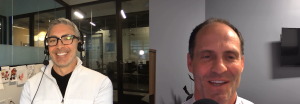
🎙️ From Mexico City Engineer to Global Amusement Ride Leader: Dr. Jay Luis Aguilar’s Journey with Chance Rides
In this inspiring episode, Dr. Jay Luis Aguilar, Global Vice President of Business Development at Chance Rides, shares his remarkable journey from dreaming of designing roller coasters as a child in Mexico City to leading business development for a 65-year-old amusement ride manufacturer that has delivered over 3,000 rides worldwide. Through candid stories about accidentally discovering his passion for sales during an emergency trip to Tokyo, navigating a catastrophic pricing mistake that nearly destroyed a Japanese partnership, and earning his doctorate while working full-time, Jay reveals how curiosity, listening skills, and cultural respect have shaped his approach to building lasting international relationships—and how Chance Rides is revolutionizing the industry with 100% electric trams powered 80% by solar panels.
✨ Key Insights You’ll Learn:
- Career pivot from automotive technology development engineer to commercial leadership after emergency Tokyo presentation
- Chance Rides history: Founded 1961 with CP Huntington train replica, now celebrating 65th anniversary in 2026
- Three core product lines: trains (with tracks at zoos), trams (trackless parking lot shuttles), and elaborate themed carousels
- Carousel complexity: From classic hand-painted horses to character-themed rides for Universal’s Kung Fu Panda and Minions
- All carousel figures are hand-painted by artists with time allocations based on complexity level
- Morgan acquisition in early 2000s: How Chance entered roller coaster market for small-to-medium amusement parks
- Portable carnival market shift: Economic conditions made competing with Europe and Asia Pacific pricing difficult
- Electric revolution: 100% electric trams launched 2025, powered 80% by solar panels with standard 120V wall charging
- Learning from trains to trams: Electric CP Huntington trains since 2017 provided foundation for tram development
- Swedish technology partnership: Collaborated on development while Chance handles manufacturing for electric trams
- Post-apocalyptic carousel at Area 15 Vegas: Half-turtle, half-robot figures with unique lighting systems
- Private equity transition 2023: Acquired by Permanent Equity, a non-traditional 30-50 year investment firm
- Doctorate earned while working: Completed PhD in business with specialty in how social media impacts corporate decision-making
🌟 Jay’s Key Mentors & Influences:
Harold Chance (Founder, Generation 1): Created iconic CP Huntington train replica in 1961, originally hoping to build 10-20 units—company has now built 439+
Dick Chance (Generation 2): Shared company history and family legacy during Jay’s transition to leadership role
Former CEO Carlos (German Automotive Company): Challenged Jay with emergency Tokyo pricing crisis, teaching resilience under pressure and cultural negotiation
Japanese Business Partners (Honda, Toyota, Nissan): Taught importance of trust, respect, and long-term relationship building in international commerce
Aaron Landrum (Chance Rides President): Hired 2017 to help navigate family transition and private equity sale process
Permanent Equity Leadership: Providing non-traditional long-term guidance focused on growth rather than quick flip model
His Wife: Supports his continuous education journey from MBA through doctorate while managing international travel
👉 Don’t miss this powerful conversation about finding your calling through unexpected opportunities, the art of listening in high-stakes negotiations, and how a 65-year-old company is electrifying the future of amusement transportation.
LISTEN TO THE FULL EPISODE HERE
Transcript
Anthony Codispoti (00:00)
Welcome to another edition of the inspired stories podcast where leaders share their experiences so we can learn from their successes and be inspired by how they’ve overcome adversity. My name is Anthony Codaspodi and today’s guest is Dr. J Luis Aguilar. Born and raised in Mexico city, J started as an electro mechanical engineer while he dreamed of working in the amusement industry, specifically designing rides like roller coasters.
Today, he is living his dream. He serves as the global vice president of business development at Chance Rides. They are an amusement ride manufacturer based in Wichita, Kansas, with over 60 years of experience. They have delivered more than 3,000 rides worldwide, including trains, trams, carousels, and roller coasters. Under Jay’s leadership, the company has participated in major industry events and earned recognition for its commitment to safety and innovation.
Now, before we get into all that good stuff, today’s episode is brought to you by my company, Adback Benefits Agency, where we offer very specific and unique employee benefits that are both great for your team and fiscally optimized for your bottom line. Imagine being able to give your employees free access to doctors, therapists, and prescription medications. And here’s the fun part. The program actually puts more money into your employees’ pockets and the company’s too.
One recent client was able to increase net profits by $900 per employee per year. Results vary for each company and some organizations may not be eligible. To find out if your company qualifies, contact us today at addbackbenefits.com. All right, back to our guest today, Global VP of Business Development and Marketing at Chance Rides, Jay Luis Aguilar. Jay, thanks for making the time to share your story today.
Jay Luis Aguilar (01:56)
Thank you so much for having me. I am looking forward to have a great conversation. And once again, thank you for having me. And thank you for that fantastic introduction.
Anthony Codispoti (02:07)
Absolutely. So, Jake, born in Mexico City, you started out as an engineer, but in the automotive industry. You always had this huge attraction to amusement rides. What first sparked that interest?
Jay Luis Aguilar (02:11)
Yes.
Mm-hmm.
⁓ you know, it is something that I can explain. I just remember that when my parents, they were taking us to the zoo or the amusement park, I just had the idea that I like humans behaving when they are having the family at the amusement park. I was always attracted to that. We were, I thought I was actually having a great moment.
And over time you realize you are building memories. So that idea really took me from early during my life. So, yes.
Anthony Codispoti (02:59)
So you didn’t start out in amusement ride, you started out in the automotive industry.
Jay Luis Aguilar (03:03)
Yes.
So what had happened is electromechanical as you mentioned, electromechanical engineer by training. And I was having those thoughts, right? I’d really would like to work for a company doing amusement rides. And it’s just like life is funny. My first job out of college was actually working in the automotive industry. So I worked for that industry for many years. And then it happened that probably after
20 years, one of the teammates at the company that I was working at the time told me that Chance, they were looking for a VP of sales. And Chance, just so you know, they build a roller coaster for Six Flags Mexico. And still today, that coaster has the highest ridership in the Six Flags system. So obviously, the name was very familiar to me. So here I am in Wichita, Kansas.
Right? Life is about trade-offs. And yeah, I certainly moved from Nashville to Wichita, but literally living my dream. So that’s how I did my transition from other industry to the amusement industry.
Anthony Codispoti (04:14)
And so the way that this door opened is a friend just happened to notice or be aware that chance rides was higher.
Jay Luis Aguilar (04:21)
Yes, exactly. That’s exactly how it happened. And ⁓ we connect through LinkedIn. And well, here I am eight years after I joined the company back in October 2017.
Anthony Codispoti (04:36)
Okay, and so let’s go into a little bit more detail about what it is that you guys do there. So roller coasters, are we talking about like the big, huge, giant ones or maybe the smaller ones that are a little more suitable to my kids?
Jay Luis Aguilar (04:39)
Yes.
Mm-hmm.
Yes, exactly. So one of the products that we do are, obviously, roller coasters. But perhaps that is not the bread and butter for the company. So to give you a little idea, the company actually was created based on one product. And this product is the CP Huntington train, a replica of the CP Huntington train. And then after that, the family owner of the company at the time, they were able to penetrate
different markets, such as the carousels, wheels, and one of them was roller coasters. That, in the way we penetrate that market, was actually through an acquisition. Back in the early 2000s, they acquired a company called Morgan. Morgan was a company doing roller coasters. And by purchasing or acquiring Morgan, we were able to penetrate a market.
Obviously we have done coasters after that acquisition as chance, but that’s exactly how we penetrate the market and it’s just one of the products that we do. We don’t do the big, big ones. So there are companies that they are the big boys doing roller coasters and we don’t compete with those guys. We do, I’m going to say for small and medium sized amusement parks, like the one in Kentucky Kingdom.
The one in Kentucky, the part name is Kentucky Kingdom. The line run, that’s a coaster that we did. About that size of coasters is primarily what we do when it comes to coasters.
Anthony Codispoti (06:26)
And so when the acquisition of Morgan was made, did you maintain their production facility wherever that is or did you bring it into Wichita, Kansas?
Jay Luis Aguilar (06:34)
to Wichita Cancer. What was happening at the time in California, it was primarily the brain, the design, the technical portion of it, and the manufacturing came right away to Wichita Cancer.
Anthony Codispoti (06:49)
Okay. But you’ve got your start, ⁓ Chance Rides did, in the replica of this CP Huntington train. Give me an idea the size of this train. Like I’ve been to a zoo where there’s a train where my family and I get in and it rides around. Or like I go to the pumpkin patch and there’s like a really small one that like my kids get in and it just kind of goes round and round in a circle.
Jay Luis Aguilar (06:57)
Yes.
All right, so actually both, if you go to a zoo, remind me again, where are you located? All right, Columbus. For instance, if you go to the Columbus Zoo and you get on that train, that is actually our replica of the CP Huntington train. That is a chance train, right? That is the size of the trains that we do today. Now, going back to the pumping patch that they go around and around, earlier,
Anthony Codispoti (07:19)
I’m in Columbus, Ohio, so the Columbus Zoo.
Jay Luis Aguilar (07:42)
In the history of the company, we used to do smaller trains in what we call gauge number 12 and number 16 and number 20. Nowadays, the only gauge that we do is gauge 24. just so you know, what we describe as the gauge is the distance between the tracks. So back in the 70s, 16 and 20 was the traditional regular size of a train, smaller trains.
As the time progress and also for safety reasons, when you have a wire support, it’s more difficult to have incidents. So what we do today is 24. But yeah, the company created the train back in 1961 already in gate 24. So both of them we do, or we did in the past, the smaller trains.
Anthony Codispoti (08:38)
Gotcha. And I’ve always wondered when I go to that pumpkin patch, obviously they’re not using that little train year round, but do they still own it or was there some sort of a lease program like, Hey, we’re sending it to you for a few weeks. You send it back and you know, how does that work?
Jay Luis Aguilar (08:53)
Yeah, you know, as far as I know in the history of the company, we have not done leasing. when we deliver a train is after we do a contract and we get a deposit. So we don’t, we don’t do leasing. Yes.
Anthony Codispoti (09:11)
Got it. Okay.
And as I understand now today, what you’re really known for are the carousel rides.
Jay Luis Aguilar (09:18)
I’m going to say that we are known by, I’m going to say that the three core products, trains, carousels, and trams. The carousel, however, has become the product that anywhere from the local zoo all the way to the big boys like Universal, they come to us, right? So the carousel has been perhaps the top performer when it comes to
the creative intent and complexity of the products that we do.
Anthony Codispoti (09:53)
of the product. Say more about
that. Seems like it’s pretty simple. Just, you know, some wooden horses going around in a circle, but I’m overlooking something here.
Jay Luis Aguilar (09:58)
You ⁓
Yes, yes. you have, have you had the chance to, um, to be seed universal Orlando, for instance. All right. So, or the sea world. All right. So if we think in terms of the carousel, we all human beings, you hear the word carousel and you think the classic carousel only horses going around very simple machine.
Anthony Codispoti (10:11)
Mm-hmm, no, I haven’t.
Sure.
Jay Luis Aguilar (10:31)
That’s it, right? With the time, and especially once again with those big companies, they do have a large team. The team task is creative intent. If you think about it, those guys, own a lot of IPs, right? I’m going to give you one example. Universal, they own the IP for Conf Panda, right? When they were working on the master planning for…
Universal in Beijing, one of the IPs they wanted to work on was Comfort Panda. So we worked with them to create a carousel that actually shows the character of the movie of Comfort Panda. So at that point, you add a lot of complexity to the machine, right? You have to create these carousel creatures slash figures.
where they provide perhaps the original concept like the Kung Fu Panda, The Kung Fu, the main figure of the picture. But then you have to add, what is the final design in order for that creature to have a human being on it as part of the carousel? And that’s all. No.
Anthony Codispoti (11:51)
So I’m not riding a horse, I’m riding
a character from this movie.
Jay Luis Aguilar (11:55)
Exactly. Right. And then once again, they do have a large team of creative people that they come with very creative ideas. For instance, the Kung Fu Panda Carousel, the lighting of that carousel is quite unique. So you have to come with this new design. the principle is still a carousel that maybe doesn’t really look like a carousel, but it’s still a carousel.
But the design that goes into it is significant, right? That’s one example. The other example is the Minions carousel that was also created and built for Universal in Sentosa in Singapore. Imagine we did the carousels with the teaming of the Minions. Imagine that you are getting on a machine that has Minions and kids are getting on them to actually have that experience.
Anthony Codispoti (12:49)
the riding the
minion characters.
Jay Luis Aguilar (12:50)
Exactly,
right? It sounds very simple and we all think about the classic simple carousel. They can become very, very complex machines.
Anthony Codispoti (13:04)
Well, isn’t I thinking just about the classic, you know, with the horse, you know, they’re actually very ornate, you know, that I’m thinking back. There’s a lot of artwork. There’s a lot of artistic design that goes even into the typical horse ones.
Jay Luis Aguilar (13:07)
yes.
Yes, you are absolutely correct. Our artists, actually we have to tell them how many hours they can spend on each of the figures depending on the level of hours that they can spend. We are using one word, artist, right? An artist is in the way they express themselves, right? So if you give an artist 1,000 hours for painting one figure,
They’re going to spend that and more time, right? But obviously, everything is related to money, so we need to give them, you know what, for this specific level, client is paying these many hours, right? And everything is hand-painted. Every single, from the most basic horse to the most sophisticated minion or Kung Fu Panda is hand-painted. Yes.
Anthony Codispoti (14:03)
wow.
What’s maybe the most surprising thing that people don’t know about manufacturing amusement park rides in general?
Jay Luis Aguilar (14:24)
I’m going to say perhaps what you just expressed a few minutes ago. They look very simple from the outside, but once you start looking at everything that goes into the attraction, from the mechanical structure all the way to the hand painting art, it’s hard for the people to picture all that together, how they come all together.
Anthony Codispoti (14:53)
How
about the rides that I see at like a neighborhood festival where, you know, I think the group is traveling with them from one city to the next. Do you manufacture these?
Jay Luis Aguilar (15:00)
Yes.
Yes, for a couple of decades, ⁓ Chance was perhaps the largest ⁓ manufacturer for those attractions, what we call portable and also known as the Carnival Market. You have one carnival going to X city. They are there for two weekends and then they move to the next. We need a lot of those. Once again, for probably 20, 30 years.
80 % of the revenue was coming from that specific segment. We did a couple of icon attractions. I’m not sure if you remember, if you did get on the zipper. The zipper was created and manufactured by chance. And this is still an icon portable carnival ride.
a lot of those and yes, giving you an answer to your question, yes, we did a lot of those for many years.
Anthony Codispoti (16:05)
Not so much anymore.
Jay Luis Aguilar (16:07)
Not so much anymore. ⁓ We didn’t exit that market intentionally. Has been a little bit of, I want to say economics, right? ⁓ In America, as you know, we have some conditions that we cannot compete with. Perhaps some conditions that they do have either in Europe or perhaps in Asia Pacific. So pricing was a thing that actually didn’t help us.
to keep at the portable mark. Now we are trying actually to get back into that segment, by the way.
Anthony Codispoti (16:44)
You’re saying
that’s something that maybe some countries that have lower labor costs, ⁓ because these are smaller portable rides that almost transformed down into this, you know, compact space. That’s a little bit easier to put on an ocean freighter and bring over here. So you’re an engineer. ⁓ you got your dream job. You’re working at chance rides with roller coasters, but as I understand it, you’re not on the engineering side. You’re on the sales side.
Jay Luis Aguilar (16:48)
Yes.
Thank you.
Yes, yes, that is correct.
Yes. ⁓
I am actually, if that’s okay with you, I would like to walk you how I did my transition. So I started working for this German company, part of the automotive industry. And so I was actually hired as technology development engineer. So my job was actually was developing a suspension system for Nissan at the time for the Sentra. So here I am working on that specific system for Nissan.
Anthony Codispoti (17:18)
Please.
Jay Luis Aguilar (17:42)
And then the account manager for that account got sick. So got sick like the day before we were traveling to Tokyo for a big commercial presentation for this suspension system. So the director of the technical team came to me and said, Hey, we have a situation here. And the situation is that the account manager cannot travel with you.
You got to do it yourself. Is that something that you can handle it or do we need to reschedule the meeting? And I said, you know what? I can handle it and have no issue at all. So I traveled by myself to Tokyo and did the whole presentation. I was always a little bit guided by how to manage the commercial side. And with that experience, I learned that this is something that I want to do for the rest of my life.
I went back at the time, still in Mexico City, and I said to my former CEO, ⁓ well, good news and bad news. Good news, everything went fantastic. We got the deal. Bad news, that is something that I would like to do for the rest of my career. And he was very supportive. said, you know what? I’m with you. I’m going to support you. And that’s something that you would like to do. So why?
I did my transition. I saw that having a technical background actually helps you to answer commercial questions because most of the times they are related to the technical aspect of. So, well, here I am doing the commercial side. Some engineers, they tell me, why did you cross to the dark side? Right. But it’s something that I enjoy. I’m going to say, and I’m going to admit that
Anthony Codispoti (19:33)
Ha ha ha.
Jay Luis Aguilar (19:40)
Today, I do have a good understanding of what we do. If somebody has a deep technical question, I admit I need help from one of the technical guys. This is a little bit too technical for me. I need your help. So that’s how I did my transition, and this is how I love what I do.
Anthony Codispoti (19:59)
So if it hadn’t been for that coworker getting sick at Nissan all those years ago, you never would have gotten to dip your toe in the water.
Jay Luis Aguilar (20:07)
Probably, probably you’re right. It’s just, you life is full of surprises.
Anthony Codispoti (20:13)
So what went down in that first sales encounter overseas? Because you came back and you were energized by it to the point where it’s like, that’s what I want to do. I mean, for most people, when they get their first taste in a sales role, it’s intimidating. You’re up in front of people, it’s high pressure, quotas to meet, et cetera, et cetera. But there was something in just that one visit on your own without somebody there to help and support and guide you. What happened? Walk us through it.
Jay Luis Aguilar (20:34)
Yes.
I don’t believe it was a mix of, first of all, we are talking about the Japanese culture. They are very respectful people, very respectful. And that obviously was a big help and something that I really took into consideration, right? The product that we were discussing at the time, I know very well what we were talking about.
so I was full prepared for that meeting. ⁓ I was dealing with people that they were very respectful to every single question, every single answer.
Most importantly, I learned that when you understand the technical aspect, you can actually help the commercial side. And what I mean is when you know the nuances of the technical aspect, you can perhaps a little bit sell it better because you have a good understanding of the product as a whole. So that’s what happened. ⁓ It was a combination of multiple factors.
Anthony Codispoti (21:52)
So we’ve talked a little bit about the history of Chance Ride, some of the changes, the acquisitions made along the way. How did the company first get started?
Jay Luis Aguilar (21:56)
Mm-hmm.
the company was started by, ⁓ a family members. Uh-huh. Harold. Harold chance was generation number one. He used to work for a company called auto way. Auto way was a company doing steam trains. Right. obviously I didn’t have the chance to interact with the family at the time. ⁓ I made the assumption that. How old got tired of working for somebody else and decided to create his own company.
And he came with the idea of doing this replica of the CP Huntington train. Back in the late 1900s, CP Huntington was a very popular engine. Engine number two was the engine that made CP Huntington very popular. Engine number two is actually still in Sacramento, inside of that museum in Sacramento. So he created this train, this replica. And I was told by Dick Chance, who is generation number two,
that his dad talked to him and said, if we do 10 or 20 of these, that’s great success. Well, here we are almost 65 years after building unit 439, right? So that was the origin of the company, the CP Huntington.
Anthony Codispoti (23:21)
And today the specialty is trams, carousels, trains. This is a naive newbie question, but what’s the difference between a tram and a train?
Jay Luis Aguilar (23:26)
Yes.
All right, the train by definition, you have tracks, right? Like the one that you go to Columbus Zoo, you get on the train and the train has to have tracks, right? So that’s the difference. The train has tracks. The tram, the tram is if you go, for instance, to, I’m going to say to a large amusement park in Florida, right? Traditionally, that park is going to be packed.
that the size, I’m gonna give you one example, for instance, if you go to Dollywood in Tennessee, right? The size of the parking lots are huge. If you get to the park by 10 o’clock, most likely you’re packing the spot, it’s gonna be anywhere between one quarter of a mile all the way to one mile away from the main entrance. So you get off your car, you walk to the closest station, you wait for the tram. The tram doesn’t have track.
It’s just what we usually buy is a four chassis and then we do the conversion to the tram. And you get on the tram. They take you from your station all the way to the main entrance, but it doesn’t have a track. That’s the main difference.
Anthony Codispoti (24:46)
Okay. Now I can visualize it. They do something similar at the Columbus zoo, right? Yeah. If you’re parked a ways back, sometimes they’re running this little shuttle looking train that, but there’s no track. So I get it now. Yeah. Okay. So we talked about how the company got started. Here we are 60 years and 3000 rides later. It’s been, you know, through different generations, different forms of leadership. It’s not easy to do what from your vantage point.
Jay Luis Aguilar (24:55)
He is Saha. There is no truck.
Yes.
Anthony Codispoti (25:16)
What do you believe is the biggest factor behind the company’s enduring success?
Jay Luis Aguilar (25:21)
You know, I’m going to say that innovation has been one of the main factors keeping the company where we are today after almost 65 years, right? And I mentioned almost because this coming year, 2026 is going to be over 65th anniversary, by the way. So I’m going to say innovation. And evidently, the family really took care of the employees, right? That’s something that
definitely helped the company to stay. And I’m going to say that the family was able to navigate some hard conditions, Like the last recession we had back in 2008, obviously through the pandemic, prior to that in early 2000s, the company used to do financing to the carnival markets.
And then you might recall also at that time we did have an economic downturn. And so the company struggled, but the family was able to navigate in a way that they were coming out on the other side of the tunnel. So, yeah.
Anthony Codispoti (26:36)
And so it’s still a family owned company.
Jay Luis Aguilar (26:38)
No,
you know what happened? I’m going to walk you through this. I believe it’s relevant and it’s important. So family was running the business, generation number two. Generation number three start taking over back in 2000, the oldest of the kids. And then it just happened that in 2016, it was 2016, the family lost the member that was taking over the business.
Right? So the youngest kid didn’t want to be part of the business. And then at that time, the youngest kid told his dad, I’m going to join the company, but I’m going to join to help you out to sell the business. So at that point, they hire back in July, 2017, Aaron, Aaron Landrum, who is, they hired him as the president.
And then right after they hire me, we did both have experience doing transactions. So the idea was, guys, we need your help. We need your help to find a buyer for the company because generation number three is not interested. So Aaron and I, we work with the family ⁓ to be able to do the, first of all, let’s say a nice organization here.
and then as well as finding the right partner. And then back in 2023, we were acquired by a permanent equity group out of Columbia, Missouri. So the family is no longer a family business. We are part now of a private equity group. And I’m gonna emphasize non-traditional private equity group. And what I mean by that is traditional private equity group, they buy, they flip, they sell.
anywhere between 18 months to probably five years, permanent. That’s the reason why the name is permanent. They do say they feel a generational gap, meaning the investments are for the long term, anywhere between 30 years to 50 years. So non-traditional private equity group. Yes.
Anthony Codispoti (28:52)
Wow. That’s very non-traditional.
And Jay, you said something that caught my attention. You said that you had experience in transactions. I think maybe we skipped over that part of your career.
Jay Luis Aguilar (29:02)
Yes.
Yes, a little bit intentionally, by the way. Intentionally. No, no, no, I have no issue. You know what happens is that when you have some experience working with some traditional private equity groups, people see you in a different way. And the reason why is because, well, what they do is they make a lot of money, right? But at the same time, I’m not talking about any specific group, I’m just talking in general.
Anthony Codispoti (29:07)
⁓ okay. Something we want to leave in the rear view mirror.
Jay Luis Aguilar (29:34)
It’s money, money, money. I did taste that world and it’s just that I was like, whoa, this is a little bit too transactional for me.
Anthony Codispoti (29:50)
Hey, sometimes in life we have to try on hats not only to find what fits, but to find what doesn’t. So you found a hat that didn’t fit, but boy did it give you some good experience that came in later on.
Jay Luis Aguilar (29:56)
Yes. So.
⁓ absolutely, absolutely. And you know what? You didn’t ask this question, but I’m going to offer my point of view. Working with Permany has been fantastic. It’s a truly known traditional PEs. They guide us. ⁓ They help us. And the idea is to grow the business. Absolutely right. ⁓ So it has been fantastic so far. ⁓ So yeah, so I kind of intentionally left that part outside.
Anthony Codispoti (30:29)
That’s all right.
So, okay, so this private equity group that you’re a part of now, do they focus specifically in the, I don’t know, entertainment ride space or are they just looking for good businesses in any industry?
Jay Luis Aguilar (30:35)
Mm-hmm.
I want to say that the diverse portfolio they have is not specifically just for amusement attractions. They do own from…
much making services all the way to chance rights and anything in between, right? So they don’t have one specific industry that they go after. My understanding, obviously, I have limited knowledge of.
if they are looking for specific industries. with the limited information that I have, I know that the portfolio is well-divertified. Yes.
Anthony Codispoti (31:24)
So you’ve been with ChanceRide since 2017, right? You brought more than two decades of experience in manufacturing, sales, engineering, transactions, now we understand. Is there a key moment or project when that diverse skill set came together to help drive a breakthrough or advancement at ChanceRide?
Jay Luis Aguilar (31:27)
Yes.
You should.
I’m to say yes, because I did have a lot of international experience though. And so being able to penetrate different segments and bringing some companies that we are able to collaborate with, those moments is where the previous experience, they came together. At the end of the day, we are today who we are because of what we did in the past or decisions as we made in the past, right?
So you are absolutely right. That combination of experience, they came together for penetrating new markets. They came together for having relationships with some companies that we can collaborate with is when that happened.
Anthony Codispoti (32:35)
How
about maybe a particular challenge, like a complex engineering issue or a tight deadline, something challenging that you had to work through on the professional front and how sort of your creative problem solving came about to help.
Jay Luis Aguilar (32:53)
Yes. So I’m going give you perhaps a couple of examples, but I’m going to focus perhaps in the first one that came to my mind. So we are part of different organizations in the continental US. One of them is ACA. ACA stands for Aquariums and Sews Association of America, right? It’s where all the sews and aquariums, they are as a group together, right? And it’s an association. You have to be accredited to be part of that.
group, right? And this is perfect example. Let me tell you why. It happened at Columbus Zoo. So traditionally we have one conference, annual conference, and that conference is in September. And it moves from one zoo to the next one in sea. So a few years ago, about four years ago, or three years ago, I should say, the ACA annual conference was in Columbus, Ohio.
So here I am working with them on this electric train since year and a half prior to that year.
So the VP called me and said, hey, Jay, how soon can you be here? ⁓ As soon as you need me. ⁓ Well, can you be here? It was a Friday. she said, can you be here Tuesday? Absolutely, I can be there. So.
Jay, you got the deal if you can deliver that train two weeks prior to ACA. And that was something in May, right?
Anthony Codispoti (34:30)
So what time span are we talking? From October to May? Did I hear that right? Okay.
Jay Luis Aguilar (34:33)
⁓ This
is from, well, think about it, from May, placing the contract in May and delivering that product kind of mid-August. It was a very challenging project. Six months. Six months. It was very challenging. So I said, you know what? As much as I want to have the deal,
Anthony Codispoti (34:44)
⁓ what’s the typical delivery timeline? Okay, so now you’re going from May to August, which is June, July, that’s three months, it’s half the time.
Jay Luis Aguilar (35:01)
I have to have a video conference or at least a conference call with two key people in the company. Obviously my boss, the CEO, as well as the operations manager. If I am able to sell them, then we can commit. So I asked for some timing, said, give me an hour. Let me go to my car. Let me have this conference call. So evidently, had this tough conversation with Aaron and Jeremy. Guys, this is the situation.
This is what we have. If we are able to, we got the deal.
And then, know, timing-wise, there is no way that we can make that.
And as you mentioned before, you start thinking, how do I solve this issue? And I knew that I had another contract that they were not going to be ready for the timing that they were asking the train for.
So I said, guys, if I am able to talk to X company and delay that one so that to some extent we can actually switch part of the building. And as long as they buy and we do have an approval from the other buyer, are you guys up? If you make that happen.
We can, we are on it, okay?
Anthony Codispoti (36:23)
So right
now you’ve got your internal team bought into this. Now you have to go to the two different clients and get them to buy into it.
Jay Luis Aguilar (36:25)
Yes.
So that was a challenging project. That was an interesting experience. ⁓ Thankfully, the things were as we intended. So the other buyer, were like, we have no issue. We are not going to be ready for the delivery of the train until this time. So.
Yes, we can make it happen. Obviously, from the legal point of view, we had to do all the legal documents and just making sure that everything was okay. So, and that’s how we made it happen. yes.
Anthony Codispoti (37:02)
I that. It
created problem solving. So we talked about trams and you educated me on the difference between trams and trains. And now I understand that you guys have moved into e-trams. These are electric trams.
Jay Luis Aguilar (37:10)
Uh-huh.
It is a hundred percent electric tram. Let me tell you, we came with first because this is a result of the experience with the electric train. So we used to do the CP Huntington fossil fuel, ⁓ meaning diesel, gasoline and propane. And then back in 2017, at the time that I joined the company, ⁓ we came with the electric CP Huntington, which now we have been doing the electric train.
since 2017. So to some extent, we were reacted to the market. They were asking us, when are you guys coming with the electric tram? Obviously developing a product 100 % from scratch, it takes time and it takes a lot of money. So what we did actually, we worked together with a company out of Sweden.
So they did develop the technology and we do the manufacturing. So we just came a perfect match. They did the development, we did the manufacturing, and we do the manufacturing. So it’s 100 % electric. We have a couple of advantages versus some other people is you can literally plug it on the wall of your house, 120, 48 volts.
And we have solar panels on the roof. we, the couples that we have out there, we know that 80 % of the battery is back from or through the solar panels. So that is the latest and greatest product that we came to the market with. Literally we, the first one we delivered was back two weeks prior to Memorial weekend. It’s apparently, it’s primarily still a new product. It is brand new. Yep.
Anthony Codispoti (39:08)
This is brand new.
And
you explained to me the complexity of it because you said you had to completely design something from scratch. In my tiny little non-engineering brain, it seems like, well, at least you can use the same chassis. But now you’re taking out, what was it, like a diesel engine before? What powered it in the past?
Jay Luis Aguilar (39:30)
In the past, for the train was diesel, gasoline, and propane.
Anthony Codispoti (39:35)
Okay, all three
or you had three different models for each one of those fuel types?
Jay Luis Aguilar (39:41)
the same
shape, just different sources of powering. Yep. Yes.
Anthony Codispoti (39:45)
Got it. And so
to me, I’m thinking, okay, you’ve got one that you had propane, one that’s gasoline, one that’s diesel, and you’re taking out, I don’t know, a chunk of componentry. And, but it sounds like switching out for the electric version was not quite so simple. It’s not just swapping between diesel and propane.
Jay Luis Aguilar (40:01)
Exactly, wasn’t it?
Exactly. You just talked exactly the baseline problem that we had to solve. The only thing that you have is you know what your limitations are when it comes to, this is the space that I have to work with to develop an electric CP Huntington train. With the tram, once again, we thought, you know what? This is going to take a lot of time and a lot of money. That’s why we found that.
the company in Sweden, they already did the development of the technology. Hey, we used to do the manufacturing, right? So going back to your point, yeah, it’s very complex when you are actually thinking of a new product, knowing that you want to do the same shape of the replica of the previous product. Now, instead of using fossil fuel power, you want to use
batteries as the power source for this new attraction. was quite challenging.
Anthony Codispoti (41:10)
And so you’ve got two
of them out there in the field now. Seems like it’s going really well. 80 % of the electricity that’s used is coming from the solar panels. Where do you see this going? What’s the future of this look like?
Jay Luis Aguilar (41:19)
Yes.
Well, know, once again, using the experience that we have with the train, where we know that perhaps the first two or three, they were a little bit difficult to sell. Obviously, we are talking about back in 2017. I do believe human beings, as the time goes by, more people are looking into the electric, right? So ⁓ some states here in the continental US,
are actually giving incentives to some companies as they switch to electric. I do believe over time, we’re going to become more. ⁓
environment, conscious, friendly. And we see it. More people are more interested now in electric products.
Anthony Codispoti (42:14)
I presume the hesitation is that the electric is going to cost more upfront. The batteries are a lot more expensive.
Jay Luis Aguilar (42:19)
⁓
I’m to say for the trams, specifically for the trams, one of the main reasons why we collaborate with these companies in Sweden is because the design from the moment number zero or number one was 100 % electric. So pricing point of view is actually not as high as many people could believe.
The price that we have for that electric tram is very competitive actually.
Anthony Codispoti (42:54)
And
so what’s the hesitation from folks buying it? Just it’s something new.
Jay Luis Aguilar (42:58)
is something new. And if you think about it, a lot of places where they do have technicians or maintenance teams, they are used to deal with grease, they are used to deal with diesel, they are used to deal with gasoline. When they hear electric, they immediately picture in their mind, oh my gosh, it’s going to be a computer that I have no clue about. And it’s not that hard. It’s easy. So it’s a little bit of reluctancy. But once again,
As the time goes by, we see the change back in 2017 to 2025, right? People are more open to learn, to talk about it. And we see that the people are changing. Little by little, they are embracing more. Yeah, we are going electric.
Anthony Codispoti (43:46)
So aside from the ⁓ electric trams and trains that you guys have developed and are now selling, what are some other fun future projects that are on the horizon?
Jay Luis Aguilar (43:52)
Mm-hmm. Mm-hmm.
Yeah, I’m not sure what I can share with you because as you know, some of the contrast that we have, we have very tight NDAs, right? What I can tell you is we are working with one of the companies in the amusement industry. We are working on a fantastic project that I do believe is going to be open sometime in twenty twenty eight. And that’s pretty much what I can share is impressive.
And this is very exciting, right? We are working with another company in the Middle East that also the concept of that product is just, we are really just blown away by that concept, right? So we are working on multiple projects that very, very exciting, very challenging projects though, but we are very excited to work on those.
Anthony Codispoti (44:54)
How about like any internal, ⁓ I don’t know, acquisitions of new skill sets or new product lines that might be coming?
Jay Luis Aguilar (45:04)
I’m going to say, one of the good news now being part of this group is that they are welcoming new ideas. They are welcoming new ideas. So we’re exploring a couple of ideas that we might come with, perhaps another line of products that we used to be part of. So without giving you specifics, yes, there are a couple of ideas that we are being…
be an explore. I’m gonna say.
Anthony Codispoti (45:35)
Well, I think what needs to happen is we just need to put a note on the calendar for, I don’t know, a year or two from now so we can check in and hear about it once it’s in the public domain.
Jay Luis Aguilar (45:41)
I’m sorry. ⁓
A little bit, a little bit. Now something very exciting that we just work on and that I believe it is worth it to mention. I’m not sure if you are familiar with this place in Vegas called Area 15. Area 15 is a very unique place. You can look at their website and I’m not making publicity for these guys, but it is quite a unique place. So they had the idea of doing this
Anthony Codispoti (45:48)
Okay.
Jay Luis Aguilar (46:15)
post-apocalyptic carousel. And we work with them and develop a post-apocalyptic carousel. So that’s a carousel that is very unique in many different ways. The lighting system is just unique. The figures we did for them is just try to picture that you see a turtle, half turtle and half robot wearing a helmet, right?
So that’s one exciting project. OK. OK. Yeah. So that’s one of the projects that we work on. They did a grand opening about ⁓ five weeks ago, so it’s super exciting. And then ⁓ when it comes to projects that are going to happen soon, ⁓ don’t have a specific timing when they’re going to do the opening, this is public.
Anthony Codispoti (46:46)
I’m not even sure what you’re talking about. I’m just gonna have to come see this for myself at some point.
Jay Luis Aguilar (47:12)
public information. I’m not sure if you have heard about this place in Glendale, Arizona. It’s a tele-adventure park. And they are going to open in the near future. We are doing two coasters for those guys. So that’s quite interesting too. And so yeah, we have a lot of interesting projects. it’s a lot of fun. Yes, a lot of fun. Yeah.
Anthony Codispoti (47:34)
lot of stuff coming.
Yeah. All
right. Let’s let’s take a let’s take a turn here and let’s explore some challenges that you’ve overcome, right? Lots of lessons to be learned through going through some hard stuff. What’s something that you would like to share that we can learn from?
Jay Luis Aguilar (47:47)
Yeah. Yes.
I’m not sure we do want experience that I actually had or went through working for the second German company that I work.
I was managing all the OEMs from Asia Pacific, where I’m going to see all the Japanese accounts. And I’m talking about Honda, Toyota, and Nissan. So we landed a contract.
And one Friday, the CEO called me. I was living in Nashville at the time. The CEO called me and said, what are you going to do this Sunday? And I knew that every time he was calling me, asking me that question, he wanted me to go somewhere overseas. So I replied, Carlos, where do you want me to go this Sunday? I want you to go to Tokyo.
And I want you to decline the business. And I said, I’m sorry, did I, what happened here? He said, well, you guys took the contract, but the finance department did consider that we were using equipment that we already have. For that specific casting machine, we need completely new equipment because all these are, wow.
I said, okay, can you give me an hour? No, no, I want you to buy your ticket. I want you to be in Tokyo by Monday morning. Okay. ⁓ Carlos, that’s okay with you. Let me think about some questions that I have. And left the office. My office was in Nashville. The traffic is very bad nowadays. still back then it was very bad. So did my driving.
an hour and a half from home. I go home and I call him back and I say, Carlos.
Do we want to decline the business? What it will take for us to keep the business? He said, the price increase. If you are able, no, no, no, he didn’t mention that portion. He said, the pricing, you guys didn’t get the right pricing. That’s why we need to decline the business. Otherwise we will be losing money. And I reply, what it will take for us to keep the business? I don’t believe you can make it happen.
And I say, you tell me what is it? Increase the price. And it was almost the double of the price. It was almost the double of the price. And I remember telling him, Carlos, if I am able, do we keep this business? I don’t believe we’re going to make it happen. But if you are, we keep it. OK?
We talked a little bit a few minutes ago about the Japanese culture. Be very respectful. As they are respectful when you do something that you shouldn’t, it’s very traditional culture where when you got to take it, you got to take it. So it took me, it didn’t take me one minute, it didn’t take me one day, it didn’t take me two days. It took me almost one week having meetings every single day to the point that we were able to reach the price that we needed to be successful. So obviously,
It was a success. When you asked me the question, what, why I learned about that, I do believe I learned that asking the right questions and listening to the other side and putting yourself in your, on the other side shoes gives you and helps you to understand the other side and asking the right questions at the right time is something that if we practice.
we communicate much better. Regardless if you are buying or selling something, it’s just as human beings. Because I don’t believe I did it myself. It was just, hold on for a second. You gotta hold it. You gotta listen. And before you open your mouth, you gotta think about exactly what they are saying. And if you don’t understand it, phrase it in a way just to make sure that I understand what you are saying. These are the limits and tell me.
I learned from that experience that, it was a very challenging, but obviously I don’t have to tell you, I didn’t sleep for one minute from Chicago here to talking to Rita. We are talking about 16 hours. I didn’t sleep for a second, go to the hotel, didn’t sleep for a second, just thinking, thinking, how do we approach, how do we solve this issue? That was perhaps one of the most challenging project or task that
were given to me.
Anthony Codispoti (52:52)
So when you’re going into this meeting, they don’t have any idea the news that’s about to be delivered to them.
Jay Luis Aguilar (52:59)
is sadly they didn’t.
Anthony Codispoti (53:01)
Okay, you decide, hey, the best way to do this, and I agree, do this in person. This is big news. And somehow over the course of that week, you were able to get to a point where they could accept the new price. Can you tell us anything about the approach that you use? Because mean, you’re walking in there like, hey guys, we screwed up, not by a little bit, but by double.
Jay Luis Aguilar (53:06)
Mm-hmm. Yes.
Mm-hmm.
Anthony Codispoti (53:31)
You’ve really got egg on your face at the start of this meeting.
Jay Luis Aguilar (53:33)
Yeah, no,
no, I’m not telling you. That’s why I use the very traditional, when I, when I communicate that to my senior buyer, he said, I need 45 minutes, I’ll be back and I’ll be back with the team. So when they came back, it was not just himself. It was the, the manager, the senior manager, the director, senior director and the VP of that specific community. And it’s very, I’m not sure if they still do it that way.
The highest rank of that team was the person right in front of me. Everybody else walked one step behind. And this person with the highest rank completely empty his cup. And in the way they are respectful, I had to take it with that respect.
Anthony Codispoti (54:25)
Say it again, he completely emptied his cup.
Jay Luis Aguilar (54:27)
Empty
his cup. He let it out. It is, no, no, it is, you know, traditional. Yes. ⁓ And nobody else was making a single noise. So I had to take it. That was very impressive, by the way. I was like, wow. Yeah, it got to be the highest.
Anthony Codispoti (54:30)
What do you mean? okay. It’s a figurative thing. I wanted to make sure there wasn’t some Japanese custom I wasn’t familiar He let you have it. He let you have it. Okay.
Jay Luis Aguilar (54:56)
Frank let it in and out. And so that was the first thing that we’re like, whoa, right? And obviously he showed up to do that specifically and giving instructions to the other team members saying this, this, this, this and that, right? And obviously every day we were tackling some questions that they were asking me, providing the answers. And they wanted to know a lot of how
We screwed it, right? Yeah. Mm-hmm. So my approach was, no, no, no, once again, listening, listening and asking the questions, right? Because sometimes, once again, I’m not sure if all the people, at least sometimes myself, especially doing sales, sometimes you try to sell without listening.
Anthony Codispoti (55:30)
And so what was your approach? Is it like, Yes, sir. Sorry, sir.
Jay Luis Aguilar (55:55)
And when you listen is when you learn what exactly is the team preventing or the reason why they say no. So you have heard this expression that most of the salespeople we do. When you hear a no, it’s not necessarily a no. You’ve got to understand why that is the answer. You’re just asking questions, asking questions. My approach was let them speak. Listen to what they had to say.
And then don’t reply absolutely, write immediately lesson, think about it and then propose. That was my approach. At least I mean, listen, listen, listen to what they have to say. What are the.
reason behind all of that. we can say it was easy. It was surprising, right? Screw the budget. No, was way more than that. is exactly, I mean, you mentioned one word that was, or I do believe it’s still key today in the Japanese culture. When you have their trust, most likely you can do business for the rest of your life. You have heard about those relationships when the Japanese culture.
Anthony Codispoti (56:51)
There’s a trust issue at that point, you have to regain their trust.
Jay Luis Aguilar (57:11)
They go for life. So it was a little bit personal because suddenly I have worked with the guys at the time, many years coming to them, doing that. It was being respectful. What like we build all these trucks for all these years and then out of the blue, you burn the bridge. Yeah, it was. But yeah, so it’s.
Anthony Codispoti (57:34)
It was tough, but you, navigated
it. You put it back together.
Jay Luis Aguilar (57:39)
Yes. And once again, that’s perhaps one of the most challenging tasks that was given to me. And I still remember today like it was used yesterday.
Anthony Codispoti (57:48)
Jay, what’s your superpower?
Jay Luis Aguilar (57:53)
Um, I believe I have known. No, no, I’m going to say something that I am very proud of is, and I’m going to phrase it that way. I’m very proud of that. like to keep learning things every single day. I believe I share with you that personally, um, in my undergrad, um, after the undergrad, the multiple certifications, and then I did my MBA in Vanderbilt.
Anthony Codispoti (57:55)
⁓ I beg to differ. Search.
Jay Luis Aguilar (58:22)
And then after that, I do believe at that point, I realized that my thirsty or my hungry for learning, I cannot feed enough. My brain. So at that point I decided to do my doctorate. And did my doctorate in the Netherlands. And actually it’s kind of interesting because last night I was just having a conversation with my wife and I told her, you know what, what if I do this?
Are you going to ever stop going to… ⁓ So I don’t know how to phrase it in the right way, just… Probably that’s the right way to say it,
Anthony Codispoti (58:59)
Curiosity, your superpower is curiosity.
and
what is your doctorate in?
Jay Luis Aguilar (59:07)
business and I did my specialty of lean marketing and specifically social media, how social media is impacting not your life, my life, personal life has been impacting that for many, years. How it’s impacted actually corporate decision-making.
Anthony Codispoti (59:28)
interesting. Is this, what was the timing of this doctorate? Was this while you were with chance rides or before?
Jay Luis Aguilar (59:28)
Mm-hmm. Yes.
Yes,
yes, actually. I started my doctorate back in 2018 is something that I I already had the idea when I joined the company. I talked to the former owner of the company. This is what I have as my plan for education. I want to complete my doctorate. So I joined the doctorate in 2018 and I completed my doctorate last year. So I did my doctorate while working for Purchance.
Anthony Codispoti (1:00:06)
Give us the short one to two minute version of how is social media affecting the way companies are.
Jay Luis Aguilar (1:00:13)
Yes. Well, I’m going to say one or two minutes. Younger generations are already taking corporate positions and younger generations are living with social media for everything they do. Right. From buying shoes all the way to making decisions of softwares, equipments and things like that. These new generations are bringing that behavior and that behavior is affecting no 110 issues. They are impacting decision that.
multi-million dollar purchasing decision making. That’s how it started, but at the end of the day, some actually X. They are using that also as feedback for whatever decision they are planning to do impacting the business. So, yeah.
Anthony Codispoti (1:00:59)
Okay, what’s your favorite thing to do outside of work, Jay?
Jay Luis Aguilar (1:01:05)
training for my triathlons. So my definition of fun is go for a swimming, go for a run, get on the bicycle and then racing. Racing is something that I enjoy, really enjoy doing.
Anthony Codispoti (1:01:08)
Okay.
And when is the next triathlon that you’re doing?
Jay Luis Aguilar (1:01:24)
The next, well, the next I’m doing a half marathon on December the 14th. Then I’m doing a half marathon in Vegas in February. Then I’m doing my first triathlon of the season in 2026 in early April here in close to Wichita. But my next Ironman is in Maryland in June 2026. Yes. That’s a big one. Yes.
Anthony Codispoti (1:01:48)
Okay, the actual Iron Man, the big one, nice.
Well, Jay, I’ve just got one more question for you today, but before I ask it, I wanna do three things. First of all, anyone who wants to get in touch with Jay, he’s given us permission to give out his personal or his work email address, I should say. And it’s j.agularr at chancerides.com. Agularr is spelled A-G-U-I-L-A-R, j.agularr at chancerides.com.
Jay Luis Aguilar (1:02:07)
Mm-hmm.
Anthony Codispoti (1:02:17)
And obviously you can learn a lot more about the company and what they do at chance rides.com. We’ll have links to both of those in the show notes. Also as a reminder, if you want to get more employees access to benefits that won’t hurt them financially and carries a financial upside for the company, reach out to us at adbackbenefits.com. Finally, if you’ll take just a moment to leave us a comment or review on your favorite podcast app, you will hold a special place in our hearts forever. Thank you.
So last question for you, Jay, a year from now, you and I reconnect and you are celebrating something big. What do you hope is that big thing you’re celebrating one year from today?
Jay Luis Aguilar (1:02:56)
Professionally speaking, a big contract somewhere in the Middle East. Yes. And a couple of contracts here with some of the big boys.
Anthony Codispoti (1:03:08)
some things
that sound like maybe they’re in the works. Yeah.
Jay Luis Aguilar (1:03:10)
Yes,
yes. then personally, one of my granddaughters is actually graduating in May, 2026. And so that’s from the personal side. I love my grandkids, love my kids. that’s always, regardless of where I am in the world, I did a commitment that I’m not going to miss as long as I’m living. And I can move, I’m going to go to every single graduation of the grandkids. ⁓
Anthony Codispoti (1:03:37)
And so this is a graduation from high school that’s upcoming? Okay, terrific. Well, Jay Luis Aguilar from Chance Rides, I wanna be the first to thank you for sharing both your time and your story with us today. I really appreciate it.
Jay Luis Aguilar (1:03:39)
High school, yes,
No, Anthony, thank you so much for having me. It was a quite interesting conversation, by the way. ⁓
Anthony Codispoti (1:03:56)
For me as well. Folks, that’s a wrap on another episode of the Inspired Stories podcast. Thanks for learning with us today.
REFERENCES
LinkedIn: Jay Luis Aguilar
Email: j.aguilar@chancerides.com
Chance Rides Website: chancerides.com
Company Address: 4200 West Walker Street, Wichita, Kansas 67209