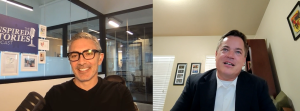
🎙️ From Litigation Refusal to “Father of Senior Living Law”: Paul Gordon’s 50-Year Journey Shaping Industry
In this inspiring episode, Paul Gordon, Senior Housing and Care Practice Leader at Hanson Bridgett LLP, shares his remarkable 50-year journey from refusing hospital healthcare law pressure as young litigator wanting first couple years trial experience to accepting 15-20 percent senior care alternative that unexpectedly consumed 100 percent of his practice when mid-1980s real estate crisis drove for-profit operators into aging services space, writing 600-page book with thousand pages of forms becoming first substantial senior living real estate publication earning “Father of Senior Living Law” recognition, and now transitioning toward expert witness work after five decades building practice through baby boomer demographic wave that AARP survey revealed 75 percent would rather die than enter nursing facilities. Through candid stories about career-defining blessing in disguise refusing hospital law preserving litigation foundation, Ken Harney syndicated newspaper columnist conference business connecting him to John Wiley and Sons publisher seeking senior living author, assisted living rise in 1990s providing attractive alternative to dreaded nursing facility stigma, and real estate professionals mistakenly treating services business like shelter-and-grounds-maintenance landlord-tenant relationships, Paul reveals how socialization through 50-80-100 resident-formed clubs drives senior living appeal beyond dining housekeeping recreational programs and care services—and why demographic juggernaut of baby boomers reaching 70s and 80s creates unavoidable real demand despite short-term capital scarcity and inflation challenges affecting development cycles.
✨ Key Insights You’ll Learn:
- Senior Housing and Care Practice Leader at Hanson Bridgett LLP, San Francisco Bay Area
- 50-year legal career exclusively in senior living and aging services
- “Father of Senior Living Law” recognition through pioneering practice and publications
- Started as full-time litigator, refused hospital law pressure to preserve trial experience
- 15-20% senior care compromise became 100% of practice within decade
- Mid-1980s real estate dip drove for-profit operators into aging services
- 600-page book (third edition) with 1,000 pages of forms on CD-ROM
- Thousand footnotes citing authorities avoiding opinion-only approach
- John Wiley and Sons publisher through Ken Harney syndicated columnist connection
- Speaking circuit built industry recognition nationwide
- Assisted living rise started 1990s with strong for-profit presence
- AARP survey: 75% prefer death over nursing facility move
- Socialization primary benefit: 50-100 resident-formed clubs on various subjects
- Services business versus real estate business misunderstanding: shelter plus dining, housekeeping, recreation, care
- Baby boomer demographic wave overwhelming every market segment
- Current baby boomer age creating actual demand after decades of anticipation
- Capital scarcity, inflation, home-selling challenges, savings absence affecting supply
- Lumber/labor costs at 8% inflation versus historical 1% impacting development
- Vigorous growth expected near-term despite current lean period
- Expert witness work focus for next year and beyond
🌟 Paul’s Key Mentors:
Hanson Bridgett Partnership
Ken Harney Syndicated Columnist
John Wiley and Sons Publisher
👉 Don’t miss this powerful conversation about career-defining refusal preserving litigation foundation, external crisis becoming practice catalyst, and transitioning toward expert witness work after 50 years building “Father of Senior Living Law” legacy.
LISTEN TO THE FULL EPISODE HERE
Transcript
Anthony Codispoti (00:00)
Welcome to another edition of the Inspired Stories podcast, where leaders share their experiences so we can learn from their successes and be inspired by how they’ve overcome adversity. My name is Anthony Cotaspodi and today’s guest is Paul A. Gordon. He is a partner and the senior housing and care practice leader at Hanson Bridgett LLP.
They are a California grown law firm with over 200 attorneys. They are known for focusing on community impact, innovative solutions, and they have offices in San Francisco, LA, San Diego, Sacramento, Fresno, and San Rafael. Their services span senior housing and care, healthcare law, real estate, and more. And they have been recognized by Chambers USA for outstanding work.
Paul himself has decades of experience working with senior housing providers since 1975 and was described by Chambers USA as a godfather in the space. He is the author of Seniors Housing and Care Facilities Development, Business and Operations published by the Urban Land Institute and has served as general counsel to the American Seniors Housing Association. He has also earned recognition in Best Lawyers
for his work in litigation and healthcare. His background includes helping clients navigate risk, regulatory compliance, and operational challenges in the senior care industry. And he serves as an expert witness and consultant in court proceedings and arbitrations involving senior care providers. Now, before we get into all that good stuff, today’s episode is brought to you by my company, Ad Back Benefits Agency, where we offer very specific and unique employee benefits
that are both great for your team and fiscally optimized for your bottom line. Imagine being able to give your senior living employees free access to doctors, therapists, and prescription medications. And here’s the fun part. The program actually puts more money into your employees’ pockets and the companies too. One recent client was able to increase net profits by $900 per employee per year. Now results vary for each company and some organizations may not be eligible.
To find out if your company qualifies, contact us today at addbackbenefits.com. All right, back to our guest today, partner of Hanson Bridget, Paul Gordon. Thanks for making the time to share your story today.
Paul Gordon (02:28)
Hello, good to be here.
Anthony Codispoti (02:31)
Okay, so Paul, you founded the Senior Living Practice Group at Hanson Bridget 50 years ago. How did that intersection of law and senior living first come about for you?
Paul Gordon (02:45)
Well, when I got to my firm, ⁓ our firm was already ⁓ representing a hospital, pretty major hospital in San Francisco, ⁓ religiously based, that also had a retirement community, a pretty significant retirement community. ⁓ The main contact with that client
was an estate planning attorney, so he wasn’t really ⁓ into what we ended up doing for these clients, which is mostly regulatory and contract type work. And so I inherited it very early. There was another lawyer there who, ⁓ within one year after I got to the firm, went on the bench as a judge, naturally retired from the firm. And I more or less inherited.
that practice and it didn’t really become a practice area for us that had any really significance until later when I had to start bringing in more attorneys to help ⁓ cover the workload that we had and that was sort of the beginning of the ⁓ practice area for our firm.
Anthony Codispoti (04:07)
And was this ⁓ when things kind of changed in the mid 80s that you saw this growth take place and you had to bring in some additional help?
Paul Gordon (04:15)
Yeah,
there was a ⁓ real shift in the field. Some people say industry. Some people don’t like the word industry because it sounds too ⁓ industrial, I guess. so around the mid-80s, prior to the mid-80s, all of our clients and most of the people in the field were not-for-profit, often religiously-based ⁓ organizations that
developed, owned, and operated these communities. And in the mid 80s, all of a sudden, and it was rather sudden, the for-profit real estate developers got very involved in and interested in the field. And part of it was that the real estate field at that time was not doing very well, and developers were looking for new opportunities.
Coincidental with that was that Marriott, a major hotel operator, decided to jump into the field with both feet. The first major ⁓ for-profit organization with name recognition ⁓ that got into the field and many followed ⁓ in their footsteps. So was a real shift in orientation and it caused some concerns and fears and
But what was certainly happening was there was a lot more activity.
Anthony Codispoti (05:48)
Was the concern based around it now being mostly for-profit entities or was it, go ahead.
Paul Gordon (05:54)
Yeah,
actually, incidents that occurred was ⁓ some of the nonprofits were afraid that the for-profits didn’t have the right motivations, that their motivations were money and that quality of care would suffer and so forth. And in the nursing field, the for-profits kind of had that reputation of not being as high quality as the not-for-profits. But in the senior living area, the for-profits turned out
to really do a very nice job of it. And they were competitive and produced a great product. But I had one person who I went to a national conference and he came up to me and he said, Paul, I understand you’re working for Marriott. This was the, you know, the scions of the not-for-profit world. And he said to me, if you were my attorney, you would no longer be my attorney.
So it became very clear, some people had very strong feelings about that. Turns out I never did lose any clients over that and kept all the not-for-profit clients and continued to work with the for-profits as well.
Anthony Codispoti (06:52)
Wow.
Why do you think the senior care industry ended up being different at the time where the nursing field, the for-profits had a really bad reputation, but it was executed differently by the for-profits and seniors?
Paul Gordon (07:18)
Well, I think there’s a ⁓ big difference between the whole residential model of care, if you will, and of services and the institutional or medical model. And the ⁓ nursing facilities were pursuing or continuing kind of the medical institutional model of services, whereas
You couldn’t really get away with doing that in the senior living area. Among other reasons ⁓ is the, the, ⁓ in the nursing business, there is very, very heavy federal regulation, which really drives how you perform all of your services. whereas in senior living, it’s much more of an open, ⁓ canvas, if you will, to develop.
or build your product however you want. You’re not constrained by federal regulations. And also the customer ⁓ has more discretion in the senior living field. They are private pay customers by and large, whereas in the nursing field, they’re being paid for through Medicare and Medicaid, which, you know, it’s a different audience.
And ⁓ the customers have, I would say, fewer choices ⁓ in the nursing area. Whereas with residential care, they’re using their own dollars and spending them where they want to spend them, which means that the providers of services have to have a customer orientation that is pleasing to the customers. And that’s a huge difference. And that continues.
through today and it will in the future. And I think we’ve seen ⁓ nursing ⁓ facilities or the development of new nursing facilities decline over the years. I’m looking back now, 50 years, there’s been a real decline in nursing and a real rise in residential models of senior living.
Anthony Codispoti (09:37)
When you say nursing, what does that mean to you? It means one thing in my head and I just want to make sure I’m in the right place.
Paul Gordon (09:41)
Well, it means ⁓ higher acuity.
It means more regulation. You know, it’s people associated with linoleum floors versus carpet, with ⁓ call lights on the outside of your room, with shared rooms, sometimes semi-private. Whereas in the senior living field, you’re dealing with ⁓ private rooms, much more of a residential
model in terms of just the physical plant and you know it looks it’s more like housing or a hotel and less like a hospital.
Anthony Codispoti (10:22)
What would you say is the breakdown of for-profits versus non-for-profits in the senior living space?
Paul Gordon (10:29)
⁓ That’s hard. mean, there are, I think there’s some organizations that maybe track that. ⁓ From my experience, I would say it’s about 50-50. Yeah, is, the nonprofits do not dominate in the way that they used to. ⁓ You might say that in some sectors, like standalone assisted living, there are more for-profits than nonprofits.
in some sub-sectors like continuing care, retirement communities. They’re more non-profits than for-profits. So it varies based on the sub-sector in the senior living arena.
Anthony Codispoti (11:11)
Paul explain in a little bit more detail what specifically you do for your clients
Paul Gordon (11:18)
Well, we do a lot things. You know, I’ve certainly said in the past, we do whatever they need us to do. And that’s really true. But what does that mean? What does that end up being ⁓ for our clients? A lot of it is regulatory work, dealing with licensing issues. A lot of it is contract drafting, the contracts that they have with their customers.
is a main focus. Also other types of contracts, management agreements and things like that. ⁓ Also dispute resolution. You know, if someone doesn’t like the kinds of services they’re getting or they have a dispute about a monthly fee increase or something like that, we will get involved with those. So ⁓ it’s whatever they need and we assist with development too. You know, lot of the licensing
work is about new developments getting approved. And we’re starting to see, I think, more and more, you know, for decades, people have been talking about the baby boomers getting older and becoming ⁓ candidates for senior living. And people have been talking about that for decades. And I think now it’s finally actually happening ⁓ for the first time. So
Anthony Codispoti (12:42)
here.
Paul Gordon (12:45)
⁓ So that’s a change that’s occurring now.
Anthony Codispoti (12:50)
How is it that you guys are different? What sets Hanson Bridget apart in this space?
Paul Gordon (12:56)
We are very, very deeply embedded into the ⁓ senior living space. We have been for a very long time. When I started out, a lot of people didn’t even know what a retirement community was. They thought, is it a retirement? Sometimes we would use, you the terminology keeps evolving. But there was a time when we were using words like a retirement facility.
And people thought that was some kind of a pension plan. You know, they didn’t realize it was a physical building with, ⁓ you know, services. And so, ⁓ you know, the terminology has changed. The understanding of it has grown dramatically. I think it’s, know, lay people understand what senior living is. ⁓ But it’s taken time and a lot of exposure to get there.
Anthony Codispoti (13:52)
I mean, you say you’re deeply embedded. mean, who was it? Chambers USA that once described you as a godfather in this space. What’s behind that nickname?
Paul Gordon (14:00)
I considered,
first of all, it embarrasses me to hear people say that, number one. But when somebody says that, you got to put it on your curriculum vitae or whatever. But what happened was ⁓ they’re a very prestigious ⁓ lawyer directory that’s pretty much international. They’re headquartered in London. They have a USA publication.
And what they do is they ask you who all your clients are and then they call them up and talk to them and then try to write something up about your firm or the individuals in your firm. And somewhere along the line, I don’t know who it was or when they said it or what exactly they said, but somebody said that I am a godfather in the senior living space or something like that.
And I think that, and I don’t know who said it or when, you know, it’s one of those things you just go, wow, that was nice. But, you know, that was it. It was kind of a fluke. It was kind of a fluke. But it’s the kind of thing you put in your resume or whatever. In any event, that happened about 14 or 15 years ago. Okay. So.
Anthony Codispoti (15:07)
Now it’s part of your folklore. You kidding?
Paul Gordon (15:25)
I don’t know that it’s entirely justified, but I will say that my book that I wrote, which was by the time it got to the third edition, it was over 600 pages long with a thousand pages of forms, like contract forms and things like that, that were on a CD-ROM with the then best technology. ⁓
So it was quite a substantial contribution to the knowledge, I guess, or the field at the time. lot of people, ULI, Urban Land Institute, was the publisher. They were a pretty well-known national organization in the real estate field. And nobody had really written a book about senior living in the real estate field of any substance. And then when my
book came out, think that established me as in some way in the field. ⁓ So that I think that’s biggest reason for it.
Anthony Codispoti (16:27)
And so this book was directed specifically
towards the real estate professionals, not towards the people that were kind of already in the space.
Paul Gordon (16:36)
Well, I would say that I probably got more attention from ⁓ real estate professionals because what had happened was ⁓ because of the dip in the real estate market at the time, there was this group. Actually, there was a fellow named Ken Harney who was a syndicated newspaper columnist in something like 80
newspapers around the country and it was a real estate ⁓ column that he had and he had a as a side business he and his wife had a ⁓ educational lecture type of business that would have speakers go around the country and give presentations at various conferences. They had they had a conference business and so they ⁓
I got in with them rather early after I started seeing them do conferences on senior living. So I spoke at lot of their conferences. And then at some point, a publisher who at the time it was John Wiley and Sons, ⁓ contacted them and said, do you have anybody who could write a book for us on this subject? And so they contacted me and I said, yes. That’s how the book.
opportunity happened.
Anthony Codispoti (18:08)
And the thousand pages of, I don’t know, forms, documents, were these like contracts? What was in that CD,
Paul Gordon (18:16)
Well,
the contracts were kind of a supplement to the book, but yeah, they were mostly contracts on different subjects or forms, know, intake forms, application forms, things like that. But the book itself was about everything from development to operations to regulation, finance, a lot of chapters, you know, 600 pages with a lot of footnotes of other
sources to back up. mean, I didn’t want to just say what my opinion was about everything. I wanted to have a site and authority for just about everything I said in these in this book. And so there were about a thousand footnotes of citing to other people’s articles and what.
Anthony Codispoti (19:10)
Aside from what you’ve already described as that real estate dip back in the mid 80s that led to the influx of for-profits coming into the senior care space, what’s the other biggest change you’ve seen happen in the industry in the 40 or 50 years that you’ve been in?
Paul Gordon (19:30)
Well, ⁓ certainly the rise of assisted living as a product type is ⁓ a major change that’s happened. It started really in the 90s, but it has continued very strong since then. And as I said before, I think there’s a lot of for-profits who are in that space. ⁓ And what it has become is
an alternative in most customers’ minds to the dreaded nursing facility. There was a time, I remember many years ago, where somebody at the AARP decided to do a poll or a survey, and they said that of the people they surveyed, 75 % said that they would rather die than move into a nursing facility, which was
Anthony Codispoti (20:27)
Bye.
Paul Gordon (20:27)
kind
of a shocking survey result. ⁓ you know, ⁓ when given the actual choice, people don’t choose death. But they say that in response to a survey. ⁓ so, you know, nursing facilities are not popular, and they were not the kind of place that somebody would want to go to. Whereas the whole point of
senior living facilities is to have a place that somebody does want to go to, does want to spend their discretionary dollars to get something that’s attractive. And that could mean a nice place to live, ⁓ great services. It’s a real positive thing. ⁓ Yeah, you wouldn’t be attracted to it in your 40s or 50s or maybe even 60s.
But when you start getting into your 70s and 80s, it looks like a really attractive thing to do for many people. Others may want to stay in their single family home, but that can lead to isolation. think one of the, it’s difficulty getting services is another thing that, you know, being in your own home is, is, is not conducive to getting services. ⁓ but I think the main.
reason to consider ⁓ senior living is the socialization aspect of it. There’s people that you can interact with and do things and you go to lot of these places and they have 50 or 80 or 100 different clubs that the residents have formed on their own. Name a subject and they’re out there doing it.
And I think that’s a big attraction in a lot of places in addition to getting the services that are provided by the operator of the community.
Anthony Codispoti (22:34)
What’s maybe the biggest misstep that you see a lot of senior care facilities make?
Paul Gordon (22:42)
Well, I don’t know if it’s a lot anymore, but there was a time when, you know, I mentioned that there were a lot of people in the real estate field who wanted to get into this field and they did. But the biggest mistakes that they would make is thinking that it is a real estate business and it really is not primarily a real estate business. It’s primarily a services business and it’s a lot closer to
a hotel ⁓ type of business where you have staff that’s providing services and maybe to some degree ⁓ like a health care facility where you have staff that’s providing care for those who need it. But whether it’s either one of those or both of those combined, it’s not a typical landlord tenant type of situation where
The operator is just providing shelter and nothing else really, or maybe grounds maintenance. That’s what you get in the real estate field. You get shelter and grounds maintenance. And somebody to come along and collect the rent and repair the roof. But you don’t get dining. You don’t get housekeeping. You don’t get recreational programs. And you don’t get care if you need care.
So that’s really the distinction. And not everybody who got into the business in the early days understood that. And so they were building buildings that they couldn’t fill or they didn’t do their market research. That’s where people made mistakes. I think most everybody in the field now, they’re much, much more sophisticated. And they understand all of those dynamics.
Anthony Codispoti (24:39)
Now that the field has become more sophisticated, where do you see senior care going? What are some of the trends that you think are upcoming?
Paul Gordon (24:48)
Well,
the big, you know, this has always been driven in many regards by demographics. And in the early days when I was involved, people were talking about the demographics. Everybody could look at the demographics and say, ⁓ the baby boomers are going to be old someday and they’re going to overwhelm the market for senior living just like they’ve overwhelmed every other thing.
that they’ve been involved with over the past, you know, so many decades. people were talking about that and in anticipation of that, they were getting into the field thinking this is going to be a big deal someday. And for a long time, it wasn’t. mean, there’s been ups and downs, but now I think that actually the baby boomers are getting to that age where
they are going to create and are creating a lot of demand. And I think some people are a little worried that the inventory of communities ⁓ is not sufficiently large to accommodate everybody. that, ⁓ I mean, there’s maybe different reasons for that. There may be a short term difficulty in doing new developments because of scarcity of capital or because of inflation or
people having trouble selling their homes in order to get their equity out and use it to get into a senior living community or some people don’t have savings at all. so, and they’re retiring, so they don’t have a ⁓ paycheck coming in regularly. So, I there are a lot of reasons that might affect ⁓ the success going forward, despite the increasing age of everyone.
But nevertheless, that ⁓ demographic juggernaut, if you will, is unavoidable. It’s real and it’s big. And there’s some percentage of that demand that is going to carry through and it is going to direct the ⁓ growth in the senior living field.
Anthony Codispoti (27:10)
And so do you see the supply being able to keep up with the demand?
Paul Gordon (27:16)
I think it will eventually, you know, where there’s a need. What you tend to see is short term, there might be a stretch. I mean, we’ve been through a lot. We’ve been through COVID, you know, we’ve been through a recession in 2008, 2009. And in each of those cases, there was some deprivation that was caused by those.
outside events that made life a little bit tough in the short term. And then what ends up happening usually is there’s some kind of ⁓ a snap back. know, the pressure builds and you have an increasing demand after you’ve had this period of scarcity and the increasing demand kind of helps you catch up to what you lost.
during the lean times. And I think that if we’re in a lean time right now, I don’t think we really are. It’s very short-lived and not very significant. But there will be a rebound from it. And I think there’s going to be vigorous growth in the field in the near term.
Anthony Codispoti (28:38)
When you say that we’re in a lean time now, are you talking just broader macroeconomic conditions or specific to the senior care space?
Paul Gordon (28:47)
Well, think it’s broader. It has to do with development, ⁓ know, invest ⁓ money that is available to invest in new construction. And of course, it varies from one locale to another. There are other things like inflation. I mean, we’ve had some inflation for years. There was a long period of years where the very idea of the time value of money didn’t exist.
The time value of money was zero for a lot of years or very close to zero, you 1%. Well, that’s changed. mean, I saw the other day that we had inflation as high as 8%, not too long ago. And, you know, compared to 1%, that’s a huge difference. And that affects things like, you know, the cost of lumber and the cost of labor. Labor is another thing.
There’s a lot of challenges. You see the articles all over the place about challenges in the construction industry to the availability of labor to get the job done. So, you know, all of these factors do have an effect on the development cycle.
Anthony Codispoti (30:05)
As you think about your role there as Senior Housing and Care Practice Leader, Paul, what’s an innovative strategy that you’ve introduced to help clients stay ahead of some of the changes?
Paul Gordon (30:21)
Well, I don’t know that I have done anything to help clients stay ahead of the changes. think that mostly what I have done is stay very involved with what the clients are doing and trying to ⁓ make sure that I understand their business and then try to assist them with what they need to get their
job done. I’m not directing them as to what to do. I am helping them get to where they want to go. some of your ⁓ questions, he sent over a few sample questions and ⁓ some of them had to do with how do we, ⁓ I got to let you ask the question, but one of the things that
Anthony Codispoti (31:17)
That’s okay.
Paul Gordon (31:19)
that we try to do and that I try to do is to understand the client’s business instead of just understanding the law. And, you know, there are a lot of attorneys around, would dare say, who they focus on the law to sometimes to the exclusion of what their client’s business is or really understanding it. And an example I’ll give is that you go,
and talk to lawyers all over and you will see that they go to conferences of other lawyers. And you know, I’ve been to a few of those, but it’s the the law association, fill in the blank, you know, the American Bar Association or the American Health Lawyers or Health Law Association. These are associations of lawyers and they put on
seminars and they have committees and they do a lot of stuff. What we have done from day one, my firm was already doing this when I got there, is they were going to and in fact they helped found some organizations, there were organizations of our clients. My firm was involved in establishing what was then called the California Association of Homes for the Aging, now it’s called LeadingAge.
both at the state and national levels. And ever since, we’ve been involved with those organizations, which are organizations of senior living owners and operators. So I think that focusing on what the clients are doing, understanding their business, and then obviously keeping abreast of what’s going on in the legal field and the regulatory field,
and then applying one to the other, that’s what we do and that’s what we do best. And that’s what maybe distinguishes us from other lawyers who don’t have those deep roots with the clients and the associations of clients.
Anthony Codispoti (33:29)
And really understanding the business side of things. Right. know in general, and I’m sure you’ve heard this before, a big complaint about attorneys is they just say no to everything. Right. Like just CYA like, you know, and I think what you’re describing here, if I’m hearing you correctly, Paul, is you understand the regulatory, the legal side of things as well as anybody, but you also understand their business goals too. And so part of what you’re able to do is
figure out how to bring those together.
Paul Gordon (34:01)
Right. And to try to help clients accomplish what they want to accomplish. Sometimes you have to tell them, if you do it this way, it’s risky. There’s a little bit of risk because somebody could say that what you’re doing ⁓ raises a question about this law or that law. We don’t want to advise clients to break the law, but we have to tell them
when there is some risk in what they do. If we just tell them no every time, nothing is going to get done. So the idea is to try to ⁓ help the client reach their goals, figure out how to do it lawfully and in compliance with all of the applicable laws. ⁓ But you have to get to yes at some point.
And that may, that doesn’t mean it’s carte blanche or it’s a free for all, but you do have to be willing to help the client accomplish their goals.
Anthony Codispoti (35:19)
Now professionally, know something else that you are doing is serving as an expert witness in federal and state courts. What kinds of things are you being called on to testify?
Paul Gordon (35:33)
Well, you know, I’ve had some cases that are just like personal injury cases where somebody, a resident is injured or they get locked out of the building and they die from hypothermia was one of them. ⁓ You know, there are issues like that. And then there’s just contract issues where somebody thinks that their contract gives them the right to own the unit that they’re living in.
where it doesn’t really do that at all. But they found a lawyer to try to make that argument. ⁓ A lot of times it’s about the standard of care. And the example that I like to give this happens a lot is there are different kinds of senior living communities. Some of them are regulated, some of them are not. Some of them offer only shelter. Some of them offer shelter plus housekeeping.
Some of them offer shelter plus housekeeping plus monitoring your health care and intervening in the event that you have a need, an unmet need. Well, if you’re in an assisted living facility that monitors your needs and intervenes when you have an unmet need and there are regulations that require that they do that,
There’s an obligation, there’s a standard of care that you have to intervene in some way. But if that same person is in independent living where there’s no regulation, there’s no contract promise to provide care or to monitor whether you need care, the obligations are completely different. I’m telling you, plaintiff’s attorneys don’t like to acknowledge that distinction.
Sometimes families don’t either. The families will go to the place that has the lowest monthly fee. Even though they know that mom or dad have some needs or are likely to have some needs coming up very soon. Sometimes it’s dementia or could be a physical ambulation issue. could be lot of things. Judgment issues. Inability to get back in the building if they get outside the building.
You know, they can’t figure out how to get to the front door and get in to where the the receptionist is. I mean, if somebody is in a building like that, that doesn’t monitor the person’s needs or needs for care or supervision, they’re not going to get the care or supervision. ⁓ And so, you know, knowing and being able to explain to a jury or an arbitrator or a judge.
what the different obligations are that are there because of the contract that the person has signed or the regulations that apply or don’t apply to that community or that particular property. I mean those are the kinds of things that I get most involved with because I understand the law, the contracts, and the responsibilities of the parties.
Anthony Codispoti (38:53)
And so who’s calling you in and asking you to testify? Is it one of your clients? Like your client is the defendant in the case?
Paul Gordon (39:01)
Well,
it’s usually I’m not working for one of my clients. I’m working for an attorney who has been hired usually by an insurance company to defend the case that’s been brought against a senior living client. It’s not necessarily my senior living client, but it is it’s this attorney’s client in the senior living field. And sometimes these attorneys who
I dare say they’re good lawyers and they’re good defense insurance counsel. They don’t necessarily understand the business of senior living and all the regulatory infrastructure around that ⁓ the way I do. And so, you know, I’m pretty well qualified as an expert and have been designated and certified as an expert in
state and federal courts and by arbitrators and so on. and with the book and all the things I’ve done, have a pretty good ⁓ resume or background to support this being an expert witness in a case like that. And they, you as I say, they range from complex contract issues to simple
Anthony Codispoti (40:05)
And you’re a godfather, so there’s that too.
Paul Gordon (40:28)
personal injury cases.
Anthony Codispoti (40:31)
And this is work that you enjoy doing. You look forward to doing more of this poem.
Paul Gordon (40:35)
I do, I really look forward to doing it because it allows me to get into depth in an area that right now my practice or for many years, my practice has my day carved up into 20 different things. I’m working on a dozen different files and I gave him a little bit of advice here, a little bit of advice there, a little bit of troubleshooting and so on.
And ⁓ being in the role as an expert witness in a litigation matter allows you to get in depth into whatever the subject is. You get to read a deposition all the way through and ⁓ comment on it and figure out where the person being deposed is right, is wrong, is off base or is right on.
point. To me, feels like a luxury because I don’t have that much time in a normal day to be able to do that. So when I have had the opportunity to do it, which is a fair number of times over the years, it feels like a luxury and I feel like I’m particularly well qualified to do it.
⁓ and it, it’s not as, it’s more of a contemplative thing. And I like to write too. I’m kind of a writer at base and I like to write a report that summarizes what the allegations are, what the problems are with the allegations, what the defenses are, ⁓ whether they’re legitimate and so on. So, you know, it’s, it’s an area where I feel like I have pretty good qualifications and I really.
do enjoy doing it. And so I want to do more in the future.
Anthony Codispoti (42:34)
How do you do more of it? How do you get your name out there to the right people?
Paul Gordon (42:38)
That’s hard to say.
mean, you know, there are some, it’s mostly word of mouth, I would say, and just letting people know that that’s something that I do and that I want to do. think it’s the best way. There are some sort of broker type organizations out there. You can go online and look up expert witness brokers, if I don’t know if that’s the right word, but
But they have an inventory of somebody who could testify about any subject in the world, biochemistry, construction, you name it. ⁓ They have a cadre of experts that are available that they will then refer to a defense attorney. So that’s one way to do it. I’ve chosen not to do that because it’s so broad and I
feel like I know enough people in the senior living field where I can have more of a focus and less of a telephone directory kind of approach to things.
Anthony Codispoti (43:47)
more signal, less noise from maybe being in some of those directories, huh? Paul, what is a serious challenge that you’ve had to overcome in your life, whether it’s your professional career or your personal life? How’d you get through that?
Paul Gordon (43:53)
Fair enough.
You know, that’s one of the
questions that you sort of teased out in advance, and I had to think about it for a while. But I hit on something that I think was really the right answer, and that was that in my early days, I had fear around public speaking.
And in the early days, I had lots of opportunities for public speaking and I have ever since. That hasn’t changed. But at the beginning, I had a kind of a fear. And sometimes I would get up in front of people who I knew they’re very knowledgeable. You know, it like 200 people or something like that. And I had to give a presentation on, let’s say something rather technical.
That they, what I was worried about is they already knew a lot about it. And so sometimes I went in feeling like, wow, this is really boring. How do I make this interesting? Are they all judging me? And there was maybe one or two occasions where, and this is every speaker’s nightmare, that you start saying something and you forget what
the next half of the sentence is that you want to say. And you draw, you’re drawing a blank and you know, a few seconds goes by, go by, and maybe it’s not that noticeable to everybody else, but it’s like sheer terror when it’s happening to you, right? And, ⁓ and that happened a couple of times. And so I had to figure out how to overcome that fear.
And I didn’t go outside to anybody or take any classes or training or anything like that. But I just decided at some point that I had to figure out how to overcome that myself. And, and I realized a kind of a truth. And that is that no matter what the subject is, you got to be able to talk about it and be clear about what you’re saying, not use a lot of jargon and
and abbreviations and stuff like that. You got to be clear. Break it down into something that’s understandable. You’ve to go in with an attitude of, and you’ve said this in your podcast, this is going to be fun. I decided that before I give a presentation that I’ve got to decide, I have to go in with an attitude that this is going to be interesting.
I’m going to make it interesting and it affects everything. It starts to affect your tone of voice. It starts to affect your enthusiasm about it. And no matter what the subject is, if you think it’s boring going into talking to somebody about it, it will be boring. And you’re not going to be happy with whatever that conversation or presentation is. So you kind of have to just decide to do it.
And I know it sounds easy to say, well, you just do it. But all I’m saying is attitude is a huge factor. And it is something that is controllable. You know, when you have control over the content and you have control over to some degree what you’re going to say or how you say it. So.
Anyway, fear of public speaking and an attitudinal change to overcome that.
Anthony Codispoti (48:02)
Yeah, I think the energy that you bring into a presentation affects the memory that people carry away with them of what you had just provided to them. And as I listen to you talk, you’re like, hey, I didn’t go to a coach. didn’t go to somebody outside. Like I handled this myself. Were there particular things you did that helped you work past this? Or was it those realizations that you talked about where I got to make this interesting, free of jargon, et cetera, and then just more repetitions?
Paul Gordon (48:32)
Yeah, I think it’s reputed repetition and getting to a comfort level. mean, I certainly started out at the beginning thinking that, okay, I need to have one good joke at the beginning of a presentation in order to, you know, loosen up the audience and stuff like that. And that’s not the way to do it. I mean, it’s okay. It’s okay to be lighthearted and to have.
you know, an anecdote or something that is not too serious. But ⁓ sometimes if you really try to do a joke as such, and I’ve got a lot of them and a lot of stories and things like that, you know, God help you if it falls flat. Because when it falls flat, you know, you can cut the silence with a knife. And so that is not a surefire way to… ⁓
Anthony Codispoti (49:24)
You
Paul Gordon (49:29)
to ⁓ lighten up in presentation, make it interesting.
Anthony Codispoti (49:33)
That’s the tricky thing about,
yeah, trying to script humor like that. If it works, great, right? When it doesn’t, whoo, you really wish you could have those 20 seconds back.
Paul Gordon (49:46)
Yeah, humor is great. I just think it has to be spontaneous. You have to be commenting on something that just happened just now, ⁓ as opposed to going in with a story. I just think it’s a lot harder to pull it off.
Anthony Codispoti (50:09)
Paul, how would you characterize your superpower?
Paul Gordon (50:15)
Yeah, that’s another question that if you asked me that off the cuff, I wouldn’t know what to say. But you did tease that one out also. I decided to think about it for a while. And I think that in pretty much everything I do, and people have told me this too, so I’ve taken it to heart, that I try to be very clear in my speech and try to take
something that is complicated. Usually legal issues are complicated. There’s not just a single right way to express something. ⁓ And to try to simplify it and make it understandable. The worst thing I think a person can do is talk over the heads of the audience. And I mentioned already using a lot of jargon.
abbreviations and things like that. It’s really unnecessary to do that to get even a complicated point across to someone else. so, and that doesn’t mean talk down to them and use, you know, poor vocabulary or something, you know, sixth grade vocabulary. It’s not necessary to do that. But I think that, you know, not trying to
act like you’re overly sophisticated or even as an expert, like you’re an expert with your nose in the air and you think you’re ⁓ superior to other people or something like that. If you go in doing that, I think it’s a losing proposition. I think if there’s a power
It is the ability to take something that is complicated and make it understandable to whoever you’re talking to. And that’s something that I have to do every day. And I remember there was a quote and, know, some of these famous people get quotes attributed to them, know, like, well, Abraham Lincoln said that or Mark Twain said it, something like that. think, I think this is a Mark Twain, but I’m not sure.
And it’s something like, if I’d had more time, my letter would have been, my letter to you would have been shorter. And I think that’s a great concept because what it means is that if you are prepared and you work on something to the point where you’re able to present it, it’s better, it’s more effective. And if it’s shorter.
Anthony Codispoti (52:51)
Yeah.
Paul Gordon (53:11)
So brevity, part of the power is brevity. Being able to say something succinctly and so that it’s easily understood and it’s not so complicated that if you did a sentence diagram of it, it would look like a wiring diagram for a stereo system or something like that. You want to be able to keep it simple.
and direct. And sometimes preparation time helps get to that goal.
Anthony Codispoti (53:48)
I like that brevity and succinctness. There’s a lot to be said for that. had a business partner years ago who was an amazing designer and he made a very similar comment about the world of art and design. Like really good design is stripping away all of the unnecessary things. Same kind of thing in what you’re talking about, know, something you’re trying to communicate, teach, deliver to people.
Paul Gordon (54:09)
Yeah.
Anthony Codispoti (54:16)
The more succinct you can make it, the easier it is for it to land in their brain for them to understand.
Paul Gordon (54:22)
Yeah, of course, as with anything, you could overdo that and end up with IKEA as your design goal. That’s not, you don’t, you maybe not want to go that far.
Anthony Codispoti (54:35)
Yeah, fair enough. ⁓ Paul, I’ve just got one more question for you today, but before I ask it, I want to do three things. First of all, anybody looking to get in touch with Paul directly can do so with his email address, pgordon at Hanson Bridgett, B-R-I-T, B-R-I-D-G-E-T-T dot com. Pgordon at Hanson Bridgett, B-R-I-D-G-E-T-T dot com. And we’ll include a link to that in the show notes.
I understand you don’t want to give out your cell phone number because you had some strange inquiries come to you when you did that when you first published the book. Care to share one or two of those?
Paul Gordon (55:15)
Well, okay. I got a call from after the book was published. I got a call from somebody who wanted to do a large retirement community, know, several hundred units for retired Taiwanese businessmen. And I was very specific and I thought, wow, you’re going to have trouble filling that. That is so far off base. Because one of the big problems with
Anthony Codispoti (55:34)
very specific niche.
Paul Gordon (55:45)
doing a new community is you’ve got to be able to fill it. And if you narrow down your market so narrow that you’ll be lucky if you can get five people to show up, that’s a big error. And I got quite a few calls like that from people who were really so far off base that I thought, you know, this is not a legitimate.
call or something I can really work with. I mean, I was always polite with them and told them that maybe it should be a broader market. ⁓ But yeah, that was an off base type of call and example.
Anthony Codispoti (56:26)
Fair enough. Yeah.
So again, we’ll have that email address in the show notes, pgordon at hansenbridget.com. Also as a reminder to listeners, if you want to get more employees access to benefits that won’t hurt them financially and carries a financial upside for the company, reach out to us at addbackbenefits.com. Finally, if you’ll take just a moment to leave us a comment or review on your favorite podcast app, you will hold a special place in my heart forever. Thank you. So last question for you, Paul.
You and I reconnect a year from now and you’re celebrating something big. What is that big thing that you hope to be celebrating one year from today?
Paul Gordon (57:09)
Yeah, I don’t know how big it is, but I would like to be able to look back at the prior year and say that I have successfully ⁓ gotten a regular ⁓ diet of expert witness and expert consultation work ⁓ because that would be for me ⁓ a successful ⁓ use of my time in the next year where I’m
really trying to shift my focus from the sort of chopped up day of ⁓ too many little things to a series of larger and deeper engagements in the expert witness area.
Anthony Codispoti (57:55)
Fair enough. We’ll check back in in a year to see how that’s coming along. But Paul Gordon from Hanson Bridget, I want to be the first to thank you for sharing both your time and your story with us today. I really appreciate it.
Paul Gordon (57:58)
Nary.
Thank you, Anthony. Good to work with you.
Anthony Codispoti (58:11)
Folks, that’s a wrap on another episode of the Inspired Stories podcast. Thanks for learning with us today.